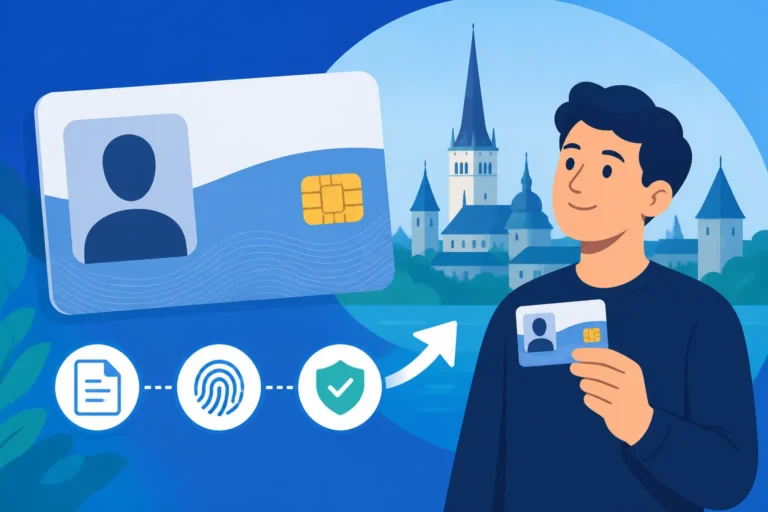
Can I Switch from a Digital Nomad Visa to a Residence Permit in Estonia?
The Estonian Digital Nomad Visa (DNV) is a fantastic gateway, offering an exhilarating year (or sometimes more!) to live and work remotely in this digital wonderland. But what happens when that year starts to wind down, and you’ve fallen completely in love with Estonia – the peaceful forests, the vibrant startup scene, or maybe even found a wonderful partner? Many nomads find themselves wanting to plant deeper roots, facing the big question: Can you switch from that temporary DNV status to a more permanent residence permit? Absolutely, but it’s not just a simple checkbox; it’s a deliberate journey, and this guide is here to walk you through every step, every hurdle, and every exciting possibility.
The Estonian Digital Nomad Visa: A Stepping Stone, Not a Destination
Let's be real, the Digital Nomad Visa is an incredible opportunity. It was designed to attract talented remote workers who contribute to the economy without necessarily taking local jobs. You can live in beautiful Tallinn, Tartu, or even a quiet coastal town, working for clients or a company anywhere in the world, all while enjoying Estonia's high quality of life. But it's crucial to understand its core nature: it's a temporary arrangement, a stepping stone, not a direct pathway to permanent residency or citizenship.
What the DNV Offers and Where It Falls Short
The DNV, which can be issued for a Type D long-stay visa or a temporary residence permit, typically grants you the right to stay in Estonia for up to one year. It allows you freedom to explore the country and work remotely. However, it explicitly states that your income must come from outside Estonia, and it doesn't automatically grant you the same rights as a permanent resident, such as full access to the public healthcare system through Tervisekassa or an easy path to bringing family members for long-term stays. For instance, your health insurance under a DNV is usually a private travel insurance policy, like those offered by providers such as Cigna Global, rather than being covered by the state social tax system. While invaluable for initial entry, it’s fundamentally designed for a transient lifestyle. If you're looking for something more substantial, you’ll quickly feel its limitations.
The Allure of Longer-Term Stability and Deeper Roots
After a year or so, many expats find themselves genuinely integrated into Estonian society. You might have made lasting friendships, perhaps even met a significant other, or discovered a local business opportunity that you're passionate about. The thought of uprooting yourself after a year, just as you've gotten comfortable with the nuances of Estonian life – from navigating public transport to understanding the local grocery stores – can be daunting. You want to contribute, to become a true part of the community, and to stop looking over your shoulder as your visa expiration date approaches. This desire for stability, the dream of calling Estonia a long-term home, is precisely why so many DNV holders consider making the switch to a proper residence permit.
Why a Residence Permit Makes Sense for Your Estonian Future
Switching to a temporary residence permit signifies a commitment to Estonia beyond just remote work. It means embracing the country fully, integrating into its systems, and often, actively participating in its local economy. This shift comes with a host of benefits that go far beyond the DNV's temporary allowances.
The Tangible Benefits of a Temporary Residence Permit
With a temporary residence permit, you gain significantly more stability and access to public services. This includes eligibility to register with the Estonian Health Insurance Fund (Tervisekassa) if you are employed by an Estonian company or meet other criteria, which is a massive relief for anyone who has relied solely on private travel insurance. You’ll find administrative tasks generally smoother, and crucially, you'll establish a clearer path towards long-term residency and potentially even citizenship down the road. For families, a residence permit is essential for enrolling children in local schools and simplifies the process of family reunification, allowing your loved ones to join you. It’s about being seen not just as a visitor, but as a valued member of Estonian society. You can learn more about this in our comprehensive guide, "The Complete Guide to Healthcare in Estonia for Expats (2027)".
Understanding the Key Types of Residence Permits in Estonia
Estonia offers several categories for temporary residence permits, each tailored to a specific purpose for your stay. Your eligibility to switch from a DNV will depend entirely on your new circumstances and intentions. The most common pathways for DNV holders looking to transition include:
- Residence Permit for Employment: This is often the most direct route if you secure a job with an Estonian company.
- Residence Permit for Business/Entrepreneurship: If you plan to start your own company (OÜ) or register as a sole proprietor (FIE) and actively operate it within Estonia.
- Residence Permit for Study: Should you decide to pursue higher education at an Estonian university.
- Residence Permit for Family Reunification: If you marry an Estonian citizen or a legal resident, or have a family member already holding a residence permit in Estonia.
Understanding these categories is the first step in identifying which path aligns with your future plans. Each has distinct requirements, financial thresholds, and application processes that you'll need to meticulously follow.
Navigating the Pathways to a Residence Permit from a DNV
Once you've decided to make Estonia your longer-term home, the next step is to figure out which type of residence permit best suits your situation. This isn't a "one-size-fits-all" scenario; your path will depend on your new purpose for being in Estonia.
The Work-Based Residence Permit: Your Local Job Opportunity
This is arguably the most common and often the most straightforward route for a DNV holder. If you've been working remotely and an Estonian company, perhaps one of the dynamic startups in Ülemiste City or Tartu Science Park, decides to hire you, you’ll need to apply for a temporary residence permit for employment. The crucial factor here is that your employer plays a significant role in the process. They need to secure permission from the Estonian Unemployment Insurance Fund (Töötukassa) to employ a foreigner, proving that the position couldn't be filled by a local or EU citizen. This usually involves meeting salary requirements (often pegged to the Estonian average gross salary or higher for certain specialists).
Imagine you've been freelancing for international clients on your DNV, but during a networking event in Tallinn, you impress a local tech company, and they offer you a full-time position. Great news! But it means a shift in your immigration status. You'll move from managing your own remote work requirements to working for an Estonian entity, which triggers the need for an employment-based residence permit. Your employer will initiate much of the initial groundwork, which is a welcome relief for many expats who are tired of handling all the bureaucracy alone. For a deeper dive into this, check out our guide on "How Do I Get a Work Permit and Residence Permit in Estonia?".
The Business-Based Residence Permit: Becoming an Estonian Entrepreneur
Perhaps your DNV experience has ignited an entrepreneurial spark, and you've identified a niche in the Estonian market you want to fill. Or maybe your remote business has grown to the point where you want to formally establish an entity here, contributing more directly to the local economy. In this case, a business-based residence permit is your answer. This path typically involves establishing an Estonian company (an OÜ, which is a private limited company, or registering as an FIE, a sole proprietor), and demonstrating a viable business plan.
The requirements here are more robust. You’ll usually need to invest a certain amount of capital (e.g., currently around €16,000 for an OÜ or €13,000 for an FIE, though these figures can change and should be double-checked with the latest official sources) into your business, and show that it has potential to create jobs or contribute significantly to Estonia's economic development. Your business plan will be assessed by an expert committee, often involving professionals from bodies like Startup Estonia. This isn't just about moving your remote work under an Estonian entity; it's about actively operating and developing a business within Estonia. It's a fantastic option for those who want to build something tangible here. To get started, you might find our guides "How to Set Up an OÜ (Private Limited Company) in Estonia" or "Understanding Residence for Self-Employment and Business in Estonia" extremely helpful.
Study-Based Residence Permit: Enrolling in Estonian Education
Sometimes, a DNV holder decides to embrace academic life in Estonia. Whether it's enrolling in a Bachelor's, Master's, or PhD program at a university like the University of Tartu or Tallinn University of Technology (TalTech), you'll need a temporary residence permit for study. The application process will involve proof of acceptance from an accredited Estonian educational institution, sufficient funds to cover your tuition and living expenses, and health insurance. This is a common route for younger digital nomads who decide to transition into a more structured academic environment while still appreciating the Estonian lifestyle. Our article "Understanding Residence Permits for Students in Estonia" provides more specifics.
Family-Based Residence Permit: Joining Loved Ones
Life happens, and sometimes, love blossoms! If you find yourself in a long-term relationship or marriage with an Estonian citizen or a foreign national who already holds a valid residence permit in Estonia, you may be eligible for a residence permit for family reunification. This pathway focuses on establishing your family ties and ensuring you can be supported in Estonia. Requirements will include proof of your relationship (marriage certificate, birth certificates for children), financial means of support from your spouse/partner, and suitable accommodation. This is a beautiful way to solidify your presence here if your personal life has led you to forge deeper bonds within the country. Our comprehensive guide, "Family Reunification in Estonia: A Complete Guide for Expats", will walk you through these sensitive and important processes.
Here's a quick comparison of the main pathways:
| Permit Type | Primary Requirement | Key Benefit | DNV Overlap (Transition) | Common Challenges |
|---|---|---|---|---|
| Employment | Job offer from Estonian employer (min. salary) | Social tax benefits, public healthcare | High chance if offered local job | Employer needs to prove local shortage |
| Business | Establish OÜ/FIE, viable business plan, capital | Full entrepreneurial freedom, direct control | Good for DNVs growing a local venture | Business plan approval, investment proof |
| Study | Acceptance to accredited Estonian educational inst. | Access to education system | Suitable for those seeking higher ed. | Proving sufficient funds for tuition/living |
| Family Reunification | Marriage/partnership with Estonian resident/citizen | Family life, shared benefits | If personal ties are formed | Proving relationship, financial self-sufficiency of sponsor |
The Practicalities of Application: From Nomad to Resident
The decision to switch is just the beginning; the actual application process can feel like a bureaucratic labyrinth, especially when you’re transitioning from one type of legal status to another. But with careful planning and a clear understanding of the steps, it’s entirely manageable.
Preparing Your Application: What You'll Need
Moving from a DNV to a residence permit means providing a whole new set of documentation to the Police and Border Guard Board (PPA). It's not just about updating your current visa; it's about proving a new purpose for your long-term stay. You’ll generally need:
- A valid travel document (passport): Ensure it has plenty of validity left.
- Your existing DNV/Type D visa information: The PPA will need to see your current legal status.
- Proof of your new purpose: This is the core of your application. For an employment permit, it's your job offer and employer's approval; for business, your registered OÜ/FIE and business plan; for study, your acceptance letter; for family, marriage certificates, etc.
- Proof of sufficient financial means: You must demonstrate that you can support yourself in Estonia, often tied to a specific income threshold for your permit type.
- Proof of accommodation in Estonia: A rental agreement or property ownership documents.
- Health insurance: While awaiting Tervisekassa coverage, comprehensive private health insurance like Cigna Global will be essential. This provides a safety net during transition.
- State fee payment: There's an administrative fee for processing the application.
- Background check: A criminal record certificate from your home country, and any other countries where you've resided for more than six months.
Let me tell you, this can feel like starting from scratch, even though you’ve already been living here. The PPA wants to see a new, compelling reason for your long-term stay, beyond just remote work. It's about showing commitment and integration. You’ll find more details on "How to Prepare Documents for an Estonian Residence Permit Application".
The Application Submission Process: Online or In-Person
Depending on your specific situation and citizenship, you might be able to start your application online via the PPA's e-service portal. However, for initial residence permit applications, especially when transitioning from another visa type, an in-person appointment at a PPA service point (e.g., in Tallinn, Tartu, or Pärnu) is often required for identity verification and biometric data collection.
Booking these appointments can sometimes be tricky, especially in busier periods, so plan well in advance. The PPA website provides an online booking system, and you’ll want to select the appropriate service for "Application for temporary residence permit." Be prepared; these appointments can be quite formal, and having all your documents organized and translated (if necessary) is paramount. Don’t forget to check out "How Do I Book a PPA Appointment for My Residence Permit?" for tips on scheduling.
What to Expect: Interviews, Processing Times, and Biometrics
After submission, you might be called for an interview with a PPA official. This is your chance to clearly articulate your reasons for wanting to reside in Estonia long-term and to elaborate on your new purpose (job, business, study, etc.). They might ask detailed questions about your financial situation, your plans, and your ties to Estonia. They are looking to ensure you genuinely meet the criteria for the permit and aren't trying to circumvent immigration rules.
Following your interview (or sometimes during it), your biometric data (fingerprints and a facial image) will be taken for your residence card. Processing times can vary widely, from a few weeks to several months, depending on the complexity of your case and the PPA's workload. It's a waiting game, and this period can be incredibly nerve-wracking, especially as your DNV expiry approaches. Stay calm, and trust that if your application is thorough and genuine, it will eventually be processed.
Overcoming Common Hurdles and Making the Transition Smooth
Even with the clearest path, administrative transitions in a foreign country are rarely without their bumps. Anyone dealing with Estonian bureaucracy will find that anticipating these hurdles is half the battle.
Financial Requirements and Proving Your Livelihood
Each type of residence permit has specific financial requirements designed to ensure you won't become a burden on the state. For an employment permit, it's typically tied to your salary; for a business permit, it’s about your company’s capital and projected income; for study, proof of funds for living and tuition. You'll need to provide bank statements, salary slips, or business financial projections. This might feel intrusive, but it’s standard practice. Make sure your finances are in order and clearly documented.
Language and Cultural Integration: More Than Just Bureaucracy
While not every residence permit requires Estonian language proficiency for the initial application, actively learning the language and engaging with Estonian culture will make your transition infinitely smoother. It shows a genuine commitment to your new home and unlocks deeper connections. Imagine trying to explain a complex medical issue without knowing some basic Estonian – it’s frustrating for everyone involved. Investing time in language courses, even at a basic level, will pay dividends. You can find comprehensive resources in our guide, "Learning Estonian: A Complete Guide to Language Courses and Levels".
The Dreaded Gap: Ensuring Continuous Legal Status
This is probably the biggest source of anxiety for many DNV holders looking to switch. What happens if your DNV expires before your residence permit is approved? Estonia has rules about legal stay, and falling out of status can lead to complications.
- Apply Early: The most crucial advice is to apply for your residence permit well in advance of your DNV's expiration date. The PPA typically allows applications for a new type of permit while your current one is still valid.
- Consult PPA Directly: If you anticipate a gap, or if your DNV is nearing expiry, contact the PPA directly. They can provide guidance on your specific situation and clarify if you can legally remain in the country while your new application is under review. Sometimes, a "waiting period" status is granted, but it's not automatic.
- Leaving and Re-entering: In some cases, if your DNV expires and your new permit isn't ready, you might be advised to leave the Schengen area and re-enter once your new residence permit is approved. This isn’t ideal, especially if you’ve already found a new apartment or need to transport your belongings (though services like Sirelo can certainly help with the logistics if you do need to move back and forth). This "limbo" period can be incredibly nerve-wracking, but with proactive communication with the PPA, you can often mitigate the risks.
Health Insurance Considerations During Transition
As mentioned earlier, your DNV likely required a private travel insurance policy. Once you transition to an employment-based residence permit in Estonia, your employer will start paying social tax (sotsiaalmaks) on your behalf, which generally grants you access to the Estonian Health Insurance Fund (Tervisekassa) after a short waiting period. However, during the transition phase, or if your new residence permit type doesn't immediately qualify you for Tervisekassa (e.g., certain business permits or if you're awaiting activation), it's vital to maintain continuous, comprehensive private health insurance. Providers like Cigna Global offer plans specifically designed for expats, ensuring you're covered for unexpected medical needs while your new status is being established. Never let your health coverage lapse! You can learn more about "Health Insurance in Estonia: Mandatory, Private and Travel Options Explained".
Switching from a Digital Nomad Visa to a residence permit in Estonia is a significant step, marking a deeper commitment to life in this fascinating Baltic nation. It requires diligence, patience, and a thorough understanding of the requirements, but for many, it's a deeply rewarding process that opens the door to a truly integrated life abroad.
Disclaimer
The information provided in this guide is for general informational purposes only and does not constitute legal or immigration advice. Immigration laws and procedures in Estonia can change, and individual circumstances vary. It is strongly recommended to consult the official website of the Estonian Police and Border Guard Board (PPA) or seek advice from a qualified immigration lawyer or consultant for the most accurate and up-to-date information pertaining to your specific situation.