How to Transfer from a Work Visa to a Residence Permit in Estonia
Moving to Estonia on a work visa often feels like a triumphant first step – you’ve landed the job, navigated the initial bureaucracy, and now you’re here! But that initial feeling of accomplishment can quickly morph into anxiety as you realize a work visa isn't a long-term solution. Many expats find themselves scratching their heads, wondering how to transition from that temporary visa status to a more stable residence permit. This guide is here to walk you through that often-confusing journey, easing your worries and outlining every crucial step.
Understanding the Foundation: Work Visas vs. Residence Permits in Estonia
It’s incredibly common for newcomers to Estonia to conflate the terms "work visa" and "residence permit." You get approved for a job, you get a visa, you come to Estonia, right? But these two documents, while both allowing you to be here, serve fundamentally different purposes and come with distinct implications for your life as an expat. Understanding this distinction is the absolute first step in planning your long-term stay.
The Short-Term Reality of a Work Visa (Type D)
When you first arrive in Estonia for work, especially if you're coming from outside the European Union or the Schengen area, you'll typically enter on what's known as a Long-Stay (Type D) visa. This visa is designed for temporary, extended stays – think of it as a bridge that gets you into the country and allows you to start your job while you sort out the more permanent arrangements. It usually has a maximum validity of 365 days, and crucially, it's tied directly to the purpose of your stay, which in this case, is employment.
The Type D visa allows you to legally work and reside in Estonia, but it’s not meant to be renewed indefinitely. Its primary function is to facilitate your entry and initial integration. While you're on a D-visa, your status in Estonia is still considered temporary. You might feel like a proper resident, enjoying the e-services and the digital life, but legally, it's a stepping stone. This is where the confusion often sets in: people assume their D-visa is sufficient for their entire stay, only to realize later that a residence permit offers far more stability and a pathway to true long-term residency. Don't let yourself get caught off guard by the expiry date looming – the planning for your residence permit should start well before then. For a deeper dive into the initial steps, you might find our guide on How to Get a Work Visa (Type D) and Work Permit in Estonia particularly helpful.
The Long-Term Security of a Temporary Residence Permit
A temporary residence permit, on the other hand, is the golden ticket to a more established life in Estonia. Unlike the D-visa, which is a visa for entry and short-term stay, the residence permit grants you a more comprehensive right to reside in the country for an extended period, typically one to five years, and is renewable. It signifies a deeper integration into Estonian society and often comes with broader rights and responsibilities.
When you secure a temporary residence permit for employment, it effectively replaces your D-visa status. This permit is what allows you to really set down roots. It provides the legal basis for registering your permanent address in the Population Register, accessing full public healthcare benefits through the Tervisekassa (after any waiting periods), and planning for your future in Estonia with much greater certainty. Critically, it also serves as a prerequisite for eventually applying for long-term residence status and even citizenship down the line. It's not just a piece of paper; it’s a commitment from Estonia that you are a welcome, albeit temporary, resident, and it gives you the confidence to truly build a life here.
When and Why to Make the Switch: Eligibility and Triggers
So, you're on your work visa, enjoying the delights of Estonian life, and perhaps getting used to the often-cryptic bureaucracy. But when do you actually need to make the switch to a residence permit, and what makes you eligible? This isn't just about an expiry date; it's about formalizing your status and unlocking more stability.
Key Eligibility Criteria for a Residence Permit
Transitioning from a work visa to a temporary residence permit for employment (or another basis) isn't automatic; you need to meet specific criteria set by the Estonian Police and Border Guard Board (PPA). The most common basis for expats in your situation is, understandably, employment. For this, your employer in Estonia must have registered your short-term employment, and you must have a valid employment contract. The job should also meet certain salary requirements, which are often linked to the Estonian average gross monthly salary. For 2024, this benchmark is subject to change, but it's generally a significant amount. This requirement is in place to ensure that foreign workers are not undercutting the local labour market and are contributing meaningfully to the economy.
Beyond employment, other eligibility factors include having adequate financial means to support yourself (even if employed, the PPA looks at your overall stability), proof of accommodation in Estonia, and valid travel documents. A clean criminal record is also a must. You'll also need a valid health insurance policy. While public health insurance kicks in once you're registered with the Tervisekassa and social tax is paid, you often need private insurance to cover the initial waiting period for the Tervisekassa or for your application process. Companies like Cigna Global offer expat health insurance plans that are often accepted for residence permit applications, providing peace of mind during this critical phase. It's a comprehensive check, designed to ensure you're a responsible and self-sufficient addition to Estonian society.
Common Triggers for Initiating the Transfer
While the most obvious trigger is your D-visa nearing its expiry date, there are several other scenarios that should prompt you to initiate the residence permit application process sooner rather than later.
Approaching D-Visa Expiry: This is the big one. As mentioned, a D-visa is generally valid for up to 365 days. You absolutely do not want to let this expire without a new permit in hand. The PPA advises starting the residence permit application at least 2-3 months before your D-visa runs out, but frankly, I’d push that to 3-4 months if you can. The processing times can be unpredictable, and you don't want to be in limbo. Being proactive here is key to avoiding unnecessary stress and potential legal issues.
Desire for Greater Stability and Rights: Some expats don't wait for the D-visa to expire. They realize early on that a temporary residence permit offers a greater sense of security. With a residence permit, you're more firmly integrated into the system, and it streamlines many administrative tasks, such as officially registering your address at the Population Register. You gain more clearly defined rights and responsibilities, and it paves the way for future steps, like applying for long-term resident status.
Family Reunification: If you're planning to bring your spouse or children to Estonia, a temporary residence permit is almost always a requirement for the primary applicant. Family members typically apply for residence permits based on family reunification, and their application is contingent on yours. So, if your family's move is on the horizon, upgrading your status becomes a priority. Understanding Family Reunification Requirements in Estonia is a crucial read for anyone in this situation.
Long-Term Career Plans: If your employment in Estonia is clearly long-term, and you envision staying with your current employer for several years, securing a residence permit makes practical sense. It aligns your immigration status with your career trajectory and simplifies any future extensions or changes that might arise with your employer.
Changes in Employment Circumstances: While you might start on a D-visa tied to a specific job, if you find yourself wanting to switch employers or take on a different role within the same company that changes the terms of your initial employment, having a residence permit can sometimes offer more flexibility. It's not a free pass to change jobs without notifying the PPA, but it generally means you're already past the initial, most scrutinised stage of entry.
The Step-by-Step Application Process for a Residence Permit from a Work Visa
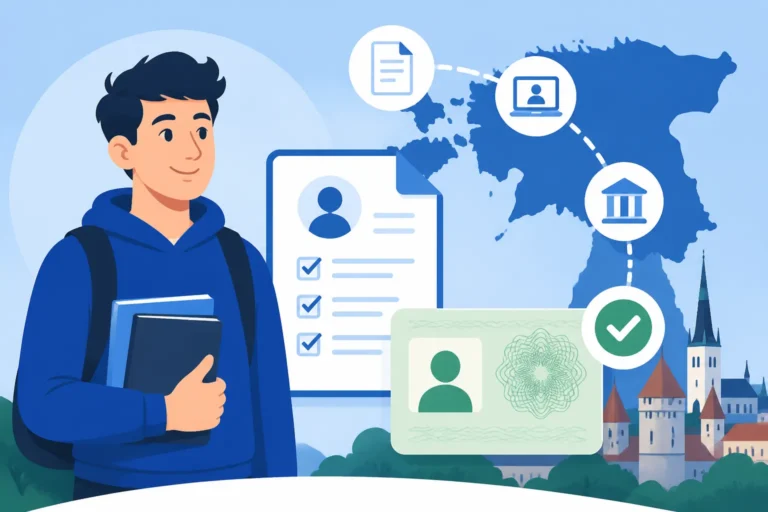
Alright, let's get down to brass tacks. The actual process of applying for a temporary residence permit, especially when you’re already in Estonia on a work visa, involves a few distinct stages. It can feel like climbing a mountain of paperwork, but breaking it down into manageable steps makes it less daunting.
Gathering Your Mountain of Documents
This is often the most time-consuming part, and where most expats experience their first real frustrations. The PPA requires a comprehensive set of documents to ensure you meet all eligibility criteria. My advice? Start gathering these early. Like, yesterday early.
Here’s a typical checklist, but always double-check the latest requirements on the PPA's official website:
- Application Form: The official temporary residence permit application form, filled out completely and accurately. Make sure you select the correct basis for your permit (e.g., employment).
- Passport/Travel Document: Your valid passport, which should have at least six months' validity beyond your intended permit expiry.
- Digital Photo: A recent passport-style photo that meets Estonian official requirements. They are very particular about dimensions and background, so it’s often best to get this done professionally in Estonia.
- Proof of Legal Income/Financial Means:
- Employment Contract: Your valid employment contract with an Estonian employer.
- Salary Confirmation: Often, a letter from your employer confirming your position, salary, and that the social tax will be paid. This is crucial for proving the income requirement.
- Bank Statements: While not always explicitly requested upfront for employment-based permits, having recent bank statements showing regular income can always bolster your application, especially if your employer is new or small.
- Proof of Accommodation: This can be a rental agreement (üürileping), proof of property ownership, or a letter from the property owner stating you reside there. Remember, this needs to be a legal, registered address.
- Health Insurance Policy: As mentioned, you'll need proof of a valid health insurance policy that meets the requirements for the duration of your residence permit. This is particularly important for the period before your Tervisekassa coverage fully kicks in, or if you're waiting for social tax payments to accumulate. For those wondering, How Much Does Private Health Insurance Cost in Estonia in 2026? will give you a good idea.
- Proof of Paid State Fee: There’s a state fee associated with applying for a residence permit. You’ll need the receipt of payment. This fee can vary depending on the type of permit and how it's submitted, so check the latest amounts.
- Documents Related to Dependents (if applicable): Marriage certificates, birth certificates, and sometimes even proof of shared accommodation or financial support if you are applying for family reunification.
All foreign documents usually need to be translated into Estonian or English by a sworn translator and often apostilled or legalized. This can be an unexpected cost and time sink, so factor it in!
Submitting Your Application: Online vs. PPA Appointment
Once your document pile is perfectly in order (or as perfect as it can get!), it's time to submit. Estonia, being the digital nation it is, offers options, but the physical visit often remains essential for the initial application from a D-visa.
Online Application (Partial): While you can often start an application online through the PPA's e-service portal, for the initial temporary residence permit application, especially if you're coming from a D-visa, you typically need to visit a PPA service point to submit biometrics (fingerprints and photo) and your physical documents. The online portal is fantastic for renewals once you have your first permit.
PPA Service Point Appointment: This is the most common route for your first residence permit application. You'll need to book an appointment at a PPA service point (Tallinn, Tartu, Pärnu, Jõhvi are common locations). This can be done online through their booking system, but appointments, especially in Tallinn, can be snapped up quickly. Plan ahead! It can feel like winning the lottery just to get an appointment sometimes.
When you go to your appointment, dress comfortably but respectfully. Bring all your original documents and their copies. The PPA official will review everything, take your fingerprints and digital photo, and provide you with a confirmation of your application. This is your chance to ask any clarifying questions, so don't be shy! Just be prepared that not all officials will be fluent in English, so if your Estonian isn't up to snuff, consider bringing a friend to translate or use a translation app. For practical advice on booking, refer to our guide on How to Book an Appointment at the Police and Border Guard Board (PPA).
The Waiting Game and Potential Follow-ups
And now, the longest part: the waiting game. The PPA states an official processing time, which for a temporary residence permit can be up to two months (60 days), but sometimes it’s quicker, sometimes it's longer. During this period, your application is being reviewed, and background checks are conducted. This is where patience truly becomes a virtue.
Status Checks: You can often check the status of your application online through the PPA's e-service portal using your application number. This can be a daily ritual for many anxious expats!
Requests for Additional Information: Don't be surprised if the PPA contacts you, or your employer, requesting additional documents or clarifications. This is quite common and doesn't necessarily mean your application is in trouble. It just means they need more details to make a decision. Respond promptly and thoroughly. Sometimes, they might ask you for a sworn statement or an updated document.
Approval and Collection: If your application is approved, you'll receive a notification. You'll then need to return to a PPA service point (or a foreign representation, if you applied from abroad) to collect your physical residence card. This card is your official proof of residence and will contain your biometrics and, crucially, your Isikukood (personal code), which is vital for virtually everything in Estonia. If you’re still getting your head around that, our guide on How to Get Your Isikukood (Personal Code) and Why It Matters for Healthcare is a must-read. Once you have this card, you are officially a temporary resident!
Navigating Specific Scenarios and Common Hurdles
Life in Estonia isn't always a straight line, and neither is the immigration process. There are specific situations and common obstacles that expats often encounter when transferring from a work visa to a residence permit. Being prepared for these can save you a lot of grief.
Changing Employers or Job Roles During the Transition
This is a scenario that can cause immense stress. You've just started your job, you're on a D-visa, and then an even better opportunity comes along, or your current role changes significantly. What happens then?
Before Residence Permit Approval: If you change employers before your temporary residence permit for employment is approved, you are essentially starting over with your application linked to the new employer. This means you'll need a new employment contract, and your new employer will have to confirm your employment and salary details to the PPA. This is a critical period, as your D-visa is tied to the original employer and purpose. It's imperative to communicate immediately with the PPA about any changes to avoid legal complications. Continuing to work for a different employer than the one listed on your D-visa application is a big no-no and can lead to serious issues.
After Residence Permit Approval: Once you have your temporary residence permit for employment, changing jobs is generally more straightforward, but still requires notification. Your residence permit is tied to the purpose of employment in Estonia, not necessarily a single employer. However, if your new job falls under vastly different conditions or if your salary drops below the required threshold, the PPA might review your situation. Generally, you must inform the PPA about changes in your employment contract within a certain timeframe (usually 5 working days) if it affects the data used in your permit application. This usually involves submitting an update through the PPA e-service or in person. This flexibility is one of the distinct advantages of having a residence permit over a D-visa.
Bringing Your Family Along: Family Reunification
For many expats, moving to Estonia isn't just about personal career growth; it's about building a new life with loved ones. Bringing your family to join you is a common goal, but it adds another layer of complexity to the residence permit process.
Your Status is Key: For your family to join you under family reunification rules, you, as the primary applicant (the one with the job), must hold a temporary residence permit. A D-visa is typically not sufficient for sponsoring family members for their own residence permits. This is a major reason why many expats push to convert their D-visa to a residence permit as quickly as possible.
Application Process for Family Members: Each family member (spouse, minor children, and in some specific cases, adult children or parents) will need to apply for their own temporary residence permit. Their application will be dependent on yours. This means they'll need many of the same documents you provided (passport, photos, state fee), plus proof of your relationship (marriage certificate, birth certificates) and proof that you, as the sponsor, have sufficient income to support the entire family in Estonia, as well as adequate accommodation. The income threshold for family reunification is higher than for a single person.
Health Insurance for the Family: Just like you, your family members will need comprehensive health insurance that covers them for the duration of their permit. This is particularly important for children. While they will eventually be covered by the Tervisekassa if you are, there might be initial waiting periods or specific requirements for the application itself. Companies like Cigna Global can provide family plans tailored for expat needs, covering everyone from day one. You'll find more details on this in our guide on How to Register Family Members for Health Insurance in Estonia.
The Crucial Role of Health Insurance
Healthcare is a universal concern, and in Estonia, your health insurance status is inextricably linked to your immigration status. This is not an area to cut corners or misunderstand.
Initial Coverage: When you first arrive on a D-visa, you are generally required to have private health insurance. This insurance needs to cover you for the entire duration of your visa and meet specific minimum coverage amounts. This is often checked at the border or when you apply for your D-visa.
Transition to Public Healthcare: Once you get your temporary residence permit and your employer starts paying social tax (sotsiaalmaks) on your behalf, you become eligible for coverage under the Estonian Health Insurance Fund (Tervisekassa). However, there's typically a waiting period. Your coverage usually starts after your employer has paid social tax for you for a certain period, often at least a month, and your employment details are registered. This means there can be a gap between your private insurance expiring and your public insurance kicking in, or a period where you are officially eligible but haven't received confirmation.
The "Gap" Insurance: This gap is precisely why it's crucial to have a private health insurance policy that covers you until your Tervisekassa status is active. For your residence permit application, the PPA will want to see proof of continuous coverage. Don't assume that just because you have a job, you're immediately covered. Always check your Tervisekassa status via the e-service portal (eesti.ee) once you have your Isikukood. Our guide on What Health Insurance Do I Need for an Estonian Residence Permit? will break down the exact requirements and pitfalls. Remember, without proper health insurance, any medical emergency could leave you with a hefty bill.
Life After Approval: What Your Residence Permit Means
Congratulations! You’ve successfully navigated the bureaucratic maze, submitted your documents, endured the nail-biting wait, and finally, you have your Estonian temporary residence permit in hand. This isn't just a new card; it represents a significant shift in your status and unlocks a new level of integration into Estonian life.
Rights and Responsibilities of a Residence Permit Holder
With a temporary residence permit, you gain certain rights and, just as importantly, take on new responsibilities. Understanding these is crucial for a smooth life in Estonia.
Enhanced Rights:
- Freedom of Movement within Schengen: Your Estonian residence permit allows you to travel freely within the Schengen Area for up to 90 days in any 180-day period, just like an Estonian citizen (though it's still good to carry your passport). This is a huge benefit compared to the more restrictive D-visa.
- Access to Public Services: You get full access to Estonia's robust public services, including the national healthcare system (Tervisekassa), provided your social tax contributions are regular and you've completed any waiting periods. This also extends to education for your children and other social benefits you might be eligible for.
- Official Residence Registration: You can formally register your place of residence in the Population Register, which is required by law and is essential for receiving mail, accessing local services, and proving your address. This is a fundamental step towards feeling truly settled. Our guide on Registering Your Place of Residence in Estonia: The Complete Guide covers this in detail.
- Path to Long-Term Status: Your temporary residence permit is a necessary stepping stone towards acquiring long-term resident status (after living legally in Estonia for five consecutive years) and eventually, Estonian citizenship, should you choose to pursue it.
Key Responsibilities:
- Adherence to Estonian Law: This goes without saying, but you are subject to Estonian laws and regulations, just like any citizen.
- Maintaining Eligibility: You must continue to meet the conditions under which your permit was granted. For an employment-based permit, this means maintaining valid employment and earning above the salary threshold. Any significant changes in your circumstances (job loss, change of address) must be reported to the PPA.
- Notifying PPA of Changes: It is your responsibility to inform the PPA promptly about any changes to your personal data or circumstances (e.g., new address, change of passport, marriage, birth of a child).
- Renewal: Your temporary residence permit is not indefinite. You must apply for its renewal well in advance of its expiry date, typically no earlier than 6 months and no later than 2 months before it runs out. Failing to renew can lead to your legal status in Estonia lapsing. Our article on How to Renew Your Estonian Residence Permit provides detailed guidance here.
Pathways to Long-Term Residence and Citizenship
Once you've spent some time in Estonia as a temporary residence permit holder, your thoughts might turn to the even longer term. Estonia offers clear pathways for those who wish to make it their permanent home.
Long-Term Resident Status (EU): After legally residing in Estonia for five consecutive years with a temporary residence permit, you can apply for a long-term resident (EU) permit. This status offers even greater stability and freedom. It's often referred to as "permanent residency" in other countries. The requirements for this typically include having a stable income, permanent accommodation, and demonstrating sufficient knowledge of the Estonian language (B1 level). This status is recognized across the EU, granting you greater flexibility. Our guide on Long-Term Residence in Estonia: The Complete Pathway will tell you everything you need to know.
Estonian Citizenship: For those who truly fall in love with Estonia and commit to making it their forever home, citizenship is the ultimate step. The path to Estonian citizenship by naturalisation typically requires:
- Eight years of legal residence: Five of which must be on a long-term residence permit.
- Demonstrated Estonian language proficiency: Usually at a B1 or B2 level, depending on your situation, proven by passing a state exam.
- Knowledge of the Estonian Constitution and Citizenship Act: Also proven by a state exam.
- Loyalty to the Estonian state.
- Renunciation of your previous citizenship: Estonia generally does not allow dual citizenship for naturalised citizens, with very few exceptions.
Each step along this journey, from your initial D-visa to a temporary residence permit, then potentially to long-term resident status and citizenship, builds upon the previous one. It's a testament to your commitment to Estonia, and Estonia's commitment to you.
Practical Tips for a Smoother Transition
Let's be honest, moving to and living in a new country, even one as digitally advanced as Estonia, is full of small challenges and unexpected bumps. Making the leap from a work visa to a residence permit is one of those significant milestones that can either be relatively smooth or incredibly frustrating, depending on your approach. Here are some veteran expat tips to help you along.
Language Barriers and Where to Find Support
Ah, the Estonian language! A beautiful but notoriously complex beast. While many Estonians, especially in Tallinn and Tartu, speak excellent English, don't rely on it when dealing with official matters, especially outside the capital.
Don't Assume English Fluency: While the PPA usually has English-speaking staff, particularly in major service points, it's not a guarantee. For specific or complex questions, or if you need to clarify something nuanced, a language barrier can quickly escalate frustration.
Bring a Friend (If Possible): If you have an Estonian-speaking friend who is willing to accompany you to appointments, that can be a huge asset. Just make sure they understand they are there to translate, not to answer for you.
Utilize Translation Apps: Google Translate or similar apps can be lifesavers for understanding documents or communicating basic needs. Just be aware of potential mistranslations in official contexts.
Invest in Estonian Language Learning: Even if you don't need it for your job, learning some basic Estonian phrases and understanding the nuances of communication will make your life significantly easier. It shows respect for your host country and opens up many more doors. There are numerous language courses available in Tallinn and Tartu; our guide on How to Enrol in an Estonian Language Course can get you started.
Seek Professional Help: For complex cases or if you feel completely overwhelmed, consider consulting an immigration lawyer or a relocation agency. While an added cost, their expertise can save you time, stress, and potential errors. Many companies like Sirelo, while primarily a moving service, often have partners or resources that can point you towards reputable immigration advisors in Estonia.
Keeping Your Documents and Digital Information in Order
Estonia is a digital country, and while this makes many things incredibly efficient, it also means you need to be on top of your digital game, alongside your physical documents.
The Power of e-Estonia: Get familiar with eesti.ee. This is your personal gateway to virtually all public services, from checking your Tervisekassa status to reviewing your tax information. Once you have your ID card and PIN codes, activating this portal is one of the first things you should do.
Organize Physical Documents: Despite Estonia's digital prowess, physical documents are still king for many official processes, especially initial applications. Create a dedicated folder (digital and physical) for all your immigration-related documents: passport copies, visa pages, employment contracts, rental agreements, PPA confirmations, state fee receipts, birth certificates, marriage certificates, and health insurance policies. Keep originals safe and carry copies when out and about.
Scan Everything: Scan all important documents and save them in a secure cloud storage (with backups!). This way, if you lose a physical document or need to quickly send a copy, you have it readily available.
Stay Updated with the PPA: The Police and Border Guard Board (PPA) website is your definitive source for the most up-to-date requirements and forms. Immigration rules can and do change, so don't rely solely on old forum posts or advice from friends. Always check the official source before taking action.
Set Reminders: Put calendar reminders for important dates: D-visa expiry, residence permit expiry, health insurance renewal, etc. This proactive approach will help you avoid last-minute panic and ensure continuous legal residence in Estonia.
By following these tips, you won't eliminate all the challenges, but you will certainly smooth out many of the wrinkles in your journey from a work visa to a stable residence permit in Estonia. It’s a process, but a very worthwhile one for those looking to build a life in this fascinating Baltic nation.
Disclaimer
Please note that the information provided in this guide is intended for general informational purposes only and does not constitute legal advice. Immigration laws and regulations in Estonia are subject to change and may vary depending on individual circumstances. While every effort has been made to ensure accuracy and timeliness, it is highly recommended to consult official sources such as the Estonian Police and Border Guard Board (PPA) website or seek professional legal advice from an immigration expert for your specific situation.