How Do I Apply for Estonia’s Digital Nomad Visa?
So, you've heard about Estonia's pioneering Digital Nomad Visa, haven't you? It's a game-changer for many, offering the dream of living in a vibrant, digital-first country while working for a foreign employer. But let's be honest, navigating visa applications can feel like trying to solve a Rubik's Cube blindfolded, especially when you're dealing with a new country's bureaucracy. This guide is here to untangle the bureaucratic knots and walk you through the entire process of applying for Estonia's DNV, step-by-step, making sure you know exactly what to expect.
Understanding the Estonian Digital Nomad Visa
Estonia truly led the charge in creating a dedicated visa for remote workers, acknowledging the global shift in how we work. The Digital Nomad Visa (DNV), introduced in 2020, allows individuals who work remotely for an employer or clients outside Estonia to legally reside in the country for up to a year. It's not just about setting up your laptop in a cool cafe in Tallinn; it's about fully integrating into Estonian life while maintaining your international professional connections.
What Exactly Is a Digital Nomad Visa?
Unlike a tourist visa, which explicitly prohibits work, or a traditional work visa that ties you to a local Estonian employer, the DNV is specifically designed for people whose income comes from outside Estonia. This means you could be a freelance designer, a software engineer for a company based in London, a marketing consultant with clients all over the world, or even someone running their own remote business. The key is that your employment or contractual services are performed for entities registered outside of Estonia, and your income source is foreign. It’s the perfect bridge for those who want to experience the European lifestyle without disrupting their established careers.
Distinguishing Between Type C and Type D Digital Nomad Visas
When you apply for the DNV, you'll encounter two main types: the Type C (short-stay) and Type D (long-stay) visas. This distinction is crucial and depends entirely on how long you intend to stay in Estonia.
The Type C Digital Nomad Visa is for those planning a shorter stint, typically up to 90 days within a 180-day period. Think of it as an extended vacation where you can also legally work. This option is often less complicated to apply for, but it's important to remember that it's a short-term solution. If you're exploring Estonia and aren't quite ready to commit to a full year, this might be your starting point. However, if you fall in love with the country (and trust me, it happens!), you'll need to apply for a Type D visa to extend your stay legally.
The Type D Digital Nomad Visa is what most aspiring digital nomads are truly after. This allows you to stay in Estonia for up to 365 days. It's a more comprehensive visa, and consequently, the application process is a bit more involved, requiring more documentation and a longer processing time. This visa is perfect if you're looking to truly immerse yourself, set up a temporary home, and experience all four seasons of Estonia. Many people eventually transition from a Type D visa to a temporary residence permit if they decide to make Estonia their long-term home.
Choosing between a Type C and Type D DNV should be your very first step, as it dictates the entire application pathway, the documents you'll need, and the fees you'll pay. Don't underestimate this decision; it sets the tone for your entire expat journey here.
Eligibility Requirements: Do You Qualify for the DNV?
Alright, let’s get down to brass tacks: do you actually qualify for this sweet deal? Estonia’s Digital Nomad Visa isn’t just given out willy-nilly; there are specific criteria designed to ensure applicants are genuinely remote workers with sufficient means. This is where many hopefuls hit their first bureaucratic snag, so pay close attention.
Proof of Remote Work and Income
This is arguably the most critical component of your application. The Estonian government needs to see undeniable proof that you are indeed a digital nomad, not just someone looking for an extended holiday. You must demonstrate that you can work independently of location and that your income comes from outside Estonia.
Here are the specific scenarios that qualify:
- You have an active employment contract with a company registered outside Estonia. This is straightforward. Think of a formal letter from your HR department stating your remote work status, job title, and salary.
- You conduct business through a company registered outside Estonia in which you have a holding. If you own your own business abroad and it generates income, you can apply. You’ll need to provide documentation proving ownership and the business’s active status.
- You provide services to clients who have their place of business outside Estonia, and you have a contract with them. This covers freelancers and contractors. Multiple contracts with different foreign clients are excellent proof.
For any of these scenarios, you’ll need to supply contracts, letters from employers/clients, company registration documents, and invoices. Make sure these documents are clear, current, and explicitly state the foreign nature of your work relationship. Estonian authorities are very thorough, and any ambiguity here can lead to delays or rejection.
Financial Sufficiency Threshold
Estonia wants to ensure you won't become a burden on their social system. Therefore, you must prove that you have a stable and sufficient income to support yourself during your stay. As of my last check, the minimum required gross monthly income for the six months preceding your application is €3,500.
This is a non-negotiable threshold. You’ll need bank statements for the past six months clearly showing deposits that meet or exceed this amount. Don't just show a lump sum from one month; they want to see consistent income. If your income fluctuates, ensure the average over six months meets the minimum. This isn’t a "nice to have"; it's a "must have." I’ve seen many otherwise perfect applications get stalled because the income proof wasn't meticulously prepared. So, gather those bank statements, highlight the relevant transactions, and make it easy for the visa officer to see you meet the criteria.
Comprehensive Travel and Health Insurance
This is another area where you cannot cut corners. For your DNV, you must have comprehensive travel or health insurance that covers you for your entire intended stay in Estonia. The minimum coverage amount required is €30,000. This insurance needs to cover emergency medical treatment, hospitalization, and repatriation in case of illness or accident. It’s also wise to ensure it covers outpatient care and specialist visits.
Many general travel insurance policies might not meet the DNV's strict requirements, especially for a full year. You'll likely need an international health insurance plan. Companies like Cigna Global are often recommended by expats because their plans are specifically designed for international living and usually exceed the visa requirements, giving you peace of mind. Getting this sorted beforehand is crucial, as you’ll need proof of coverage when you apply. Don’t wait until the last minute!
Clean Background Check and No Previous Visa Violations
Like any country, Estonia wants to ensure that individuals entering its borders are law-abiding. You’ll need to provide information for a background check. This usually involves declaring any criminal history. Furthermore, if you’ve ever overstayed a visa in the Schengen Area or violated immigration laws in any country, this could significantly jeopardize your application. Be honest in your application; attempting to hide such information will almost certainly lead to a permanent ban. It’s better to address any past issues head-on, if possible, rather than hoping they won’t be discovered.
The Application Process: Step-by-Step
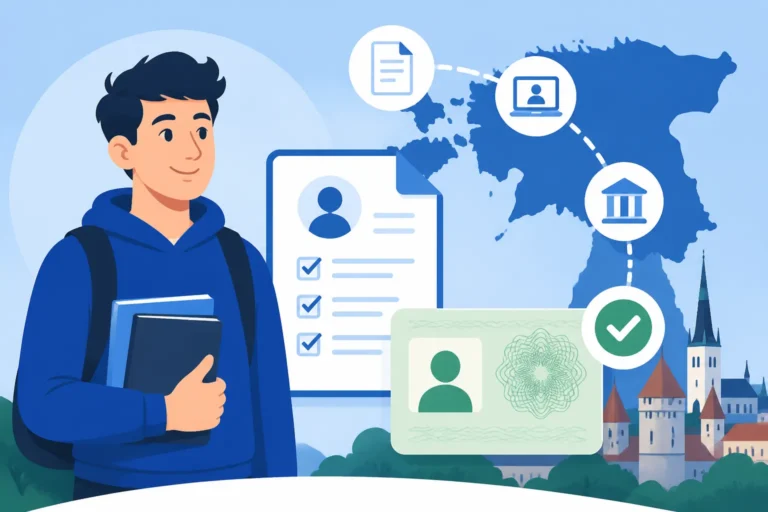
You’ve checked the eligibility boxes and feel confident you meet the criteria. Great! Now, let’s dive into the actual application process. It can seem daunting, but breaking it down into manageable steps makes it much less intimidating. Remember, thoroughness is your best friend here.
Gathering Required Documents
Before you even think about booking an appointment, get all your documents in order. This is where most people stumble. Think of it as building a fortress – each document is a brick, and if even one is missing or flimsy, the whole structure can fall apart.
Here’s a general checklist of what you'll need, but always double-check the latest requirements on the Estonian Police and Border Guard Board (PPA) website:
- Application form: Duly completed and signed. You can usually find this on the PPA website.
- Passport: Must be valid for at least six months beyond your intended stay and have at least two blank pages. Provide photocopies of all relevant pages.
- Passport-style photos: Recent, high-quality, and compliant with Schengen visa photo standards (usually 35×45 mm).
- Proof of remote work: As detailed above – employment contracts, service agreements, company registration documents, letters from employers/clients.
- Proof of financial means: Bank statements for the last six months showing consistent income meeting the €3,500 monthly threshold.
- Travel/Health Insurance: Proof of comprehensive insurance covering the duration of your stay with at least €30,000 coverage, including repatriation.
- Travel itinerary/accommodation proof: While not always strictly required for the full year, an initial accommodation booking or a letter explaining your housing plans can be helpful.
- Curriculum Vitae (CV): A detailed CV outlining your professional background.
- Cover letter: A personal letter explaining your motivation for applying for the DNV, your plans in Estonia, and reiterating how you meet the criteria.
- Payment of state fee: The fee for the Type D visa is currently €100. This is non-refundable, even if your application is rejected.
Ensure all foreign documents are translated into Estonian or English by a sworn translator if they are not already in one of those languages. This isn't optional; it's a requirement.
| Document Type | Specific Requirement | Notes |
|---|---|---|
| Application Form | Completed and signed | Available on the PPA website (Politsei- ja Piirivalveamet) |
| Passport | Valid for +6 months beyond stay, 2 blank pages, copies of all pages | Ensure it's not expiring soon! |
| Passport Photos | 2 photos, 35x45mm, white background, recent | Strict Schengen photo requirements apply |
| Remote Work Proof | Contracts, company registration, client agreements (foreign entities) | Must clearly show work is for non-Estonian entities |
| Financial Proof | Bank statements (last 6 months), minimum €3,500 gross/month | Highlight income, ensure consistency |
| Health Insurance | Coverage ≥ €30,000, valid for entire stay, includes repatriation | Look for international health insurance; companies like Cigna Global are an option |
| CV | Detailed professional history | Standard format, clear and concise |
| Cover Letter | Explaining purpose, plans, and eligibility | Personalize it, be persuasive but factual |
| State Fee Payment | Proof of payment (€100 for Type D visa) | Non-refundable; pay online or at the consulate/embassy |
| Translations | Sworn translation for non-English/Estonian documents | Absolutely essential for all supporting documents |
Where to Apply and Book Your Appointment
You cannot apply for the Estonian Digital Nomad Visa while already on a short-stay Schengen visa (like a tourist visa) within Estonia. You must apply either:
- At an Estonian representation (embassy or consulate) in your country of origin or legal residence. This is the most common route. You'll need to find the nearest Estonian embassy or consulate and check their specific procedures for booking a visa appointment. Many use online booking systems, but some still require phone calls or emails. Be prepared for potential waiting times for appointments, especially in popular locations.
- At a service point of the Police and Border Guard Board (PPA) in Estonia. This option is available only if you are already legally residing in Estonia on another type of long-stay visa or residence permit (e.g., a student visa) and wish to switch to a DNV. It's not for those entering on a standard tourist visa.
Booking an appointment at the PPA in Estonia is done through their online system. If you're applying from abroad, you'll contact your local Estonian embassy. Always book well in advance, as slots can fill up quickly. Remember that an appointment is typically for submitting your documents and potentially undergoing a short interview.
The Interview Process and Biometrics
Once your appointment is booked, prepare for a brief interview. This isn't usually an interrogation, but rather a chance for the visa officer to clarify any details in your application, verify your intentions, and assess your genuine interest in living in Estonia as a digital nomad.
They might ask you questions like:
- "What do you do for work?"
- "How long do you intend to stay in Estonia?"
- "What are your plans in Estonia?"
- "How did you hear about Estonia’s DNV?"
- "Can you confirm your financial situation?"
Be honest, clear, and concise in your answers. Bring all your original documents, even if you’ve only been asked to submit copies. The officer may want to see the originals for verification.
During this appointment, your biometric data (fingerprints and a digital photograph) will also be collected. This is standard procedure for most long-stay visas and residence permits within the Schengen Area.
Processing Times and What to Expect After Submission
After you’ve submitted your application and biometrics, it’s a waiting game. The processing time for an Estonian Digital Nomad Visa can vary widely depending on the embassy, the time of year, and the complexity of your application. Typically, you can expect it to take anywhere from 15 to 30 days, but it can sometimes extend up to 60 days, especially if additional information is requested.
Patience is key here. Avoid calling or emailing the embassy every other day for updates, as this can actually slow down the process. They will contact you if they need more information. Once a decision is made, you'll be notified. If approved, you'll usually be asked to return to the embassy or consulate to have the visa sticker placed in your passport.
If your application is rejected, you will receive a formal letter explaining the reasons. You usually have the right to appeal this decision, but you'll need to address the specific reasons for rejection with additional evidence or clarification.
Life After Approval: Next Steps in Estonia
Congratulations! You've got your Estonian Digital Nomad Visa. That feeling of relief is immense, I know. But the journey isn't quite over. There are a few crucial administrative steps you’ll need to take once you arrive in Estonia to ensure a smooth, legal, and comfortable stay.
Registering Your Place of Residence
This is one of the most important first steps. Within one month of arriving in Estonia with your Type D DNV, you must register your place of residence with the local government. This process, known as registering your elukoht in the Population Register, is vital for several reasons. It allows you to obtain an official address, which you'll need for almost everything else: getting an Estonian personal code (How to Get Your Isikukood (Personal Code) and Why It Matters for Healthcare), opening a bank account, and accessing public services.
You’ll typically do this at the local city or rural municipality government office. For those in Tallinn, it’s usually at the district government office (e.g., Kesklinna Valitsus for central Tallinn). You’ll need your passport and proof of your address, such as a rental agreement or a letter from your landlord. Make sure your rental agreement is legitimate and that you have all the necessary details, as they will cross-reference this. Without a registered address, you're essentially a ghost in the system, and that causes all sorts of problems down the line. Expats often struggle for months because they put this off, thinking it wasn't a big deal. It is.
Obtaining Your Estonian Personal Code (Isikukood)
Once your residence is registered, an Isikukood (personal identification code) will usually be assigned to you automatically. If not, you can apply for it separately at the PPA or a local government service office. This ten-digit number is your unique identifier in Estonia and is absolutely indispensable.
You'll need your Isikukood for practically everything:
- Interacting with
Tervisekassa(Estonian Health Insurance Fund) if you become eligible for public health insurance, though remember your DNV requires private insurance first. - Opening a bank account at local institutions like Swedbank or LHV.
- Signing up for utility services.
- Accessing various e-services through the eesti.ee portal.
Think of it as your golden ticket to truly participating in Estonian society. Don't underestimate its importance; it unlocks a whole new level of convenience in this digital society. For more detailed information, check out our guide on How to Get Your Isikukood (Personal Code) and Why It Matters for Healthcare.
Understanding Your Tax Obligations
As a digital nomad on a DNV, your tax residency status is crucial. If you spend more than 183 days in Estonia within any 12-month period, you generally become an Estonian tax resident. This means your worldwide income could become subject to Estonian income tax. However, Estonia has a flat income tax rate and many double taxation agreements with other countries.
It’s vital to consult with a tax professional who understands international taxation and Estonian law. They can advise you on how to report your foreign income, avoid double taxation, and ensure you comply with all local regulations. Simply assuming you only pay tax in your home country might lead to unpleasant surprises down the road. Understanding Tax Residency in Estonia: A Definitive Guide for Expats (2027) is a key step.
Planning for the Future: Extending or Transitioning Your Stay
Your Type D DNV is valid for up to one year. As your visa approaches its expiry, you'll need to decide on your next steps.
- Extending your DNV: It is generally not possible to extend the same DNV beyond its initial validity. The DNV is typically a one-time visa for a specific period. If you want to stay longer, you usually need to apply for a temporary residence permit.
- Transitioning to a residence permit: If you've fallen in love with Estonia and wish to stay longer than a year, you’ll likely need to apply for a temporary residence permit. This could be based on employment with an Estonian company, self-employment as an FIE (sole proprietor) or through an OÜ (private limited company), or other grounds. This process is more involved and requires meeting different criteria. For more details on the process, you can look into How to Apply for a Temporary Residence Permit in Estonia.
Start planning this transition well in advance, ideally several months before your DNV expires, as residence permit applications can also take time to process. Don't leave it to the last minute! And for those big moves, services like Sirelo can be really helpful when it comes to shipping your belongings, comparing costs, and finding reliable movers if you decide to make Estonia your permanent base.
Disclaimer
The information provided in this guide is intended for general informational purposes only and does not constitute legal, financial, or immigration advice. Visa regulations and requirements can change frequently. While we strive to keep our content up-to-date, we strongly recommend consulting the official website of the Estonian Police and Border Guard Board (PPA) or seeking advice from a qualified immigration lawyer or consultant for the most current and personalized information regarding your specific situation. We cannot be held responsible for any inaccuracies or omissions.