How to Get Estonia’s Digital Nomad Visa: The Full Guide (2027)
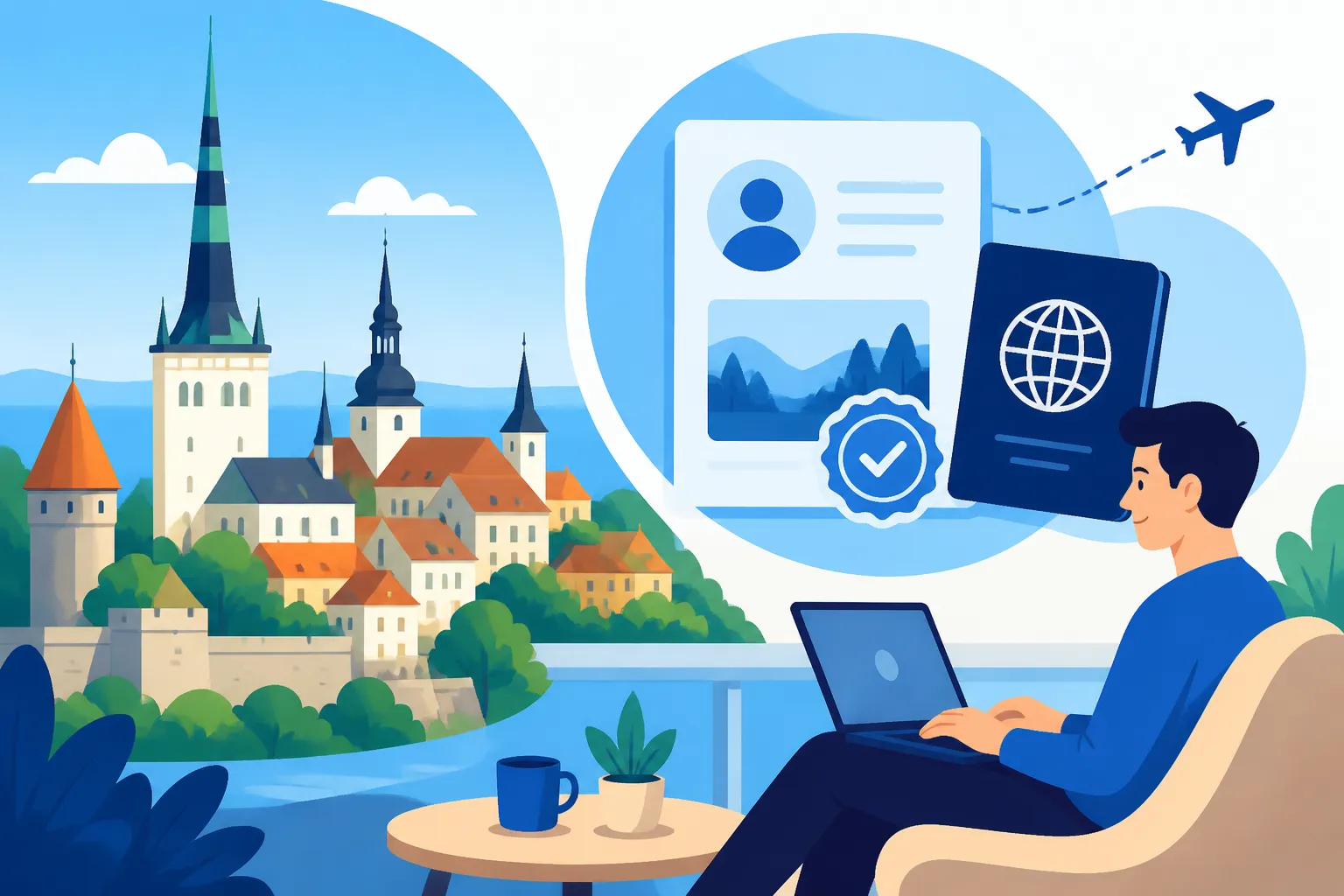
Moving to a new country and trying to figure out the visa labyrinth can feel like an Olympic sport, especially when you’re a remote worker yearning for a change of scenery. You’re sitting there, laptop open, dreaming of Baltic beaches or medieval old towns, only to be hit with a wall of immigration jargon and contradictory advice. This comprehensive guide is here to cut through the confusion and walk you, step-by-step, through the often-misunderstood process of securing Estonia’s Digital Nomad Visa (DNV), so you can truly embrace that remote work dream.
Understanding Estonia's Digital Nomad Visa: A Game-Changer for Remote Workers
Estonia has always been at the forefront of digital innovation, and it really solidified its reputation by being one of the first countries in the world to introduce a dedicated Digital Nomad Visa. For those of us who make our living untethered to a physical office, this initiative was nothing short of revolutionary. It offered a clear, legal pathway to live and work from within the EU, something many countries are still only contemplating.
What Exactly Is the DNV?
At its heart, the Estonian Digital Nomad Visa is a national long-stay D-visa designed specifically for individuals who can work independently of location. Unlike a tourist visa, which strictly prohibits employment, or a traditional work visa that ties you to a local employer, the DNV acknowledges the modern reality of remote work. It explicitly grants you the right to reside in Estonia for up to one year while continuing to work for your foreign clients or employer.
This isn't merely an extended tourist stay; it's a legitimate immigration status. It’s built on the understanding that your economic activity contributes to the global economy from Estonia, without directly competing in the local labour market in the traditional sense. Essentially, Estonia wants to welcome talented individuals who bring their skills and spending power without requiring local jobs. Think of it as an official invitation to come and experience Estonian life, with the full backing of a legal framework for your remote income.
Why Estonia? The Appeal for Digital Nomads
So, why Estonia? Well, beyond the pioneering spirit of the DNV itself, Estonia offers a unique blend of high-tech convenience and charming European life that truly appeals to remote workers. The country is famous for its digital society, meaning almost everything, from banking to government services, can be done online. This digital-first approach means less bureaucracy and more time for actual living, which is a huge draw for anyone who's ever battled with endless paperwork in other countries. You'll quickly discover how integral services like eesti.ee are to daily life.
Beyond the digital efficiency, Estonia boasts a vibrant startup scene, especially in Tallinn and Tartu, which fosters a dynamic and entrepreneurial environment. Co-working spaces are plentiful, and there's a strong expat community, making it easier to connect with like-minded individuals. The cost of living, while rising, remains generally more affordable than in many Western European capitals, particularly outside of central Tallinn. Plus, its strategic location in Northern Europe makes it an excellent base for exploring the Nordics and the Baltics, offering a fantastic balance of work, life, and travel opportunities.
The Legal Basis: What You Need to Know
The Digital Nomad Visa is regulated under Estonian law, specifically through amendments to the Aliens Act, which came into force in July 2020. It allows for the issuance of a D-visa (long-stay visa) with the explicit purpose of digital nomadism. This D-visa is initially granted for up to 365 days. It's crucial to understand that while it's often referred to as a "visa," it functions much like a temporary residence permit in terms of enabling a longer stay and requiring registration of your place of residence.
The DNV is distinct from e-Residency. While Estonia's e-Residency program allows you to run an EU-based business remotely, it does not grant you the right to reside in Estonia. The DNV, on the other hand, is all about physical presence. This distinction is vital for avoiding confusion and ensuring you apply for the correct legal status. The DNV ensures you are legally present in Estonia, allowing you to access various services, including registering your official place of residence, which is a critical step for many aspects of daily life, including healthcare.
Eligibility Requirements: Do You Qualify for the Estonian DNV?
Before you even think about filling out forms, you need to ensure you actually meet the core eligibility criteria for the Estonian Digital Nomad Visa. This isn't just a formality; these are strict requirements set by the Estonian Police and Border Guard Board (PPA), and they will scrutinize your application carefully. Missing any of these key points will likely result in a rejection, so pay close attention.
Income Thresholds and Proof of Funds
This is often the first hurdle for many applicants, and it's non-negotiable. To qualify for the Estonian DNV, you must demonstrate a monthly income of at least €3,500 gross for the six months preceding your application. This isn't a suggestion; it's a hard rule. The PPA needs to see consistent financial stability, proving that you can support yourself fully without becoming a burden on the Estonian state.
How do you prove this? You'll need to provide bank statements covering those six months, clearly showing incoming payments that meet or exceed this threshold. If you have multiple income sources, consolidate them or present clear evidence for each. Client contracts, invoices, and salary slips from your foreign employer can also bolster your case, providing context to the bank transactions. The key here is consistency and clarity. Don't just show one big payment; show a steady stream of income that reflects reliable remote work.
The "Remote Work" Definition: What Counts?
Estonia's DNV is designed for specific types of remote workers, and understanding this definition is paramount. You must be able to prove that you are:
- Working for an employer registered in a foreign country with whom you have an employment contract. This means your company is not based in Estonia.
- Conducting business through a company registered in a foreign country where you are a partner or shareholder, and you are operating remotely.
- Providing services as a freelancer or consultant to clients who are primarily outside of Estonia. This means you’re essentially self-employed and your client base is international.
What doesn't count? You cannot be working for an Estonian company or primarily serving Estonian clients. The spirit of the DNV is to bring in foreign income, not to fill local job positions or compete with local businesses. If you are considering How to Register as an FIE (Sole Proprietor) in Estonia or an OÜ, this would be a separate business visa route, not the DNV. Your work must be location-independent, meaning you can perform your duties from anywhere with an internet connection. This definition ensures the visa targets genuine digital nomads.
Health Insurance and Accommodation
These two points are critical for any long-term stay in a foreign country. Firstly, you absolutely must secure private health insurance that is valid for the entire duration of your planned stay in Estonia. This insurance needs to cover medical expenses, including inpatient and outpatient care, and ideally, emergency medical evacuation. The minimum coverage amount is usually specified by the PPA and should be clearly stated in your policy documents. This isn't just a recommendation; it's a mandatory document for your application. Many expats find reputable international providers like Cigna Global to be a solid choice, as they understand the specific needs and documentation requirements for visas like the DNV. Ensure your policy's terms and conditions explicitly state coverage in Estonia and meet the minimum requirements.
Secondly, while you don't necessarily need a long-term rental agreement before applying, you must have a credible plan for accommodation. This could be a booking for a short-term Airbnb, a hotel reservation for your initial weeks, or a letter of invitation from a resident in Estonia. The PPA wants to see that you have thought about where you will live upon arrival and won't be without shelter. Having a clear idea of your initial living arrangements also shows preparedness. If you're planning a full relocation, considering services like Sirelo for moving logistics can help you plan your accommodation, as they often have resources for finding rentals and understanding local housing markets. Just remember, once you arrive and find your permanent spot, registering your place of residence with the Population Register is a crucial follow-up step.
The Application Process: Step-by-Step for a Smooth Journey
Navigating any visa application can feel like a bureaucratic maze, and Estonia's Digital Nomad Visa, while straightforward in principle, still requires meticulous attention to detail. This isn't the time for shortcuts or assumptions; a methodical approach will save you countless headaches and potential delays. Let's break down the journey into manageable steps.
Gathering Your Essential Documents
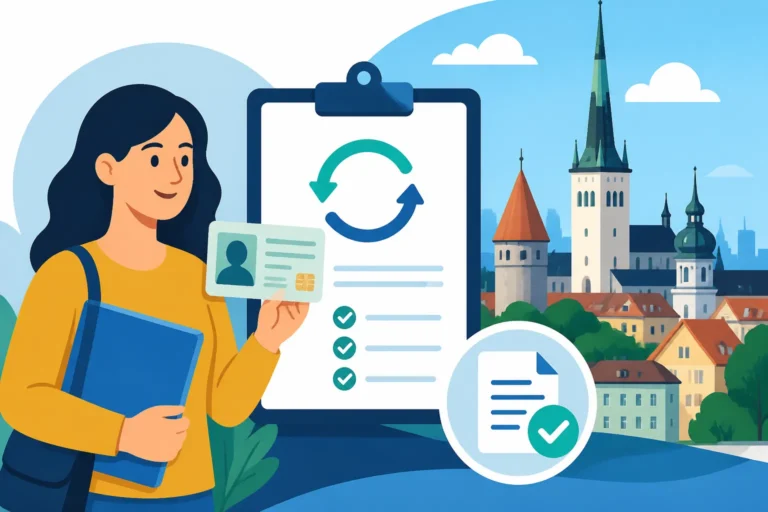
This is where the real work begins. The PPA requires a comprehensive set of documents to assess your eligibility. Think of this as building your case file, where every piece supports your claim to be a legitimate digital nomad. Here’s a typical checklist, though you should always consult the official PPA website for the most current requirements:
- Passport: Must be valid for at least three months beyond your intended departure date from Estonia and have at least two blank pages.
- D-visa application form: Filled out completely and accurately, either online or by hand.
- One passport-sized photo: Meeting Schengen visa photo specifications (recent, colour, plain background).
- Proof of financial means: As discussed, bank statements for the last six months, income statements, contracts, invoices showing your €3,500+ gross monthly income.
- Proof of remote work: Employment contract with a foreign company, business registration documents for your foreign company, or detailed freelancer contracts/portfolio with international clients. This is where you demonstrate your work meets the DNV definition.
- Travel health insurance policy: Valid for the entire duration of your stay, with sufficient coverage (typically €30,000 minimum).
- Proof of accommodation: Initial hotel booking, rental agreement, or letter of invitation.
- Flight reservation (optional but recommended): Shows your intended entry and exit dates.
- Curriculum Vitae (CV) or Resume: Detailing your professional experience and qualifications.
- Motivation letter (optional but recommended): Explain why you want to live and work in Estonia, and how you meet the DNV criteria.
- Criminal record check: From your country of origin and any country you’ve resided in for over two years in the past decade. This helps ensure you meet security requirements.
Organize these documents clearly, making copies of everything, and ensure they are translated into English or Estonian by a sworn translator if they are in another language.
Submitting Your Application: Where and How
Once your document pile is perfectly stacked, it’s time to submit. For the Estonian Digital Nomad Visa, you generally have two main avenues:
- Estonian Embassy or Consulate Abroad: If you are applying from outside Estonia, you will typically submit your application at the nearest Estonian embassy or consulate in your country of residence. You’ll usually need to book an appointment in advance. This is the most common route for those starting their DNV journey.
- Police and Border Guard Board (PPA) in Estonia: In some specific cases, if you are already legally present in Estonia (e.g., on a different valid visa or as an EU citizen who needs to convert to a DNV for tax residency purposes), you might be able to apply directly at a PPA service point. However, for most initial DNV applicants, the embassy route is the standard. You can book an appointment at the PPA service points online, but always double-check eligibility for in-country applications.
The application fee for the DNV is a state fee that needs to be paid at the time of submission. Be prepared for potential waiting times for appointments, especially at popular embassies. Early planning is always key.
The Interview Process and Biometrics
After submitting your application, you may be invited for an interview. This is a standard part of the process, designed to clarify any ambiguities in your application and verify your intentions. Don’t be nervous; approach it as a conversation. The interviewing officer will likely ask about your remote work, your income sources, your plans for living in Estonia, and how you intend to support yourself.
They might inquire about your professional background, your specific clients, or the nature of your foreign company. Be honest, confident, and have a clear understanding of your application details. This is your chance to articulate why you are a perfect fit for the DNV program. For instance, if you are a freelancer, be ready to discuss your specific services and how you secure international clients.
During this appointment, or a separate one, you will also have your biometrics taken. This typically involves fingerprinting and a digital photograph. These biometrics are crucial for security purposes and will be linked to your visa and future residence card if your application is successful. Ensure you follow all instructions carefully, as this step is mandatory for completing your application.
Digital Nomad Visa Application Checklist
| Document Category | Specific Item | Notes |
|---|---|---|
| Personal Identity | Valid Passport | 3+ months validity beyond stay, 2+ blank pages |
| Passport-sized Photo | Recent, colour, Schengen standard | |
| Application Forms | D-visa Application Form | Fully completed and signed |
| Financial Proof | Bank Statements (6 months) | Showing consistent income ≥ €3,500 gross/month |
| Income Statements/Contracts | Supplementary proof of income sources (e.g., salary slips, client invoices) | |
| Remote Work Proof | Employment Contract (foreign employer) | Or foreign company registration documents (if self-employed/partner) |
| Client Contracts/Portfolio (if freelancer) | Demonstrating international client base, scope of work | |
| Insurance | Travel Health Insurance Policy | Valid for entire stay, €30,000+ coverage, proof for Estonia |
| Accommodation | Proof of Accommodation (initial) | Hotel booking, rental agreement, letter of invitation |
| Background Checks | Criminal Record Check(s) | From home country and any country of residence >2 years in last decade |
| Professional/Other | Curriculum Vitae (CV) / Resume | Detailing professional history |
| (Optional/Recommended) | Motivation Letter | Explaining intentions, suitability for DNV |
| (Optional/Recommended) | Flight Reservations | Showing planned entry/exit dates |
Proof of Remote Work and Financial Stability: The Nitty-Gritty Details
This section is where many DNV applications live or die. It’s not enough to simply say you’re a digital nomad; you have to prove it, convincingly and with undeniable documentation. The Estonian PPA is looking for clear evidence that your work is genuinely remote, your income is sufficient and stable, and that your economic ties are primarily outside of Estonia. This requires more than just a casual statement; it demands a robust portfolio of financial and contractual proof.
For Employees of Foreign Companies
If you are employed by a company registered outside of Estonia, your proof of remote work and financial stability will revolve around your employment relationship and consistent salary. Here’s what you’ll typically need to provide:
- Employment Contract: A legally binding contract with your foreign employer, clearly stating your position, responsibilities, and crucially, a clause (or implicit understanding) that allows for remote work. The contract should also specify your gross salary.
- Company Registration Documents: Evidence that your employer is a legitimate, registered entity in a foreign country. This shows that your employer is not an Estonian company.
- Letter from Employer: A formal letter from your employer, on company letterhead, confirming your employment, your salary, your remote work status, and that your work is not tied to a specific location (or at least not Estonia). This letter should be signed and dated.
- Salary Slips/Pay Stubs: Consistent salary slips for the past six months, matching the income threshold. These provide a direct link between your employment contract and the funds appearing in your bank statements.
- Bank Statements: As mentioned, these are paramount. They must clearly show your salary being deposited consistently over the required six-month period, demonstrating that your income meets or exceeds the €3,500 gross monthly minimum.
The PPA is looking for a cohesive story: your contract permits remote work, your employer confirms it, and your bank statements show you’re being paid for it, consistently. Any discrepancies or missing links here can raise red flags.
For Freelancers and Self-Employed Individuals
This category often requires a bit more nuance, as your income streams might be more varied. However, the core principle remains the same: demonstrate consistent remote work and financial stability from international sources.
- Client Contracts/Service Agreements: Provide contracts with your foreign clients. These should outline the services you provide, the duration, and the payment terms. Multiple contracts with different clients over the six-month period are ideal, showcasing a diverse and stable client base.
- Invoices: Copies of invoices issued to your foreign clients for services rendered over the past six months, clearly showing the amounts charged and the services provided.
- Bank Statements: Your bank statements are critical here. They must clearly reflect the payments from your foreign clients, correlating with your invoices, and consistently demonstrating that your gross monthly income reaches the €3,500 threshold. It’s important that these payments are from foreign entities.
- Proof of Company Registration (if applicable): If you operate through your own foreign-registered company (e.g., an LLC in your home country), provide its registration documents. This substantiates your self-employed status and that your business is based outside Estonia. If you are exploring options for registering a business in Estonia later, remember that this would entail a different type of visa, as per How to Register as an FIE (Sole Proprietor) in Estonia.
- Portfolio/Website: While not a strictly legal document, a professional portfolio or website showcasing your work and clients can provide excellent supplementary evidence of your legitimate freelance activities.
- Letters of Recommendation/Testimonials: From foreign clients, attesting to your services and the remote nature of your engagement.
For freelancers, the PPA is looking for a clear pattern of legitimate business activity with foreign clients, generating a consistent income that meets the threshold.
Demonstrating Sufficient Financial Means
Beyond simply hitting the €3,500 monthly gross income threshold, the PPA wants to be confident in your overall financial stability. This isn't just about your earnings; it's about your ability to live comfortably in Estonia without needing public assistance.
- Savings: While not explicitly a requirement if your income is consistent, having a healthy savings account balance can add an extra layer of reassurance to your application. This shows you have a buffer in case of unexpected expenses or a temporary dip in income.
- Consistency is Key: The most important aspect is the consistency of your income over the six-month period. A sudden, large deposit in the last month might be viewed with skepticism if it doesn't align with previous months. The PPA wants to see a steady, reliable flow of funds.
- Source of Funds: Be prepared to explain the source of any significant or unusual deposits. Transparency is vital. The funds must be legitimately earned through your remote work.
- Acceptable Accounts: Generally, personal bank accounts from reputable financial institutions are acceptable. If you use business accounts for your freelance income, ensure you can clearly demonstrate the transfer of funds to your personal account for living expenses, or use business statements if they clearly show your personal drawings/salary.
Remember, the goal is to paint a clear, honest, and robust financial picture that leaves no doubt about your capacity to thrive as a digital nomad in Estonia.
Life After Approval: What to Do Once You Have Your DNV
Congratulations, your Estonian Digital Nomad Visa has been approved! This is a fantastic achievement, but it's not the end of the administrative journey. Once you arrive in Estonia, there are a few crucial steps you need to take to fully integrate and ensure you remain compliant with local regulations. These initial steps are vital for unlocking all that Estonian life has to offer.
Registering Your Place of Residence
This is hands down one of the most important administrative tasks you need to complete after arriving in Estonia. While your D-visa grants you the right to reside, you must formally register your actual place of residence in the Estonian Population Register within one month of your arrival. This might seem like an extra step, but it’s foundational for everything else. Without a registered address, you can’t get your official Isikukood (personal identification code), which is the key to accessing nearly all public and private services.
To register your residence, you'll need your rental agreement (or proof of ownership if you bought property) and your passport. You can do this at your local municipal government office (e.g., Tallinn City Office or Tartu City Government). The process is relatively simple, but it's essential to get it done promptly. Once registered, you will be able to apply for your Isikukood, which is not only essential for How to Get Your Isikukood (Personal Code) and Why It Matters for Healthcare but also for things like setting up utilities, opening a local bank account, and even getting a public transport card. For a deeper dive into this, check out our guide on Registering Your Place of Residence in Estonia: The Complete Guide.
Navigating Healthcare in Estonia
As a DNV holder, you are responsible for your own healthcare. The Estonian public health insurance system (Tervisekassa) is primarily for those who pay social tax in Estonia, which, as a digital nomad working for foreign entities, you generally won't be doing automatically. Therefore, the private health insurance you secured for your visa application is your primary coverage. It’s imperative that this policy remains active and covers you adequately for your entire stay.
However, it's wise to understand the local healthcare landscape. While you'll rely on private insurance, knowing how to access emergency services (dialing 112) or how private clinics operate is important. You can visit private clinics directly, paying out of pocket and then seeking reimbursement from your private insurer. If you happen to be in Estonia for an extended period and later find employment with an Estonian company or establish an FIE that pays sufficient social tax, you might become eligible for public healthcare. For a comprehensive overview, refer to The Complete Guide to Healthcare in Estonia for Expats (2027) and Health Insurance in Estonia: Mandatory, Private and Travel Options Explained.
Understanding Taxes for Digital Nomads
This is where things can get a bit complex, and it’s crucial not to make assumptions. Your tax obligations in Estonia depend heavily on your tax residency status. While the DNV allows you to reside in Estonia, it doesn't automatically make you a tax resident.
Generally, if you spend more than 183 days in Estonia within a 12-month period, you are likely to become an Estonian tax resident. If this happens, your worldwide income (including your remote earnings) may become taxable in Estonia. However, Estonia has a flat income tax rate and often has double taxation agreements with other countries, which can prevent you from being taxed twice on the same income.
It is highly recommended to consult with a local tax advisor specializing in expat taxation soon after your arrival, especially if you anticipate becoming a tax resident. They can help you understand your specific obligations, how to report your foreign income, and how to utilize any double taxation treaties. Misunderstanding tax residency rules can lead to significant headaches down the line. Our guide on Tax Residency in Estonia: A Definitive Guide for Expats (2027) provides a deeper dive into this intricate topic, which differs significantly from understanding How Does Social Tax Give Me Health Insurance in Estonia?, as social tax usually applies to local employment.
Extending and Renewing Your Digital Nomad Visa
The Estonian Digital Nomad Visa is typically issued for a maximum of one year. As your time in Estonia approaches its end, you might find yourself wanting to prolong your adventure or even make a more permanent move. Fortunately, Estonia offers options, but they require foresight, planning, and meeting specific criteria. Don't wait until the last minute to consider your next steps.
Eligibility for Extension
The D-visa (which the Digital Nomad Visa is) is generally a one-time visa and is usually not directly extendable as another D-visa for the same purpose. This means you cannot simply apply for another DNV after your current one expires. However, if you wish to stay in Estonia for a longer period, your pathway would typically be to apply for a temporary residence permit (TRP).
To be eligible to transition from a DNV to a temporary residence permit, you would generally need to demonstrate a new purpose for your stay that aligns with TRP categories, such as:
- Working for an Estonian employer: If you've found a job with a local company.
- Business or Entrepreneurship: If you decide to establish your own company in Estonia and meet the relevant criteria for a business residence permit.
- Studying: If you enroll in an Estonian educational institution.
- Family Reunification: If you have family ties in Estonia.
The key is that the purpose of your stay must change to fit one of the available temporary residence permit categories. Simply continuing as a digital nomad under the same foreign employer/client arrangements may not qualify you for a TRP. Always verify the latest requirements on the PPA website. For a more detailed look at the different options, refer to How to Apply for a Temporary Residence Permit in Estonia.
The Renewal Process
Since the DNV itself isn't typically "renewed" in the traditional sense for the same purpose, the discussion shifts to applying for a new type of residence permit. The process for applying for a temporary residence permit in Estonia involves:
- Identifying the correct category: Based on your new purpose of stay (work, business, study, etc.).
- Gathering new documents: The document requirements will differ significantly from your DNV application, tailored to the chosen TRP category. This will include new proof of income (if applicable), contracts, education certificates, and potentially different health insurance requirements (as an employee, you might become eligible for Tervisekassa).
- Submitting your application: This is usually done at a PPA service point in Estonia, where you’ll need to book an appointment.
- Paying the state fee: The fee for residence permits can be different from the D-visa.
- Biometrics and Interview: You may need to provide biometrics again and attend an interview.
It is critical to start this process well in advance of your DNV expiration. Processing times can vary, and you do not want to find yourself without a valid legal basis to stay in Estonia. The PPA recommends starting the application for a residence permit several months before your D-visa expires.
Pathways Beyond the DNV
The Digital Nomad Visa can be a fantastic stepping stone. Many digital nomads use their year in Estonia to explore opportunities and decide if they want to put down more permanent roots. Here are some common pathways:
- Work-Based Residence Permit: If you connect with an Estonian company and secure employment, you can apply for a residence permit for employment. This will involve your employer sponsoring your permit.
- Business/Startup Residence Permit: Estonia is very friendly to entrepreneurs. If you decide to launch a startup or establish a company (like an OÜ) in Estonia, there are specific residence permits for entrepreneurs and startup founders. This often requires a business plan and demonstrating the viability of your venture.
- Study Residence Permit: If you fall in love with Estonian academia, applying for a student residence permit could be your next step.
- Long-Term Resident (EU) Status: After living in Estonia legally and continuously for five years on a temporary residence permit, you might become eligible to apply for Long-Term Residence in Estonia: The Complete Pathway (EU status), which offers greater stability and rights. This is a significant step towards more permanent integration.
The DNV provides a fantastic opportunity to experience Estonia firsthand and then make informed decisions about your future. For a broader understanding of all residence options, consult The Complete Guide to Estonian Residence Permits for Expats (2027).
Common Challenges and How to Overcome Them
While Estonia is remarkably digitally advanced and generally welcoming, no move abroad is without its bumps. There are common frustrations digital nomads face. Knowing them beforehand and having strategies to overcome them can make your transition infinitely smoother.
Language Barriers and Bureaucracy
Even in a country as digitized as Estonia, language can still be a hurdle. While many Estonians, especially in Tallinn and Tartu, speak excellent English, particularly the younger generation and those in customer service, it's not universally true. Older generations or those in more rural areas might have limited English, and official government documents, while often available in English, sometimes require navigating Estonian interfaces.
- Learning Estonian: Even a few basic phrases can go a long way. It shows respect and can genuinely help in daily interactions. There are many online resources and local language courses available.
- Google Translate: A reliable companion for street signs, menus, and basic conversations.
- PPA and Service Points: When dealing with official bodies like the PPA, ensure you book appointments at locations known to have English-speaking staff, or bring a friend who speaks Estonian. Be patient, bring all your documents (and copies!), and don't be afraid to ask for clarification. Remember, they deal with many foreigners, but sometimes the process can feel rigid.
- Online Services: Leverage eesti.ee for everything you can. It's often the most efficient way to interact with public services and minimizes direct verbal interaction challenges.
The bureaucracy, though digital, can still be a bit rigid compared to what you might be used to. Forms must be filled precisely, and requirements must be met exactly. Don't assume; always double-check official sources or seek professional advice if unsure.
Finding Accommodation and Settling In
Finding a good place to live and truly settling into your new surroundings can take time and effort. While Tallinn and Tartu have plenty of options, finding the right one for you can be a journey.
- Initial Accommodation: Plan for short-term accommodation (Airbnb, hotel, serviced apartment) for your first few weeks. This gives you a base to operate from while you search for a long-term rental in person.
- Rental Market: The rental market, especially in Tallinn, can be competitive. Be prepared for landlords asking for a deposit (usually one month's rent) and the first month's rent upfront. Often, you'll need a signed rental agreement to register your place of residence. If you're struggling, consider engaging with reputable local real estate agents. Our guide The Expat Guide to Setting Up Utilities in Estonia will be invaluable once you have your place.
- Utilities: Setting up utilities like electricity, internet, and heating might seem daunting, but it’s often tied to your rental agreement or apartment association. Get clarity from your landlord or agent.
- Moving Logistics: If you're bringing a lot of belongings, research international moving companies well in advance. Services like Sirelo can help with quotes and finding reliable movers to or from Estonia, ensuring your possessions arrive safely.
The first few months will be a whirlwind of administrative tasks and adjustments. For a detailed roadmap on what to expect, refer to The Complete Guide to Moving to Estonia: Your First 90 Days (2027).
Building a Community and Networking
As a digital nomad, it’s easy to stay in your bubble, but connecting with others is crucial for mental well-being and professional growth.
- Expat Groups: Join expat groups on social media (Facebook is very active for expats in Tallinn and Tartu). These groups are fantastic for asking questions, getting recommendations, and finding social events.
- Co-working Spaces: These are not just for work; they are hubs for networking. Places like Lift99, Ülemiste City hubs, or SPARK Demo in Tartu are full of like-minded individuals, many of whom are also international.
- Meetup.com and Eventbrite: Check these platforms for professional meetups, language exchange groups, and social events in your city.
- Local Activities: Embrace local culture! Join a sports club, take an art class, or participate in local festivals. It’s a great way to meet Estonians and learn about the culture firsthand.
Estonia offers a welcoming environment for digital nomads, but like any new chapter, it requires proactive engagement. By preparing for the common challenges, you can truly make the most of your time in this innovative Baltic nation.
Disclaimer
Please note that the information provided in this guide is intended for general informational purposes only and does not constitute legal, financial, or immigration advice. Visa regulations, eligibility criteria, and administrative processes in Estonia can change. While every effort has been made to ensure accuracy and reflect the situation for 2026, readers are strongly advised to consult the official website of the Estonian Police and Border Guard Board (PPA) or seek professional legal/immigration counsel for the most current and personalized information before making any decisions related to their Digital Nomad Visa application or stay in Estonia.