How Do I Exchange My UK Driving Licence in Estonia?
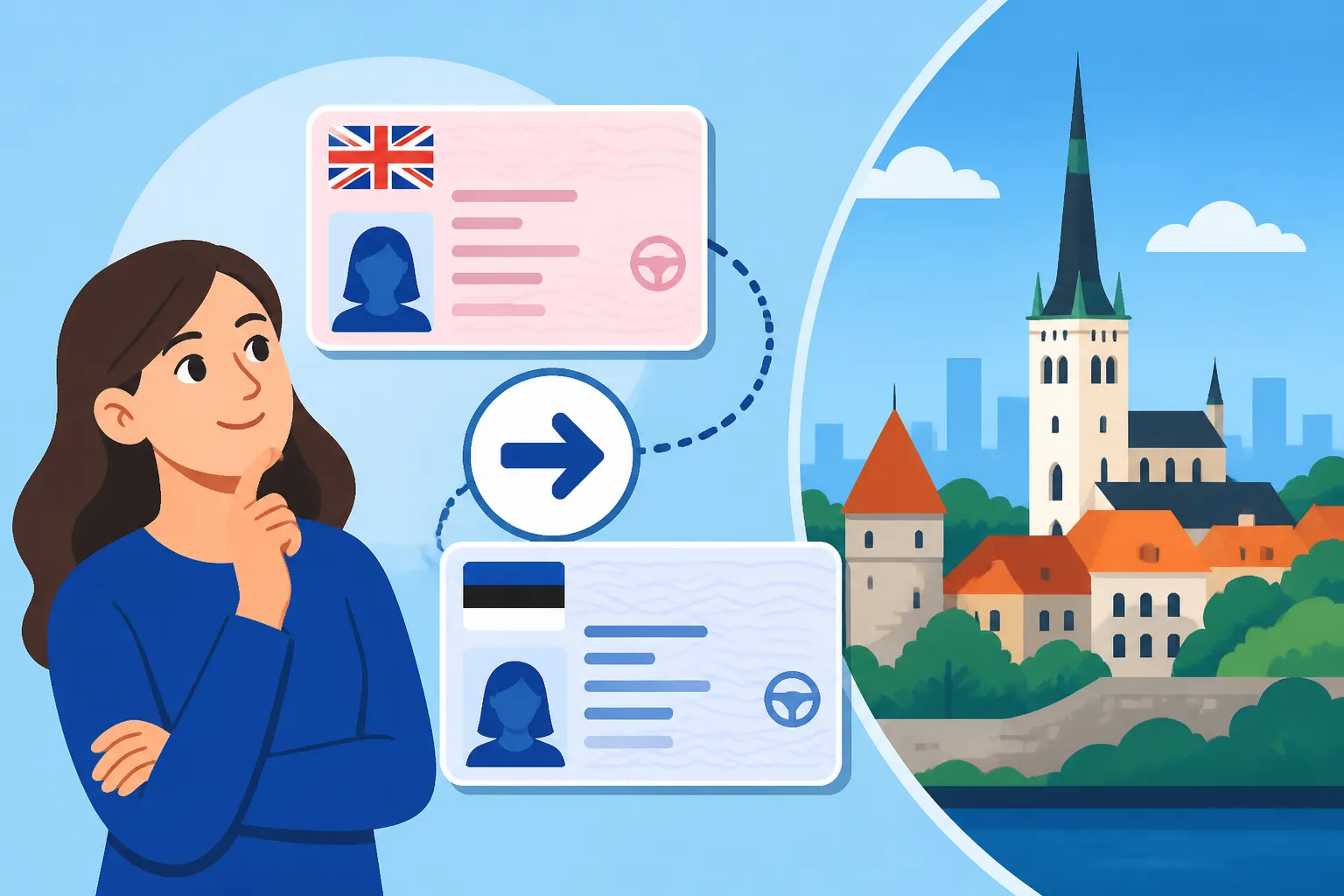
Oh, the infamous UK driving licence exchange! If you're fresh off the boat from the UK, or even if you've been here a little while, you've likely felt that familiar dread creeping in about this particular administrative hurdle. Post-Brexit, the rules have shifted, turning what used to be a fairly straightforward situation into a slightly more complex, but still manageable, process. This guide is here to untangle that knot, walking you through every single step to get your beloved UK driving licence exchanged for an Estonian one, sparing you the frustration of endless website digging and confused glances at government portals.
The Post-Brexit Reality for UK Driving Licences in Estonia
Let's start with the elephant in the room: Brexit. For years, UK driving licences were treated just like any other EU licence, meaning seamless recognition and no need for exchange if you were an expat. You simply kept your UK licence and drove happily ever after. Ah, those were the days!
Initial Period of Validity
However, since the UK left the European Union, its driving licences are now considered "third-country" licences in Estonia. What this means for you, dear expat, is that your UK driving licence is only valid for 12 months from the date you register your official place of residence in Estonia. That's a hard and fast rule. So, if you've just moved here, or recently registered your address, that clock is ticking.
Imagine you arrived in Tallinn last September, got your Isikukood (Personal Code) sorted, and registered your address at the local omavalitsus. From that day, you had exactly one year to get your UK licence exchanged. Beyond that 12-month mark, your UK licence legally becomes invalid for driving in Estonia, even if it's still perfectly valid back in the UK. This is crucial to understand because driving without a valid licence, or with one that has expired for use in Estonia, can lead to fines, insurance issues, and a whole heap of unnecessary stress. You absolutely do not want to be caught in a situation where you've had an accident and your insurance company points to an invalid licence.
Why Exchange is Now Essential
Beyond the legal requirement, exchanging your UK licence offers several practical benefits. Firstly, it eliminates any confusion during traffic stops. While most police officers are aware of the post-Brexit rules, having an Estonian licence simplifies things considerably. You won't have to explain the nuances of your UK document or potentially face scrutiny.
Secondly, an Estonian driving licence integrates you more fully into the local system. It becomes another official document that ties you to your new home. For instance, while often not strictly required, having an Estonian licence can sometimes simplify identity verification in certain situations, although your residence permit and ID card usually suffice. However, the primary, overriding reason for the exchange is quite simply that after that initial 12-month grace period, your UK licence is no longer a legal document for operating a vehicle on Estonian roads. It's not optional anymore; it's a necessity for anyone planning to drive long-term in Estonia.
Eligibility and Requirements for Exchange
So, you've accepted the reality check. Now, who exactly can exchange their UK licence, and what do you need to gather? This isn't a simple swap-shop operation; there are specific hoops to jump through, but none are insurmountable.
Who is Eligible to Exchange
First and foremost, you must be a permanent resident in Estonia. This means you need to have a valid Estonian residence permit. If you're an EU citizen, you'll need to have registered your right of residence. If you're coming from outside the EU, you'll have obtained a The Complete Guide to Estonian Residence Permits for Expats (2027) that grants you the right to reside here for an extended period. This is not for tourists or temporary visitors; it's for those making Estonia their home. You also need to meet the minimum age requirements for the driving categories you wish to have on your Estonian licence (e.g., 18 for category B).
Secondly, you need to prove that you have been a resident in Estonia for at least 185 days in the last 12-month period. This is the standard EU rule to prevent "licence tourism," where people might try to get a licence in an easier country. The Transport Administration (Transpordiamet) will verify your residency status through the Population Register. If you've been working here and paying taxes, or studying, you'll generally meet this requirement. Don't stress too much about calculating it yourself; the system usually handles this in the background, but it's important to be aware of the underlying principle.
Essential Documents Checklist
Alright, time to get organised! Gathering all the necessary paperwork before your appointment will save you a world of pain and potential second trips. Here's what you'll typically need:
- Your existing UK Driving Licence: This is paramount. They'll need to see the original.
- Your Estonian ID Card / Residence Permit: This proves your identity and residency status.
- Proof of your registered place of residence: While your ID card often serves this purpose, sometimes they might ask for additional confirmation from the Population Register. Usually, the Transport Administration can access this electronically. You can also refer to our guide on Registering Your Place of Residence in Estonia: The Complete Guide for more details on this process.
- A valid medical certificate (Tervisetõend): This is perhaps the most crucial and often overlooked document. More on this below!
- Application Form: You'll fill this out either online beforehand or at the service point.
- A recent passport-style photo: Although often taken digitally at the service point, it's always wise to have one ready just in case.
- Proof of payment for the state fee: You can usually pay this on-site with a card, but having proof of payment if you paid online can be helpful.
The All-Important Medical Certificate
This is where many expats hit their first real administrative snag, mainly because it's a separate process and requires a visit to a medical professional. You need a valid medical certificate (tervisetõend) issued by an Estonian doctor, confirming you are medically fit to drive.
The process usually goes like this:
- Find a Family Doctor (Perearst): If you haven't already, you'll need to be registered with a family doctor in Estonia. This is a crucial step for accessing The Expat Guide to Finding a Family Doctor (Perearst) in Estonia and general healthcare. If you're new here, our guide on How to Choose and Register with a Family Doctor (Perearst) in Estonia can walk you through it.
- Book an Appointment: Contact your perearstikeskus (family doctor's centre) and specifically ask for a "tervisetõend for driving licence" (juhiloa tervisetõend).
- The Medical Check-up: The doctor will likely ask you about your general health, vision, hearing, any existing medical conditions, and medications. They might conduct a basic physical examination. It's usually quite straightforward unless you have complex medical history.
- Digital Certificate: In Estonia's wonderfully digitalised system, your doctor will usually issue this certificate electronically. It will be recorded in your Navigating Estonia's Digital Healthcare System: An Expat's Roadmap (2027), meaning the Transport Administration can often access it directly once it's issued. You don't usually receive a paper copy, which can feel odd if you're used to physical documents, but rest assured, it's there in the system. Just make sure your doctor confirms it's been uploaded and is valid for driving purposes.
This certificate is valid for a certain period, usually 5 or 10 years, depending on your age and health status. Ensure it is current when you apply for the licence exchange.
The Step-by-Step Exchange Process at the Transport Administration
Once you've got your medical certificate sorted and your documents in order, it's time to face the Transport Administration (Transpordiamet). While it might sound daunting, their processes are generally quite efficient.
Booking Your Appointment
Firstly, I highly recommend booking an appointment online. Trust me, just walk-in if you enjoy waiting for hours, but an appointment is the civilised way to do it.
- Visit the Transport Administration Website: Head over to the official Transpordiamet website (transpordiamet.ee). Look for services related to driving licences.
- Navigate to Booking: Find the section for booking an appointment (usually under "Broneeri aeg" or "Registreeri").
- Choose a Service Point: You'll select your preferred service point. Tallinn has a few, but the main one in Maanteeamet, the previous name, at Mäepealse 19/2 is a popular choice. In Tartu, the office is also quite central.
- Select Service and Time: Choose the service for "driving licence exchange" or "juhilubade vahetus" and pick a suitable date and time.
- Confirm Details: You'll need your ID details, and sometimes your Isikukood, to confirm the booking. You'll usually receive a confirmation email or SMS.
It's a good idea to check out the Understanding eesti.ee and Digital Government Services in Estonia guide if you're struggling with online government services, as the principles often overlap.
Navigating the Application
When your appointment day arrives, head to the chosen service point a few minutes early.
- Check-in: Upon arrival, you might need to check in at a self-service kiosk to get a queue number for your appointment time.
- Your Turn: When your number is called, approach the counter. The official will greet you (often in English, especially in Tallinn, but don't assume!).
- Document Submission: Present all your documents: your UK driving licence, Estonian ID/residence permit, and tell them you've got your medical certificate in the system. They will verify your residency in the Population Register.
- Application Form: You'll either have filled this out online or you'll do it there. It's quite straightforward, asking for personal details and confirmation of your driving categories.
- Photo and Signature: They will usually take your photo digitally right there at the counter and ask for your digital signature. This is why having a recent passport photo ready as a backup isn't a bad idea, but often not strictly necessary.
- State Fee Payment: You'll pay the state fee for the new licence. This is typically done via card at the counter.
Sometimes, the language barrier can be a bit of a challenge, especially outside of Tallinn. While many officials speak English, it's not guaranteed. If you're not confident in Estonian, consider bringing a friend who can help translate, or have Google Translate ready on your phone. Having a reliable data connection, perhaps with an eSIM from a provider like Airalo, can be a lifesaver when trying to access online portals or confirm appointments on the go, or even for quick translation.
The Waiting Game and Collection
Once you've submitted everything and paid the fee, the official will process your application.
- Temporary Driving Right (optional): In some cases, if there's a delay, they might issue you a temporary document confirming your right to drive. However, with the digital system, it's often not needed.
- Processing Time: The new Estonian driving licence isn't issued on the spot. It usually takes around 10 working days for it to be produced and delivered.
- Collection: You'll typically collect your new licence from the same service point where you applied. They will notify you when it's ready, usually via SMS. Just bring your Estonian ID card/residence permit for collection.
When you collect your new Estonian licence, the Transport Administration will usually retain your UK driving licence. They are obliged to send it back to the issuing authority in the UK (the DVLA). So, don't expect to keep both! This is standard procedure to ensure you only hold one EU/EEA-area licence at a time.
Important Considerations and Common Pitfalls
Navigating bureaucracy as an expat is rarely completely smooth sailing. Here are some extra tips and things to watch out for.
Costs Involved
The exchange isn't free, but the costs are relatively minor in the grand scheme of things.
- State Fee for Driving Licence: This is the fee charged by the Transport Administration for issuing your new licence. As of my last check, it's typically around €26. You can usually pay this by card at the service point.
- Medical Certificate (Tervisetõend): The cost for this varies by medical centre and whether you are registered with them. Expect to pay anywhere from €15 to €40. If you're registered with a family doctor, it might be cheaper or even included in some cases, but generally, there's a fee for this specific certificate.
- Translation Costs (Rare): In very rare cases, if your UK licence has unusual endorsements or annotations that aren't clear, you might be asked for a sworn translation. However, for standard UK licences, this is almost never required.
Driving Categories and Endorsements
When your UK licence is exchanged, your new Estonian licence will reflect the equivalent driving categories. For most people, this means Category B (for cars) will transfer seamlessly.
- Motorcycles, Lorries, Buses: If you hold other categories (A for motorcycles, C for lorries, D for buses), these should also transfer over, provided they are clearly indicated on your UK licence and you meet the Estonian age requirements for those categories.
- Endorsements: Any special endorsements or restrictions (e.g., driving with corrective lenses) will also be transferred to your Estonian licence. Make sure to double-check your new licence for accuracy upon collection.
- Trailer Entitlements: Post-1997 UK drivers might have acquired Category B (car) but needed separate tests for trailers (B+E). Estonian licences are generally more straightforward with B usually encompassing light trailers. Clarify this at the Transport Administration if you frequently tow heavier trailers, as rules can differ slightly.
What Happens to Your UK Licence
As mentioned, your original UK licence will be confiscated by the Transport Administration and sent back to the DVLA in the UK. This is part of international agreements to prevent individuals from holding multiple licences from different countries within the EU/EEA area. So, make sure you take a photo or scan of your UK licence for your records before handing it over if you want to keep a copy of your old one.
The Language Barrier
Estonia is increasingly English-friendly, especially in Tallinn and Tartu. Many officials at the Transport Administration will speak English, particularly the younger staff. However, don't expect it in every corner of the country or from every single person.
- Be Prepared: Learn a few key Estonian phrases related to driving licences ("juhiluba," "vahetus" – exchange, "tervisetõend").
- Translate Apps: Have Google Translate or a similar app ready on your phone.
- Bring a Friend: If you're particularly worried, ask an Estonian-speaking friend to accompany you. This can make the process much smoother and less stressful.
- Online Resources: Utilise online resources and guides like this one to understand the process beforehand, so you know what to expect and what questions to ask. When you're dealing with moving across borders, it helps to have all your ducks in a row. Services like Sirelo often provide guides for various aspects of international relocation, which can be useful for broader planning, though specific licence rules will always be country-specific.
A Small Table of Documents for Quick Reference
| Document | Purpose | Where to Get It / What to Do | Notes |
|---|---|---|---|
| UK Driving Licence | Proof of existing driving entitlement | Your current licence | Original required, will be sent to DVLA |
| Estonian ID Card/Residence Permit | Proof of identity and residency | PPA (Police and Border Guard Board) | Must be valid |
| Medical Certificate (Tervisetõend) | Proof of medical fitness to drive | Your Estonian Family Doctor (Perearst) | Electronically issued, valid for 5-10 years |
| Proof of Residence | Confirmation of 185+ days residency in Estonia | Population Register (often verified automatically) | Ensure your address is registered |
| State Fee Payment | Fee for issuing new licence | Transport Administration service point | Approx. €26, usually payable by card |
| Application Form | Official request for exchange | Online or at service point | Fill out accurately |
| Passport-style Photo (optional) | For the new licence | Taken digitally at service point, or bring one | Backup if digital capture fails |
Don't let this process intimidate you. While it requires a few specific steps, it's a routine procedure for the Transport Administration. The key is to gather your documents diligently, especially that all-important medical certificate, and book your appointment. Soon enough, you'll be zipping around Estonia with a shiny new Estonian driving licence, feeling even more settled in your new home. For a broader overview of vehicle regulations, check out our guide on Driving in Estonia: Licences, Registration and Rules for Expats (2027).
Disclaimer
Please note that while every effort has been made to provide accurate and up-to-date information, regulations regarding driving licences and residency can change. This guide is for informational purposes only and does not constitute legal advice. Always consult the official Estonian Transport Administration (Transpordiamet) website or a legal professional for the most current and specific guidance pertaining to your individual situation.