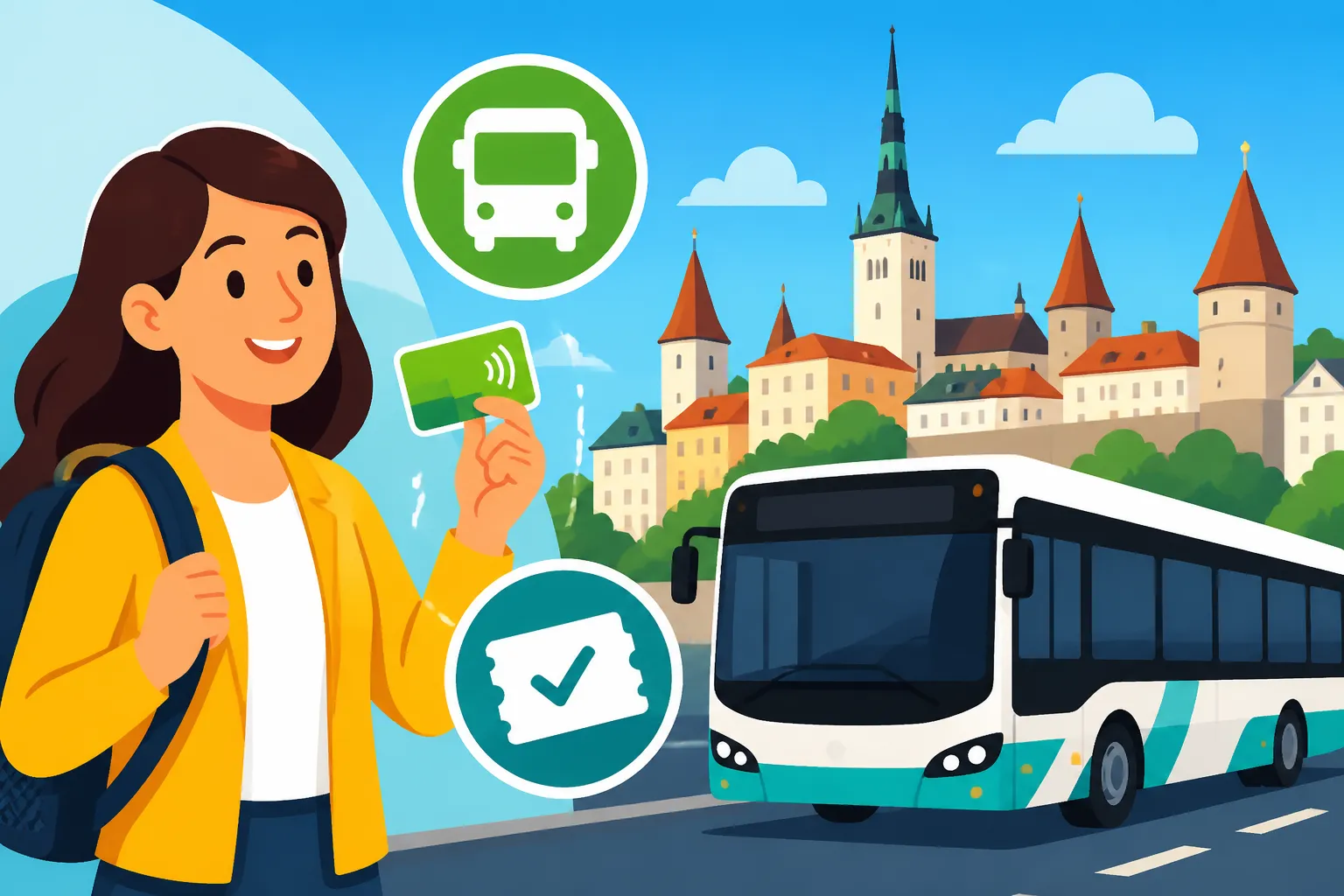
How to Use the Public Transport System and Free Travel in Tallinn
Stepping into a new city, especially one as digitally advanced and yet charmingly traditional as Estonia's capital, Tallinn, can feel a bit like learning a whole new dance. One of the biggest hurdles many of us expats face right off the bat is figuring out how to get around without constantly shelling out for taxis. Thankfully, Tallinn boasts an efficient public transport system, and for those who make it their home, a truly unique perk: free travel. This guide will walk you through everything you need to know, from getting your first public transport card to confidently navigating the city's bus, tram, and trolleybus lines, ensuring you become a seasoned local in no time.
Getting Started with Public Transport in Tallinn
When you first arrive in Tallinn, the public transport system might seem a little daunting with its specific rules and the language barrier. But trust me, once you get the hang of it, it’s incredibly straightforward and cost-effective, especially if you plan to become a resident. The key to unlocking this system is understanding the ubiquitous Ühiskaart, or Public Transport Card.
The Ühiskaart Public Transport Card – Your Best Friend
The Ühiskaart is your gateway to Tallinn’s public transport. It’s a green plastic card, roughly the size of a credit card, and it's essential for anyone using the system, whether you're paying for single journeys or taking advantage of free travel as a resident. Think of it as your personal key to the city's mobility. You can purchase an Ühiskaart at various convenient locations across Tallinn, including most R-Kiosks (those small convenience stores you see everywhere), post offices, and even at the information desk in the passenger terminal of Tallinn Airport. The initial cost for the card itself is a small, refundable deposit, usually around 2 euros.
Once you have your physical card, you’ll need to load it. For non-residents or those not yet eligible for free travel, you can load it with "e-money" or specific ticket types like daily, weekly, or monthly passes. This can be done at the same R-Kiosks or post offices, but also very easily online through the pilet.ee website or its corresponding mobile app. When loading money, you simply tell the cashier how much you want to add, and they'll swipe your card. If you're going the online route, you'll enter your card's serial number (found on the back), choose your desired ticket type or amount, and pay with a credit card or Estonian bank link. It's a system designed for convenience, reflecting Estonia's digital-first approach. Learning How to Choose a Mobile and Internet Provider in Estonia will make using these online services a breeze.
Understanding Zones and Fares Even for Free Travel
While Tallinn itself operates largely as a single public transport zone for its residents, it’s still important to understand the concept of zones and fares, particularly if you're a visitor or traveling beyond the immediate city limits. For anyone not eligible for free travel, single-ride tickets are available, though they are more expensive when purchased directly from the driver compared to using your Ühiskaart with e-money loaded. A single ticket bought from the driver typically costs around €2, while a ride validated with a loaded Ühiskaart is often closer to €1.50. You can also purchase 1-hour tickets, daily tickets, or longer passes if you’re staying for a specific period and don't qualify for free travel.
The most crucial step for everyone using public transport is validation. Every time you board a bus, tram, or trolleybus, you must tap your Ühiskaart against one of the orange validators located near each door. If you have a loaded ticket or e-money, it will deduct the fare. If you are a registered resident with free travel activated, it will simply register your journey without deducting any money. This validation step is absolutely non-negotiable, and we’ll get into why in more detail later. Failing to validate, even if you’re entitled to free travel, can lead to hefty fines, so always remember to tap your card!
The Magic of Free Travel for Tallinn Residents
Now, let's talk about the real perk that makes Tallinn stand out: free public transport for its registered residents. This isn't a myth; it's a fantastic reality that many expats come to appreciate deeply, especially when considering The Complete Guide to Cost of Living in Estonia for Expats (2026). It was introduced back in 2013 and has been a game-changer for daily commutes, making the city even more accessible and affordable.
Who is Eligible for Free Public Transport?
The eligibility for free public transport in Tallinn is very specific, and this is where many newcomers can get confused. It is not for tourists or short-term visitors. Free public transport is exclusively available to individuals who are officially registered as residents of the City of Tallinn. This means your official place of residence, as recorded in the Estonian Population Register, must be Tallinn.
The process involves two key elements: obtaining your Isikukood (personal identification code) and then registering your address in Tallinn. Your Isikukood is like your social security number and is vital for virtually all administrative procedures in Estonia, including healthcare and, yes, your residency status. You can learn more about How to Get Your Isikukood (Personal Code) and Why It Matters for Healthcare. Once you have your Isikukood, you need to register your place of residence at a local government service office (e.g., in Tallinn, this would be at a city district administration office) or through the e-eesti.ee portal. This step is critical, and you can find a comprehensive guide on Registering Your Place of Residence in Estonia: The Complete Guide. Without this official registration, you simply won't qualify for free travel, no matter how long you've been living here. Many expats initially find How to Find and Rent Long-Term Accommodation in Estonia helpful in securing their first address, which is then needed for registration.
How to Activate and Use Your Free Travel Right
Once you've successfully registered as a Tallinn resident and have your Ühiskaart, the next step is to link your card to your Isikukood in the public transport system. This can be done either online via pilet.ee or at the same R-Kiosks or post offices where you bought your card. You'll need to provide your Isikukood, and the system will verify your residency status. Once linked, your Ühiskaart essentially becomes your passport to free travel within Tallinn's city limits.
Even with your free travel activated, the golden rule of validation still applies. On every single journey, you must tap your Ühiskaart against the orange validator when you board. This isn't just a suggestion; it's a mandatory step that registers your trip and proves your eligibility to inspectors. Failing to validate your journey is treated the same as traveling without a valid ticket, even if you are a registered resident. I've seen countless expats, brimming with confidence about their "free travel," get caught out by inspectors simply because they forgot to tap their card. The fines are substantial and entirely avoidable, often around €40 for a first offence, escalating if unpaid. So, make it a habit: step on, tap, and then find your seat.
Navigating Tallinn's Public Transport Network
Tallinn’s public transport network is quite comprehensive, especially within the city limits. It’s designed to get you pretty much anywhere you need to go, from the bustling Old Town to the modern business districts, and out to the quieter residential areas.
Buses, Trams, and Trolleybuses: Your Daily Commute
The backbone of Tallinn's public transport system consists of three main modes: buses (bussid), trams (trammid), and trolleybuses (trollibussid).
- Buses: These are the most extensive part of the network, covering nearly every corner of the city. You'll find a wide array of routes, some serving as main arteries connecting major districts, others as feeder routes to more local areas. Buses are generally modern, clean, and equipped with screens displaying the next stops, which is incredibly helpful for non-Estonian speakers.
- Trams: Trams are perhaps the most iconic and often the most pleasant way to travel, particularly in the city center. There are several tram lines, primarily serving areas like the Old Town perimeter, Kadriorg, Ülemiste City, and Kopli. The newer trams are low-floor and very accessible, offering a smooth ride. They're great for sightseeing too!
- Trolleybuses: These are electric buses that run on overhead lines, giving them a distinct hum. They operate on specific routes, mostly serving areas to the west of the city center like Mustamäe and Õismäe. They're a bit of a hybrid and just as efficient as their bus and tram counterparts.
Understanding the routes can be done by looking at the maps available at most major stops or inside the vehicles. Each stop is clearly marked with its name and the numbers of the lines that serve it. The digital displays inside the vehicles and automated announcements help you keep track of your journey, ensuring you don't miss your stop.
Using Digital Tools and Apps for Planning
Estonia is a digital leader, and its public transport system is no exception. While physical maps are available, digital tools are truly where it's at for real-time planning and convenience.
The official go-to resource is pilet.ee. This website and its corresponding app not only allow you to load your Ühiskaart and activate free travel but also provide a comprehensive journey planner. You can input your starting point and destination, and it will show you the best routes, estimated travel times, and even real-time updates on vehicle locations. It’s an invaluable tool for any expat trying to navigate a new city. Furthermore, Understanding eesti.ee and Digital Government Services in Estonia will familiarize you with how this, and many other digital services, integrate into daily life.
Beyond the official portal, familiar apps like Google Maps are excellent for real-time public transport navigation in Tallinn. Google Maps integrates local public transport data very well, providing accurate schedules, delays, and step-by-step directions, often including walking portions to and from stops. Other popular local apps like Tallinna Transport (available on both iOS and Android) also offer similar functionality, focusing specifically on Tallinn's network. Of course, for these apps to work seamlessly on the go, you’ll need reliable mobile data. Many expats opt for convenient eSIM services like Airalo to ensure they’re always connected without hassle. Having immediate access to these apps makes planning spontaneous trips or reacting to unexpected delays much less stressful.
Practical Tips and Common Expat Hurdles
Even with the convenience of free travel, there are still a few quirks and rules to get used to in Tallinn's public transport system that can trip up even the most prepared expat. Forewarned is forearmed, as they say!
Dealing with Inspections and Fines
This is perhaps the most common source of frustration and anxiety for newcomers: the dreaded ticket inspectors, or piletikontroll. These aren't your friendly neighborhood conductors; they are often plain-clothed, can appear out of nowhere, and are very efficient at their job. They operate in teams, sometimes blocking all exits of a vehicle at a stop to ensure no one escapes scrutiny. Their job is to check every passenger's Ühiskaart to ensure it’s properly validated and that the person is eligible to travel.
If you're caught without a validated card or without a valid ticket (if you're a non-resident), prepare for a fine. The process is quick and to the point. They will ask for your ID (your passport or Estonian ID card), record your details, and issue a fine, typically €40 for a first offence. Trying to argue, make excuses (e.g., "I forgot to tap," "I'm a resident, I don't pay!"), or pretend not to understand will not help. They’ve heard it all before. The key is simply to always, always validate. Even if the validator seems broken, try another one on the vehicle. If none work, it’s best to get off at the next stop and wait for another vehicle rather than risk a fine. Paying the fine promptly, usually online or at a bank, can prevent it from escalating.
Peak Hours, Etiquette, and Accessibility
Just like any major city, Tallinn experiences peak hours. Mornings (roughly 7:30 AM to 9:00 AM) and evenings (4:30 PM to 6:30 PM) see buses and trams packed, especially on popular routes connecting residential areas to business districts and schools. During these times, be prepared for close quarters, and remember to be mindful of your personal space and that of others.
There are also some unspoken rules of etiquette that are good to know:
- Let passengers off first: Always allow people to exit the vehicle before attempting to board. It keeps the flow moving and prevents unnecessary bottlenecks.
- Offer your seat: It's considered good manners to offer your seat to elderly passengers, pregnant women, or those with young children.
- Keep bags off seats: If the vehicle is crowded, keep your bags on your lap or the floor, not on an empty seat that could be used by another passenger.
- Mind your volume: While chatting on your phone or with friends is fine, keep your voice down, especially during quieter times, to avoid disturbing others.
In terms of accessibility, newer buses and trams are generally low-floor, making them easier to access for individuals with prams, wheelchairs, or mobility issues. However, some older models are still in circulation and may have steps, so keep that in mind when planning your journey.
Transport Outside Tallinn: Elron Trains and Regional Buses
While Tallinn's public transport system is fantastic for city dwellers, your adventures in Estonia will undoubtedly take you beyond the capital. When you venture out, the system changes, as free travel is only applicable within Tallinn.
Elron trains are Estonia's national railway operator and offer a comfortable and efficient way to travel between major cities like Tartu, Narva, Pärnu, and Viljandi, as well as smaller towns and villages. The main train station in Tallinn (Balti Jaam) is conveniently located near the Old Town. Tickets for Elron trains are not free and must be purchased. You can buy them online via the Elron website or app, at the ticket machines at stations, or directly from the conductor on board (though online purchase is often slightly cheaper). Train travel is a lovely way to see the Estonian countryside, and definitely check out Understanding Train Travel with Elron in Estonia for more detailed information.
For destinations not served by train, regional buses fill the gap. The central hub for these is the Tallinn Bus Station (Tallinna Bussijaam), located a short tram or bus ride from the city center. Like Elron, tickets for regional buses must be purchased. The main ticket vendor website is tpilet.ee, where you can find schedules and buy tickets online. You can also buy tickets at the bus station or sometimes directly from the driver, but booking ahead, especially for popular routes or peak times, is always a good idea. While public transport is fantastic for daily commutes, when you first arrive or are planning a bigger move within Estonia, say from Tallinn to Tartu, you'll quickly realise you need to factor in how to get your belongings from A to B. Services like Sirelo can be a lifesaver for those larger logistics, letting you focus on things like mastering the transport system and exploring your new surroundings.
Beyond Public Transport: Alternatives and Considerations
While Tallinn's public transport is superb, there are times when you might need or prefer an alternative. The city offers a variety of other options, from ride-sharing to cycling, catering to different needs and preferences.
Ride-Sharing and Taxis
For those times when public transport schedules don’t quite align, or you're out late, ride-sharing apps are incredibly popular and efficient in Tallinn.
- Bolt: This is the undisputed king of ride-sharing in Estonia. It’s an Estonian-founded company, and you’ll find their distinctive cars (and scooters, and food delivery couriers) everywhere. Bolt offers competitive pricing, a user-friendly app, and a wide network of drivers, making it a go-to for many expats. You can also hail a traditional taxi, but using Bolt often provides more transparent pricing and easier communication through the app.
- Uber: While Bolt dominates, Uber also operates in Tallinn and offers a similar service. It’s another reliable option if you prefer or are more familiar with their platform.
These services are particularly convenient for late-night returns when public transport frequency drops, or when you're carrying heavy shopping or luggage. For those navigating the initial move, coupling a service like Sirelo for larger logistics with local ride-sharing for daily errands can make the transition much smoother.
Cycling and Walking
Tallinn is a city that increasingly encourages active transport, and both cycling and walking can be wonderful ways to experience its charm, especially during the warmer months.
- Walking: The Old Town and many central districts are best explored on foot. The cobblestone streets, hidden courtyards, and charming architecture reveal themselves beautifully when you take your time. Walking is also a great way to link public transport stops to your final destination, and the city is generally very pedestrian-friendly.
- Cycling: Tallinn has been investing in its cycling infrastructure, with more dedicated bike lanes appearing across the city. It’s a healthy and eco-friendly way to get around, particularly for shorter to medium distances. However, be mindful of the weather; Estonian winters can make cycling challenging with snow and ice. You can use your own bike, or take advantage of bike-sharing schemes that pop up, especially during the summer months. Before committing to buying a car or extensive use of taxis, exploring Driving in Estonia: Licences, Registration and Rules for Expats (2027) might also be a worthwhile read for understanding alternative personal transport options.
Here's a quick comparison of travel methods and associated costs (estimates for non-residents):
| Transport Method | Eligibility / Cost (Non-Resident) | Validation / Payment Method | Typical Use Case |
|---|---|---|---|
| Tallinn Public Transport | Residents: Free | Ühiskaart linked to Isikukood, must tap on validator | Daily commute, exploring city |
| Non-Residents: Single ticket ~€1.50 (card), ~€2 (driver) | Ühiskaart with e-money/pass, must tap on validator | Short-term visitors, occasional travel | |
| Elron Trains | Varies by distance, e.g., Tallinn-Tartu ~€10-15 | Online, app, station ticket machine, conductor | Intercity travel (Tallinn to Tartu, Narva, etc.) |
| Regional Buses | Varies by distance, e.g., Tallinn-Pärnu ~€8-12 | Online (tpilet.ee), bus station, driver | Towns/villages not on train lines, specific routes |
| Bolt/Uber | Varies by distance, time, demand (e.g., short ride ~€5+) | App-based payment (card linked to app) | Late nights, heavy luggage, direct door-to-door, urgent |
| Walking | Free | N/A | Old Town, short distances, sightseeing |
| Cycling | Free (own bike), rental fees (bike share) | Own equipment, rental app for bike share | Eco-friendly, exercise, pleasant weather |
Understanding Tallinn's public transport system, particularly the nuances of free travel for residents, is a key step in truly settling into expat life here. Embrace the Ühiskaart, remember to validate, and soon you'll be zipping around the city like a local, ready to explore everything this vibrant capital has to offer. Just don't forget that if you're undertaking a larger relocation, perhaps between cities or even internationally, services like Sirelo can greatly simplify the process, leaving you more time to master the local transport.
Disclaimer
The information provided in this guide is intended for general informational purposes only and is subject to change. While we strive to keep the content up-to-date and accurate based on our experience as expats living in Estonia, regulations, prices, and procedures can evolve. It is always recommended to verify specific details with official sources such as the Tallinn City Transport Department, the Police and Border Guard Board (PPA), or the relevant service providers for the most current information.