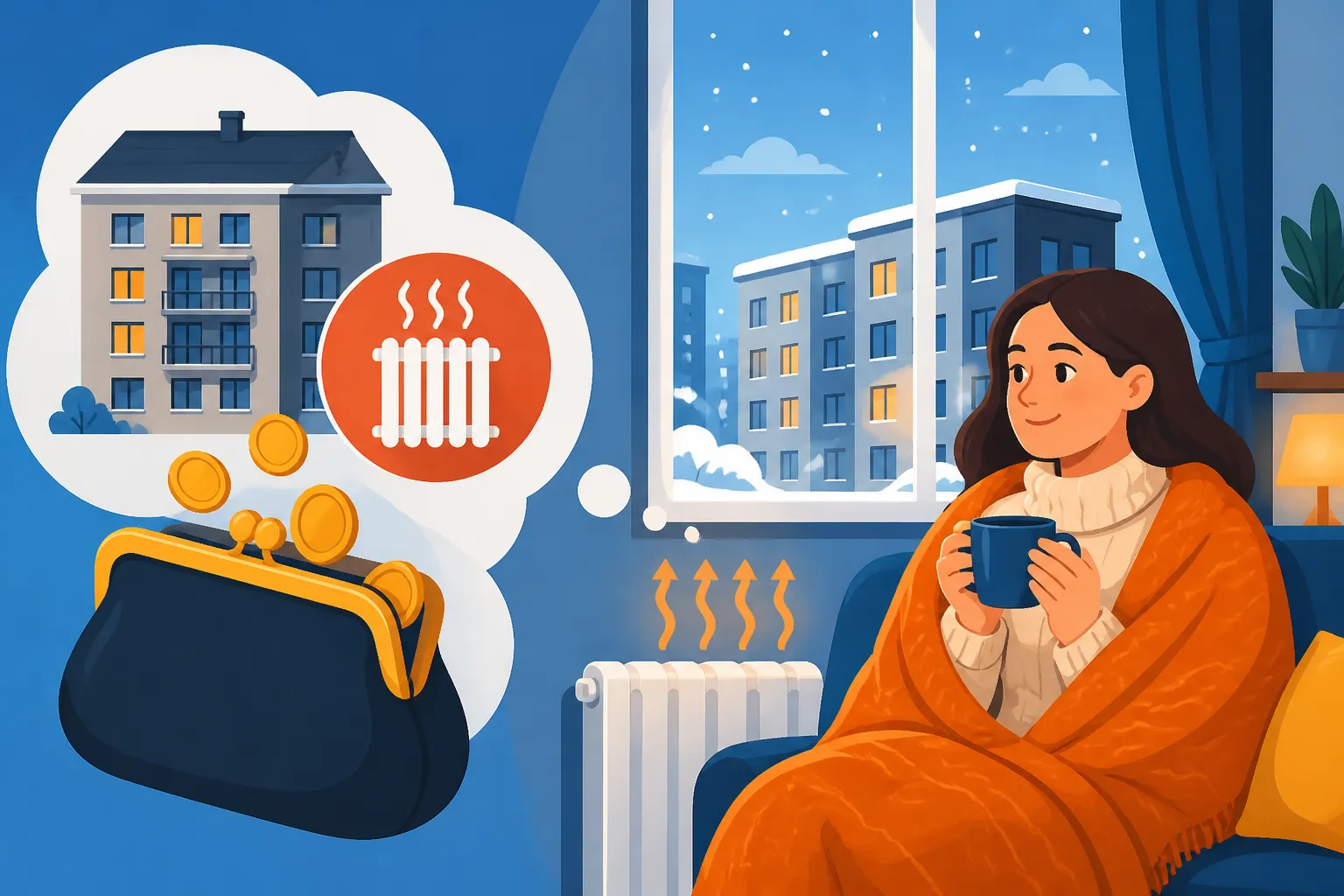
How Much Does It Cost to Heat an Apartment in Estonia in Winter?
Alright, let's be real for a moment. Moving to Estonia, you’re probably picturing those dreamy, snowy winters, right? Crisp air, charming old towns, maybe a bit of ice skating. What you might not be picturing, until that first utility bill lands on your doormat, is the eye-watering cost of keeping your apartment toasty warm when it's -20°C outside. It's a rude awakening for many of us, a truly existential question each November: "How much does it cost to heat an apartment in Estonia in winter?" This guide isn't here to sugarcoat it, but to arm you with all the realistic, expat-tested information you need to understand, anticipate, and maybe even mitigate those winter heating expenses.
Understanding Estonia's Heating Landscape and Factors Affecting Your Bill
When you first arrive in Estonia, the heating system can feel a bit like a mystery, especially if you're used to different setups back home. It's not just about flipping a switch; there's a whole infrastructure and a lot of variables that dictate just how much you'll be shelling out to avoid turning into an icicle.
District Heating vs. Individual Solutions
The vast majority of apartments in Estonian cities, especially in Tallinn and Tartu, are connected to a district heating system. This means that heat is generated centrally (often from a mix of natural gas, biomass, or waste heat) and then distributed via a network of insulated pipes to multiple buildings. It’s an efficient system on a city-wide scale, but it does mean your individual control might be limited, depending on your building.
With district heating, your building's apartment association (Korteriühistu) receives a bulk bill from a provider like Utilitas (dominant in Tallinn and Maardu) or Gren (in Tartu, Pärnu, and other towns). This cost is then usually divided among residents based on apartment size in square meters, or, increasingly, based on individual meters if your building has been modernised. This is where it gets tricky: if your building doesn't have individual meters, you're paying a share regardless of how much heat you personally use, which can feel incredibly unfair if you're a minimalist living at 18°C while your neighbour is cranking it up to 25°C.
Then there are individual solutions. Some older buildings, or houses outside of central heating networks, might rely on electric heating, gas boilers, or even wood-fired stoves. Electric heating, while offering individual control, can be prohibitively expensive as a primary heat source due to electricity prices, especially if your apartment isn't well-insulated. Gas boilers are less common for individual apartments in larger buildings but are prevalent in private homes. Wood or pellet stoves are lovely for ambiance and can be cost-effective if you have access to cheap fuel, but they demand more work and maintenance. Understanding what kind of heating system your prospective rental or purchase uses is absolutely critical. You can learn more about this when you're setting up utilities in your new home, which is covered in our guide on The Expat Guide to Setting Up Utilities in Estonia.
Insulation, Building Age, and Apartment Size
This is perhaps the single biggest factor influencing your winter heating bill. Estonia’s building stock is incredibly diverse. On one end, you have the beautiful but often draughty pre-war wooden houses or stone buildings in the old towns. Then there's the massive legacy of Soviet-era panel buildings (known as paneelmajad) from the 60s, 70s, and 80s. Many of these have undergone extensive renovation and insulation upgrades in recent years, thanks to EU funds and proactive apartment associations. Others, however, are still in their original state, which means poor insulation, leaky windows, and heat escaping faster than you can say "külm!" (cold).
A modern, newly constructed apartment building, built to stringent energy efficiency standards, will have significantly lower heating costs. They boast triple-glazed windows, thick insulation, and often modern ventilation systems that recover heat. A two-room apartment in a brand-new building in Kalamaja might have a heating bill half that of a similar-sized apartment in an unrenovated paneelmaja in Lasnamäe, even if both are on district heating.
And, of course, apartment size matters. A tiny 30-square-meter studio will naturally cost less to heat than a sprawling 80-square-meter three-bedroom family apartment. Always ask about the building's energy class (energiaklass) when looking at properties. This rating, from A (most efficient) to G (least efficient), can give you a strong indication of what your heating costs might look like. When you're trying to figure out overall expenses, it's a key piece of the puzzle, alongside general The Complete Guide to Cost of Living in Estonia for Expats (2026).
Energy Providers and Tariffs
For those on district heating, the primary providers are Utilitas (covering Tallinn and other major towns like Haapsalu, Jõgeva, Keila, etc.) and Gren (in Tartu, Pärnu, Valga, Viljandi, etc.). These companies have tariffs that are regulated to some extent, but they do fluctuate based on the wholesale price of fuel (natural gas, wood chips, peat) and other operational costs. These prices are generally updated monthly or quarterly, and while individual consumers don't pick their district heating provider, the pricing directly impacts their utility bills.
For electricity, the main player is Eesti Energia, the national energy company. While you can sometimes choose other providers, Eesti Energia is the most common default. Electricity tariffs can be fixed or variable, much like in many other countries. A fixed-rate contract locks in a price per kilowatt-hour (kWh) for a certain period, offering predictability. A variable rate (often tied to the Nord Pool spot market) can be cheaper during off-peak times but spikes during high demand, especially on very cold days. If you rely on electric heating, choosing the right electricity package and understanding peak/off-peak rates becomes paramount. Getting your electricity set up is one of the initial hurdles you face, as detailed in our guide on How to Set Up Electricity in Your Estonian Home.
Deciphering Your Estonian Heating Bill: What to Look For
Okay, so you've navigated the rental market, signed your üürileping (rental contract), and now the first winter bill arrives. What in the world is all this Estonian? It's often bundled into one big kommunaalkulud statement, and it can be a maze of numbers and terms. But don't despair, it's decipherable!
The 'Kommunaalkulud' Explained
In Estonia, your monthly bills for things like heating, water, rubbish collection, and building maintenance are almost always grouped into a single statement known as the kommunaalkulud or korteriarve (apartment bill). This is typically issued by your building's apartment association (Korteriühistu) or a property management company they employ. It's not uncommon for expats to be totally blindsided by the sheer volume of this bill in winter, as heating can represent 50-70% of the total during the coldest months.
Here’s a breakdown of what you might see:
- Küte (Heating): This is your main event. It will often be listed as a per-square-meter charge, or if your apartment has individual meters, it will show your consumption in kilowatt-hours (kWh) and the corresponding cost.
- Vesi ja kanalisatsioon (Water and sewerage): Based on your water meter readings.
- Elekter (Electricity): If not billed separately by Eesti Energia, it might be included here, especially for shared building electricity. Your apartment's individual electricity bill is usually separate.
- Prügivedu (Waste collection): Your share of the building's rubbish removal.
- Hooldustasu (Maintenance fee): A recurring fee for general building upkeep, cleaning common areas, minor repairs, etc.
- Remondifond (Repair fund): A contribution to a building-wide fund for major renovations (e.g., facade insulation, roof replacement). This is a vital but often surprising cost for new residents, as explained in Understanding Apartment Association (Korteriühistu) Fees in Estonia.
- Kindlustus (Insurance): Building insurance, not your personal home insurance.
The heating portion of the kommunaalkulud is the one that causes the most gasps. If you don't have individual meters, your share is often calculated by taking the total building heating consumption for the month, multiplying it by the district heating tariff, and then dividing it by the total heated area of the building, and finally multiplying by your apartment's area. It sounds complex, and it is, but the key takeaway is that you're influenced by the entire building's efficiency and usage habits. For more on this, check out our guide on Understanding Utility and Maintenance Costs (Kommunaalkulud) in Estonia.
Average Costs and Seasonal Fluctuations
This is the million-dollar question, and unfortunately, there's no single answer. The seasonal fluctuation is dramatic. In summer, your heating bill might be zero, or a nominal charge for hot water. In winter, it can easily dwarf all other utility costs combined.
Let's look at some average ranges, keeping in mind these are highly variable based on insulation, building age, location, and your personal warmth preferences:
- Small (30-45 sqm) well-insulated apartment: Expect €50-80 in a mild winter month, jumping to €80-130 in a very cold peak month (December-February).
- Medium (50-70 sqm) average-insulated apartment: This could be €80-130 in milder conditions, soaring to €150-250+ during the coldest periods.
- Large (75-100+ sqm) or poorly insulated apartment: Prepare for €150-250+ in average winter, potentially exceeding €300-400 in the deep freeze.
These figures are based on recent years and generally reflect district heating costs. Electric heating for a similar-sized, poorly insulated apartment could easily double or triple these figures. The energy market has seen some volatility, which means prices can surge. It's a stark difference from summer, where your kommunaalkulud might only be €50-80 for a medium apartment (just for maintenance, water, rubbish). In winter, that figure can easily hit €200-300. This is why knowing How Much Does It Cost to Rent an Apartment in Tallinn in 2026? also needs to factor in this massive seasonal variability in utilities.
Reading Your Meter and Consumption Data
If you're lucky enough to live in a building with individual heating meters (often electronic devices on each radiator or a central meter for your apartment), you have much more control. These meters typically measure energy consumption in kWh or MWh. Your monthly bill will then show your specific usage. Many modern buildings and apartment associations offer online portals where you can track your daily or weekly consumption, allowing you to react quickly if you see an unexpected spike.
For apartments without individual meters, you usually cannot directly read your own heating consumption. Instead, the building's total consumption is metered, and your share is calculated. While this means less direct control, it also means your apartment association should be actively working to improve the building's overall energy efficiency, as it benefits everyone. If you’re considering an apartment, especially for a long-term rental in Tartu or anywhere else, always ask if it has individual heating meters, as this transparency and control can make a huge difference to your budget.
If you don't have individual meters, you might be able to monitor the temperature sensors in your apartment, but this is less about consumption and more about comfort. The Korteriühistu is legally obligated to provide detailed breakdowns of the kommunaalkulud, so if anything is unclear, don't hesitate to ask your landlord or the board for clarification. When you're managing your bills, understanding how to pay them is also key, so our guide on How Do I Pay My Utility Bills in Estonia? will come in handy.
Practical Strategies for Managing and Reducing Heating Costs
The good news is that while Estonia's winters are long and cold, you're not entirely at the mercy of the elements. There are definite steps you can take to manage and reduce your heating expenses.
Optimizing Thermostat Settings and Ventilation
This might seem obvious, but many expats crank up the heat to tropical levels, only to open windows when it gets too stuffy. This is essentially throwing money out the window. Estonian homes are generally designed to retain heat, but they also need proper ventilation to prevent moisture and mould.
Here’s a common-sense approach:
- Find your comfort zone: Most Estonians are comfortable at around 20-22°C during the day. Experiment to find the lowest temperature where you feel comfortable. Even dropping it by 1 degree Celsius can reduce your heating bill by 5-7%.
- Night setbacks: If you have individual thermostats (on your radiators or a central unit), turn down the heat by a few degrees at night, or when you're away at work. There's no point heating an empty apartment to maximum capacity. Modern thermostats can be programmed, and some smart home devices, compatible with services you might manage on your phone (especially useful if you've got an Airalo eSIM for data), allow remote control.
- Ventilate smartly: Instead of leaving windows slightly ajar for hours, which causes massive heat loss, adopt the "shock ventilation" method. Open windows wide for 5-10 minutes, creating a cross-breeze to completely air out the room, then close them tightly. This replaces stale air without cooling down your walls and furniture. Do this a few times a day, particularly after showering or cooking.
Energy-Saving Habits and Minor Improvements
Beyond thermostat control, a myriad of small changes can add up to significant savings:
- Close curtains and blinds at night: This creates an extra layer of insulation against cold windows, trapping heat inside.
- Block draughts: Check around windows and doors for any gaps where cold air is seeping in. Simple self-adhesive foam strips or draught excluders can make a big difference. For older apartments, this is a must.
- Wear warmer clothes indoors: It sounds simple, but instead of raising the thermostat, put on a sweater and some thick socks. This is part of embracing the Estonian winter lifestyle.
- Arrange furniture strategically: Don't place large furniture directly in front of radiators, as this blocks the heat distribution. Allow air to circulate freely around heating elements.
- Use rugs and carpets: Hard floors can feel very cold. Rugs add a layer of insulation and make rooms feel warmer.
- Utilize natural heat: Open curtains wide during sunny winter days to let in any solar warmth, then close them as dusk approaches.
- Cook and bake: The heat generated from cooking or baking helps warm the kitchen and adjacent areas. Just avoid over-ventilating immediately afterwards if you want to keep that warmth.
These little adjustments might not feel like much individually, but cumulatively, they can shave a noticeable amount off your bill.
Understanding Government Subsidies and Support
For the vast majority of expats, direct government subsidies for heating costs are unlikely to apply unless you meet very specific low-income criteria or are part of a particularly vulnerable group (e.g., pensioners with minimal income). Estonia does have a social safety net, and there are municipal housing benefit schemes for residents who struggle to cover their utility costs. However, these are typically means-tested and designed for long-term, low-income residents, not generally for newcomers or those on average expat salaries.
It's always worth checking with your local municipality's social welfare department if you find yourself in genuine financial distress due to heating costs. They can provide information on any available support programs. However, for most of us, the focus needs to be on proactive management and energy-saving habits rather than relying on government assistance. This is part of the broader administrative landscape that you deal with when establishing your residence, as detailed in Registering Your Place of Residence in Estonia: The Complete Guide.
Cost Comparison Table and What to Budget
To give you a clearer picture, here's a simplified table comparing estimated monthly winter heating costs in Tallinn based on apartment characteristics. Remember, these are estimates and actual costs can vary.
| Apartment Size | Building Age & Insulation | Estimated Monthly Heating Cost (EUR) |
|---|---|---|
| 30-40 sqm | New build, A/B energy class | 50 – 90 |
| 30-40 sqm | Renovated Soviet, C/D energy class | 80 – 120 |
| 30-40 sqm | Unrenovated Older, E/F energy class | 120 – 180 |
| 50-70 sqm | New build, A/B energy class | 70 – 120 |
| 50-70 sqm | Renovated Soviet, C/D energy class | 100 – 180 |
| 50-70 sqm | Unrenovated Older, E/F energy class | 180 – 280+ |
| 80-100 sqm | New build, A/B energy class | 100 – 180 |
| 80-100 sqm | Renovated Soviet, C/D energy class | 150 – 250+ |
| 80-100 sqm | Unrenovated Older, E/F energy class | 250 – 400+ |
Note: These figures are for peak winter months (Dec-Feb) and assume district heating. Electric heating can be significantly higher.
Estimating Your Monthly Heating Budget
When looking for an apartment, don't just consider the rent. Always, always ask to see the kommunaalkulud statements from the previous winter for that specific apartment. Landlords are usually transparent about this, as it manages expectations. This is the single most reliable way to gauge what you’ll be paying. If they only show summer bills, be wary, or at least mentally triple them for winter.
If you're moving from abroad, factor this into your initial relocation budget. Services like Sirelo can help you plan your move and estimate overall costs, but remember that utilities, especially heating, will be a major variable in Estonia. A good rule of thumb is to budget an extra €100-250 per month on top of your rent for utilities during winter, depending on your apartment size and energy efficiency.
Impact of Personal Choices on Overall Cost of Living
Your heating choices are intrinsically linked to your overall Cost of Living in Estonia. If you choose a cheaper rent in an older, less efficient building, you might save on rent, but those savings can quickly be eaten up by a massive heating bill. Conversely, paying a bit more for a newer, well-insulated apartment could lead to lower total monthly housing expenses when utilities are factored in.
It's a trade-off that many expats don't fully grasp until they're shivering and staring at their bill. Don't be that expat! Do your research, ask the right questions, and be prepared for Estonia's beautiful, but undeniably chilly, winters. Your wallet will thank you.
Disclaimer
The information provided in this article is intended for general guidance only and does not constitute professional financial, legal, or energy advice. Heating costs in Estonia are subject to change due to fluctuating energy prices, government regulations, and individual building management policies. While every effort has been made to ensure accuracy, readers are advised to consult official sources, landlords, apartment associations, and energy providers for the most current and specific information.