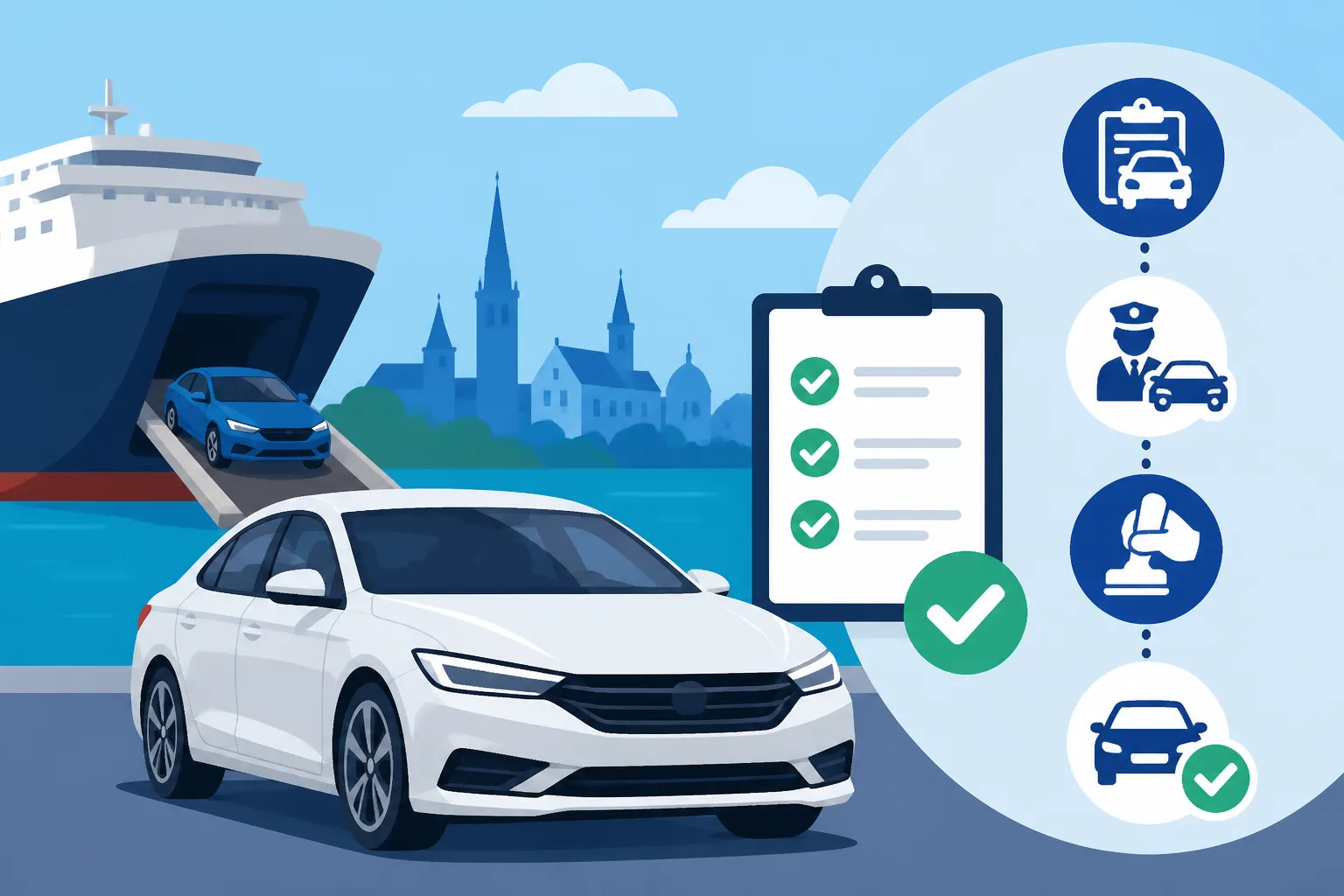
How Do I Register an Imported Car in Estonia?
Oh, the joy of bringing your beloved car to a new country! Or perhaps you've fallen in love with a ride you found across the border and now need to make it officially Estonian. Either way, you're likely staring down a mountain of paperwork and an alphabet soup of agencies, wondering exactly how to get that foreign vehicle registered in Estonia. Trust me, I've navigated my fair share of Estonian bureaucracy, and while it might seem daunting, this guide will break down the entire process for you, step by step, making it much clearer than a fog-shrouded Tallinn morning.
Understanding the Initial Requirements for Importing a Car to Estonia
Before you even think about new license plates, there are several fundamental steps and considerations you absolutely must get straight when bringing an imported car into Estonia. This isn't just about driving it in; it's about ensuring your vehicle meets Estonian standards and that you, as the owner, are properly prepared for the administrative journey ahead.
Vehicle Origin and Customs Clearance
The first thing to understand is where your car is coming from. This makes a huge difference in the requirements and complexity of the process.
If you’re importing a car from another EU/EEA country, the good news is that the process is generally smoother. Since Estonia is part of the European Union, there are no customs duties or VAT to pay upon entry, assuming the car was purchased and registered in another EU country and VAT was already paid there. You're primarily dealing with administrative registration. However, if you've bought a new car from another EU country and are bringing it to Estonia, you might need to pay Estonian VAT. "New" in this context usually means less than six months old or has driven less than 6,000 km. It's a key detail to check, as the tax implications can be significant. Even if it's from the EU, you'll still need proper ownership documents like the foreign registration certificate and proof of purchase. Don't underestimate the need for clear documentation; Estonian officials are thorough.
For vehicles coming from outside the EU/EEA, it's a completely different ball game. This is where customs clearance comes into play, and it can be a real headache if you're not prepared. You'll need to pay customs duties and Estonian VAT on the vehicle's value upon its arrival. This typically happens at the point of entry. You’ll also need to consider temporary import procedures if you're driving it in yourself before final registration. This can involve deposits or guarantees with the Estonian Tax and Customs Board (Maksu- ja Tolliamet). It's crucial to have all your shipping documents, purchase invoices, and proof of origin in order. The customs officials will want to see everything. If you're using a shipping company, they often handle much of the customs paperwork, but it's still your responsibility to ensure it's done correctly. Many expats find it easier to hire a customs broker for non-EU imports to avoid costly mistakes and delays. When you first arrive in Estonia, having reliable mobile data can be incredibly helpful for coordinating all these details on the go, and something like an Airalo eSIM can keep you connected without hassle.
Essential Documentation You’ll Need
Regardless of where your car originates, a pile of specific documents is non-negotiable. Missing even one can send you back to square one, causing frustrating delays.
Firstly, you'll need proof of ownership. This includes the original foreign registration certificate (like the V5C in the UK or Teil I and II in Germany) and the purchase agreement or invoice. Ensure these documents clearly state you as the owner and include all relevant vehicle details. Next up is the Certificate of Conformity (CoC). This document proves your car meets European Union safety and environmental standards. Most cars manufactured for the European market will have one. If your car is older or from outside the EU and lacks a CoC, you might need to obtain a single vehicle approval from a technical service, which involves a more thorough and costly inspection. This is often the biggest hurdle for non-EU cars, as modifying a vehicle to meet EU standards can be expensive, sometimes even prohibitive.
Beyond these, bring your passport or ID card, your Estonian personal identification code (isikukood), and proof of your Estonian residence. You absolutely need to have established your official residency in Estonia to register a car in your name. If you haven't sorted that out yet, you'll want to check out "How to Get Your Isikukood (Personal Code) and Why It Matters for Healthcare" and "How to Register Your Place of Residence (Elukoht) in the Population Register" because these are foundational steps for almost any administrative task here. For cars from outside the EU, you'll also need customs declarations and proof that all duties and taxes have been paid. It's also wise to have a valid insurance policy (even temporary foreign insurance) to cover you until you get Estonian plates and mandatory traffic insurance.
Here's a quick overview of the key documents:
| Document Type | Description | Origin (EU/EEA) | Origin (Non-EU/EEA) |
|---|---|---|---|
| Proof of Ownership | Foreign registration certificate (parts I & II), bill of sale, purchase invoice | Required | Required |
| Certificate of Conformity (CoC) | Proves vehicle meets EU standards (Type Approval) | Required | Required (or equivalent approval) |
| Personal Identification | Passport/ID, Estonian Isikukood | Required | Required |
| Proof of Residence | Valid Estonian residence permit/card or registration of residence | Required | Required |
| Customs Documents | Declaration, proof of duty/VAT paid | N/A (usually) | Required |
| Insurance | Valid traffic insurance policy (Estonian or temporary foreign) | Required | Required |
| Technical Inspection Cert. | If already done abroad (e.g., TÜV), useful for reference | Recommended | Recommended |
The Vehicle Registration Process Step-by-Step
Once you’ve gathered all your documents and understood the initial requirements, you're ready to tackle the main event: getting your car officially registered with the Estonian Transport Administration (Transpordiamet), formerly known as Maanteeamet or ARK. This is where the rubber meets the road, quite literally.
Undergoing the Technical Inspection
Even if your vehicle has a valid technical inspection from its country of origin, it will need to undergo a specific registration inspection in Estonia. This isn't your regular annual vehicle inspection (which you'll deal with later, as detailed in "Understanding the Vehicle Inspection (Ülevaatus) in Estonia"), but a detailed check to ensure the car's specifications match its documents and that it complies with Estonian technical requirements.
You'll need to book an appointment for this at a certified technical inspection station. You can find these stations across Estonia, including in larger cities like Tallinn and Tartu. The inspection itself is thorough. They will verify the vehicle's identification number (VIN), engine number, structural integrity, lighting, brakes, emissions, and general roadworthiness. For non-EU cars, this inspection is particularly critical, as they'll be looking to ensure it meets all EU type-approval standards, which may sometimes mean additional tests or even minor modifications. For example, some non-EU headlight patterns might need adjustment. It’s always a good idea to ensure your car is clean and well-maintained before taking it for inspection; presentation can sometimes subtly influence the ease of the process. If your car fails, you'll get a list of deficiencies that need to be rectified before you can re-present it for inspection. This can add significant time and cost, so make sure your car is in top shape.
Applying at the Transport Administration
With a successful technical inspection certificate in hand, you're finally ready to visit the Transport Administration's service bureau. This is the central hub for "How to Register a Vehicle with the Transport Administration in Estonia" and the final administrative step.
You'll need to book an appointment in advance – trust me, don't just show up and hope for the best, especially in Tallinn. The PPA (Police and Border Guard Board) system, which handles many expat services, often has long queues. Bring all your original documents from the previous steps: your personal ID, proof of residence, the foreign registration certificates, the purchase agreement, the Certificate of Conformity (CoC), any customs documents, and crucially, the technical inspection report from the Estonian station. You'll also need to fill out a registration application form, which can usually be found on the Transport Administration's website or provided at the service desk. Be prepared for potential language barriers; while many officials speak English, it's not guaranteed. Having a basic understanding of Estonian phrases or bringing an Estonian-speaking friend can be a lifesaver. This is where meticulous preparation really pays off. They will cross-reference everything, verify your identity, and ensure all details align.
Paying Fees and Obtaining Plates
Once your application and documents are approved by the Transport Administration official, you'll proceed to pay the necessary state fees.
These fees typically include a registration fee and a fee for the new Estonian license plates and the registration certificate. The exact amounts can vary and are subject to change, so it's best to check the current fee schedule on the Transpordiamet website beforehand. Payment can usually be made on the spot by card. After payment, you will immediately be issued your new Estonian license plates and the registration certificate. The registration certificate is a crucial document; it’s proof that your vehicle is officially registered in Estonia. Keep it safe, preferably in your car’s glove compartment, as you’ll need it for future inspections, sales, or any interactions with traffic police. You'll then fix the new plates onto your car, and voilà – your imported vehicle is now officially Estonian! Don't forget to arrange Estonian traffic insurance immediately if you haven't already, as it's mandatory to drive your car legally here. You might find it useful to compare options, just like you would for other big moves, so checking resources that help with international moves like Sirelo can sometimes have indirect benefits by putting you in a 'comparison shopping' mindset for local services too.
Costs and Ongoing Obligations for Imported Cars in Estonia
Registering your car is just the beginning. There are several financial implications and ongoing responsibilities that come with owning and driving a car in Estonia, especially one you’ve imported. Understanding these from the outset will prevent any nasty surprises down the road.
Registration Fees and Annual Costs
The initial costs for registering an imported vehicle can add up. Beyond customs duties and VAT for non-EU cars, you'll face the state registration fee for the vehicle itself and a separate fee for the new Estonian license plates. As of my last check, these fees are generally in the range of tens to a couple of hundred euros, depending on the vehicle type and if you opt for personalized plates. It's a one-time payment for the initial registration.
However, the costs don't stop there. All vehicles in Estonia are subject to mandatory traffic insurance (Liikluskindlustus). The price of this insurance depends on various factors: the car's engine size, power, your driving history, and where the car is primarily used (e.g., Tallinn usually has higher rates due to traffic density). You'll pay this annually or in installments. Then there's the annual road tax, which is currently being reformed in Estonia but has always been a consideration for vehicle owners. Keep an eye on updates regarding "Understanding Road Tax and Vehicle Costs in Estonia" as these can change. Fuel costs, parking fees (especially in Tallinn and Tartu), and routine maintenance are also part of the ongoing budget. If you're comparing the overall cost of ownership, it's a good idea to also look at options like "How Much Does It Cost to Buy a Used Car in Estonia?" to gauge the local market value and associated costs.
Mandatory Technical Inspections and Maintenance
Once your car is registered, it falls under the regular schedule for mandatory technical inspections, known as "ülevaatus." New cars typically get their first inspection after three years, then two years later, and then annually. Older cars usually require annual inspections. This is a crucial aspect of vehicle ownership in Estonia, ensuring that all cars on the road meet safety and environmental standards.
Failing an ülevaatus means you cannot legally drive your car until the issues are fixed and it passes re-inspection. This typically includes checks on brakes, lights, tires, suspension, emissions, and general structural integrity. It's not uncommon for expats to be caught off guard by the strictness of these inspections, especially if they're used to more lenient standards in other countries. Regular maintenance is key to passing these inspections without hassle. Find a trusted mechanic who understands European car standards, and don't skip your routine oil changes, tire rotations, and brake checks. Proactive maintenance will save you headaches and potentially costly repairs down the line. Remember, driving an uninspected vehicle can result in fines, so mark your calendar for these important dates.
Common Challenges and Tips for Expats
Navigating the imported car registration process in Estonia can feel like trying to solve a Rubik's Cube blindfolded, especially when you're fresh off the plane. There are specific pain points that many expats encounter, but with a bit of foresight and the right approach, you can smooth out most of the bumps.
Language Barriers and Bureaucracy Navigation
One of the most persistent frustrations for foreigners in Estonia is the language barrier. While English proficiency is high in tech companies and among younger generations, you might find that some public service officials, particularly in smaller towns or older departments, communicate primarily in Estonian or Russian. The Transport Administration does have English-speaking staff, especially in Tallinn, but it’s not a given. Official forms are almost always in Estonian. This can make understanding complex requirements or explaining your specific situation incredibly difficult.
My best advice? Don't go it alone if you're not confident in Estonian. Bring an Estonian-speaking friend, colleague, or hire a local translator. Having someone who can clarify doubts and advocate on your behalf can dramatically reduce stress and errors. Furthermore, Estonian bureaucracy, while often digital and efficient, still requires precision. Every document must be in order, and every step followed exactly. Trying to rush or cut corners will inevitably lead to delays. Be patient, polite, and persistent. Utilizing digital platforms like eesti.ee for general information or initiating processes online can sometimes circumvent some face-to-face language hurdles. When you're just starting your expat journey, getting connected with a local SIM or an eSIM like those from Airalo can really make a difference, allowing you to access online translation tools or make calls without worrying about roaming charges while you're sorting out initial logistics. This connectivity is invaluable for everything, from finding a service point to clarifying a detail on the Transport Administration website.
E-Services and Digital Signatures
Estonia prides itself on its advanced e-government services, and many administrative tasks can be done online. However, as an expat, you first need to be set up to use these services. This means having your Estonian ID card, mobile-ID, or Smart-ID, which allow you to digitally identify yourself and sign documents. If you've just arrived, getting your ID card and activating these digital signing options might be one of your very first bureaucratic tasks, often covered in guides like "The Complete Guide to Moving to Estonia: Your First 90 Days" or "Navigating Estonia's Digital Healthcare System: An Expat's Roadmap (2026)" as they are essential for everything from banking to healthcare.
While some basic vehicle checks can be done on the Transport Administration's e-service portal, the initial registration of an imported car almost always requires a physical visit. The complexity of verifying foreign documents and undergoing a technical inspection necessitates a hands-on approach. However, for renewing your annual technical inspection, checking your vehicle's history, or even eventually selling your car, the e-services become incredibly convenient. Familiarize yourself with the e-MTA (Estonian Tax and Customs Board) portal for tax-related queries and the Transpordiamet portal for vehicle-specific services. Once you're properly set up with your digital ID, these platforms can save you a tremendous amount of time in the future. Don't be intimidated by them; they are designed to be user-friendly, but the initial setup can be a hurdle.
Seeking Professional Assistance
Sometimes, the simplest solution is to admit defeat and call in the cavalry. If you find the entire process overwhelming, or if your car has particularly complex import circumstances (e.g., a classic car, a highly modified vehicle, or unusual non-EU origin), don't hesitate to seek professional help.
There are car dealerships that offer import and registration services, often for a fee. They handle all the paperwork, inspections, and liaison with the Transport Administration on your behalf. While this comes at an additional cost, it can save you immense time, stress, and potential mistakes, especially if your Estonian language skills aren't up to par. Additionally, several expat service providers or legal firms specialize in assisting foreigners with administrative tasks, including vehicle registration. They can guide you through the process, ensure all your documents are correct, and even accompany you to appointments. Think of it as an investment in your peace of mind. Many expats arriving with a lot of personal belongings, potentially including a car, might already be looking at international moving services through platforms like Sirelo, which sometimes have partners who can offer such comprehensive assistance for various aspects of settling in, including car registration. Just remember to compare services and costs before committing to any external provider.
Disclaimer
The information provided in this guide is intended for general informational purposes only and does not constitute legal, financial, or professional advice. While we strive to keep the content accurate and up-to-date, regulations and procedures in Estonia, particularly concerning vehicle registration, taxes, and customs, are subject to change. It is always recommended to consult the official websites of the Estonian Transport Administration (Transpordiamet) and the Estonian Tax and Customs Board (Maksu- ja Tolliamet) or seek advice from a qualified local professional for the most current and specific information pertaining to your individual situation.