How Do I Move to Estonia as a Non-EU Retiree?
Oh, the dream of retiring to a charming, digital-savvy country like Estonia! Many non-EU citizens picture themselves settling down in a cozy Tallinn apartment or a peaceful countryside home, enjoying the clean air and efficient services. However, if you’re a non-EU citizen dreaming of spending your golden years here, you’re likely already feeling the cold splash of reality: Estonia doesn’t offer a straightforward "retirement visa." This guide is going to walk you through the often-frustrating truth and illuminate the only realistic pathways for a non-EU retiree to legally live in Estonia long-term, backed by practical advice and a good dose of expat empathy.
The Elusive Estonian Retirement Visa: Managing Expectations
Let's just get this out of the way upfront, because it’s the biggest hurdle and the source of so much expat frustration: Estonia, unlike some sunnier European locales, does not have a specific, dedicated "retirement visa" for citizens outside the European Union. You won't find an option that simply says, "Come here, you're retired, you have money, enjoy." The system simply isn't set up for it.
For those of us who have navigated the various administrative mazes here, this isn't entirely surprising. Estonia's immigration policy is largely geared towards attracting skilled labor, entrepreneurs, and students. The focus is on individuals who will actively contribute to the economy or society, rather than those seeking a quiet, comfortable retirement based solely on passive income from abroad. This doesn't mean it's impossible, but it does mean your approach has to be creative and, frankly, a bit entrepreneurial, even if you’re past your working years. You can't just apply for a long-stay visa (Type D) or a temporary residence permit and tick a box that says "retirement." These visas and permits are typically tied to specific purposes like work, study, business, or family reunification.
Many expats arrive in Estonia with the mistaken belief that if they have enough passive income from their home country or significant savings, a residence permit will be a simple formality. While financial self-sufficiency is absolutely critical, it’s not enough on its own without a "purpose" that aligns with Estonia's immigration criteria. This can be a really disheartening discovery for those who have fallen in love with Estonia and envisioned a peaceful, digital retirement here. It forces you to rethink your entire strategy, often making you feel like you have to invent a reason to be here.
Navigating the Residence Permit Maze: Possible Paths for Non-EU Retirees
Since a direct retirement visa is off the table, the goal becomes finding an existing category of temporary residence permit that you can genuinely fulfill, even if it feels a bit like fitting a square peg into a round hole. The key here is demonstrating a clear "purpose" for your stay that aligns with Estonia’s immigration goals.
Establishing Residence Through Business or Self-Employment
This is, by far, the most common and often the most viable route for non-EU citizens who wish to retire in Estonia but don't have family ties here. Estonia is incredibly business-friendly, known for its e-Residency program and streamlined company registration process. The thinking here is: if you can't come to retire, you can come to invest or run a business, even a very small one, that generates some form of income in Estonia.
The two main options here are registering as a sole proprietor (FIE – füüsilisest isikust ettevõtja) or establishing a private limited company (OÜ – osaühing). For many retirees, an FIE might seem simpler initially, but an OÜ offers more flexibility and often better protection. The core idea is that you're seeking a residence permit for business purposes. This doesn't mean you need to launch a booming startup at 70; it means you need to present a credible business plan that demonstrates legitimate economic activity. This could be anything from consultancy (leveraging your past career experience) to investing in local real estate (through your company) or even a small online venture.
The critical hurdle with this path is proving the economic viability and genuine intention of your business. The Police and Border Guard Board (PPA) will assess your business plan, your qualifications, and your financial investment. You'll need to show that your business will contribute to Estonia's economy, even modestly, and that you have sufficient funds to both run the business and support yourself. This financial proof is not just about showing savings; it’s about showing capital for your venture and regular income to cover your living expenses. They're looking for genuine economic activity, not a shell company used purely for a residence permit. Expect the PPA to scrutinize your application closely; they are adept at distinguishing genuine entrepreneurial intent from mere visa-seeking maneuvers. For a deeper dive into the specific requirements, you might want to look into "Self-Employment in Estonia: The FIE and OÜ Guide for Foreigners" for more details.
The Strict Financial Self-Sufficiency Requirement
Regardless of the specific permit category you pursue, a fundamental requirement for any long-term stay as a non-EU citizen is demonstrating robust financial self-sufficiency. Estonia wants to ensure you won't become a burden on its social system. For residence permits for business or self-employment, this means proving you have sufficient funds to live comfortably without relying on Estonian social benefits.
The exact amount can fluctuate and depends on the PPA's current guidelines and your specific situation, but generally, you'll need to demonstrate stable and sufficient legal income to cover your living expenses for the duration of your permit. This could include foreign pension income, rental income from properties abroad, dividends, or other passive income sources. Bank statements showing substantial savings are usually also required, acting as a buffer. For instance, the PPA usually requires proof of funds equivalent to the official Estonian average salary multiplied by a certain factor, often for at least six months or even a year in advance. This means you should expect to show evidence of several thousands of euros in stable monthly income or tens of thousands in savings.
The good news is that if you're a non-EU retiree, you often have a lifetime of savings and possibly a solid pension. The challenge is structuring that wealth and income to align with the PPA's requirements and presenting it clearly in your application. They want to see consistent, reliable funds.
| Residence Permit Type (Potential Fit for Retirees) | Primary Purpose/Condition | Key Challenges for Retirees | Financial Requirement (Illustrative) |
|---|---|---|---|
| Business/Entrepreneurship | Active participation in an Estonian registered company (OÜ) or as a sole proprietor (FIE). | Requires a credible, active business plan; not just passive investment. | Significant start-up capital + ongoing funds for living (e.g., >€16,000 capital, €2,500/month income). |
| Digital Nomad Visa (DNV) | Working remotely for a foreign company/client or owning a foreign company. | Limited to 1 year, extendable to 2 years max. Not a permanent solution for retirement. | Minimum income of €4,500/month gross. |
| High Income/Top Specialist | Employment by an Estonian employer at a salary above the national average (usually 1.5x). | Requires an actual Estonian job offer, which is highly unlikely for retirees. | Salary of at least 1.5x Estonian average gross salary. |
| Family Reunification | Joining a spouse, parent, or child who already has an Estonian residence permit or citizenship. | Only applicable if you have immediate family already legally residing in Estonia. | Sponsor must meet specific income and accommodation requirements. |
Other Limited or Unlikely Paths
While the business route is the most practical, it's worth briefly touching on other options just to understand why they typically don't work for non-EU retirees:
- Digital Nomad Visa (DNV): While Estonia's DNV is fantastic, it's a temporary solution, generally valid for one year and extendable for another. It's designed for remote workers, not for permanent retirement. If you're a retiree who still actively consults or runs an online business for foreign clients, it could be a stepping stone, but it won't grant you long-term residence beyond two years. The income requirement is also quite high.
- Work Visa/EU Blue Card: These require an actual job offer from an Estonian employer, which is very improbable for someone in retirement.
- Study Visa: Unless you genuinely intend to pursue full-time education in Estonia, this isn't a viable long-term solution.
- Family Reunification: This path is only open if you have immediate family members (spouse, children, or sometimes parents) who are already Estonian citizens or hold a valid residence permit. If your children are working in Estonia, for example, they might be able to sponsor you, but the requirements are strict, including proving adequate income and accommodation for you.
For the vast majority of non-EU retirees without existing family ties in Estonia, the business or self-employment path is the primary, if not sole, realistic avenue. It's a journey that demands preparation, legal consultation, and a significant commitment to showing genuine economic ties.
Key Practicalities Once You've Found a Path
Once you’ve identified a potential residence permit category and are prepared to pursue it, there are several crucial practicalities that will shape your application and your life in Estonia. These aren't just administrative hurdles; they’re fundamental aspects of integrating into Estonian society.
Proving Adequate Financial Means
This deserves a deeper dive because it underpins almost every residence permit application. The PPA needs to be absolutely sure that you can support yourself without becoming reliant on the Estonian social welfare system. For retirees, this typically means demonstrating a steady stream of passive income, along with substantial savings.
You’ll need official bank statements (often from the last 6-12 months) from a reputable bank, clearly showing your income sources like pensions, investment dividends, or rental income. These documents should ideally be translated into Estonian or English by a sworn translator if they are in another language. They want to see consistency and reliability. If your income varies, they will look at the average, but also at the minimum you receive. Don't just show one large deposit; show how you sustain yourself month-to-month. While there isn't a single magic number that guarantees approval, aiming to demonstrate an income significantly above the average Estonian salary (which, as of 2023, was around €1,800 gross) is a wise strategy. Consider the Cost of Living in Estonia for Expats (2026) and add a healthy buffer. For example, if you can comfortably show €2,500-€3,000 net income per month, along with healthy savings, your application will look much stronger.
Health Insurance Obligations
This is non-negotiable. For any temporary residence permit in Estonia, you must have valid health insurance coverage. And for non-EU retirees, this almost certainly means private health insurance. When you eventually gain long-term residence status or if your business sufficiently contributes to social tax for long enough, you might become eligible for the Estonian Health Insurance Fund (Tervisekassa) public coverage. However, during the initial phases of your residence permit, and possibly for many years, private insurance is your lifeline.
Your private health insurance policy needs to meet specific criteria set by the Estonian state: it must cover at least €30,000, be valid for the entire duration of your requested permit, and cover emergency treatment, outpatient care, and inpatient care. Many international providers like Cigna Global offer plans specifically designed for expats that meet these requirements. It's vital to choose a policy that covers you in Estonia from day one, often even before your permit is fully issued, especially during the long-stay D-visa period if you apply from abroad. Don't underestimate this step; the PPA will be very strict about adequate coverage. You might want to explore "How Much Does Private Health Insurance Cost in Estonia in 2026?" for more in-depth information.
Accommodation and Registering Your Place of Residence
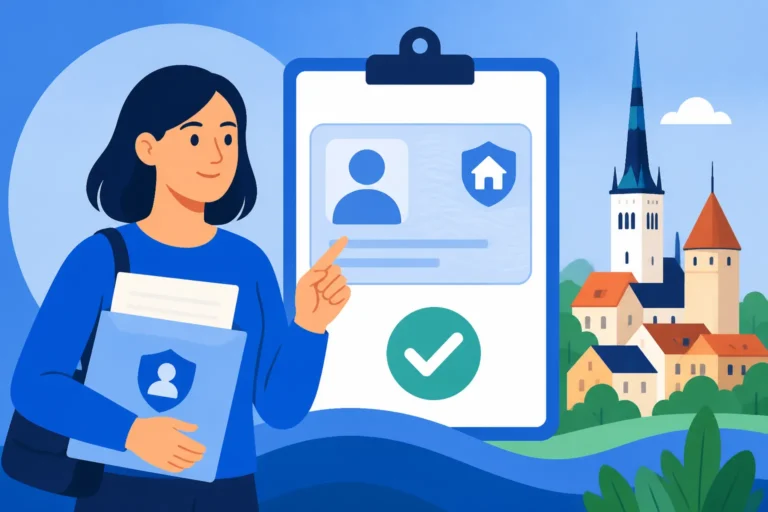
You cannot apply for a residence permit without proving you have a place to live in Estonia. This means a valid rental agreement (üürileping) for an apartment or house, or proof of ownership if you purchase property. The rental agreement needs to be a long-term one, usually for at least one year. Short-term Airbnb rentals won't cut it for a residence permit application.
Once your residence permit is granted and you arrive in Estonia, one of your very first administrative tasks will be to officially Registering Your Place of Residence in Estonia: The Complete Guide. This is done at your local population register office (e.g., in Tallinn, this would be at the local district government office). This registration is crucial because it links you to the Estonian state, allows you to receive correspondence, and is often a prerequisite for obtaining your Isikukood (Personal Code), which is essential for virtually everything else, including accessing healthcare and banking.
The Application Process and Bureaucracy
Applying for a residence permit requires meticulous attention to detail. You'll need to gather a substantial dossier of documents, including your passport, application forms, photos, your business plan (if applicable), financial statements, health insurance policy, proof of accommodation, and proof of payment for the state fee. All documents not in Estonian, Russian, or English will need to be officially translated and possibly apostilled.
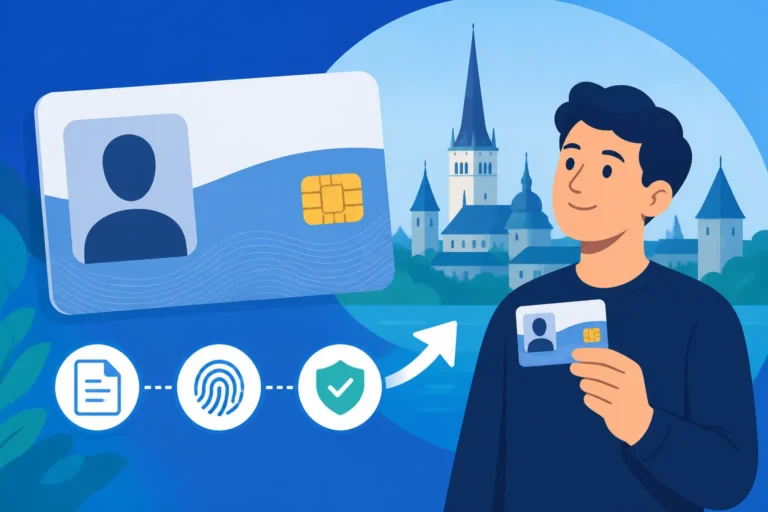
The process often involves booking an appointment at a PPA service point, either in Estonia (if you entered on a D-visa or are an EU citizen changing status) or at an Estonian embassy/consulate in your home country. Be prepared for potentially long waiting times for appointments and for the processing of your application. Patience is a virtue here, my friends. Don't expect things to move at lightning speed, especially if your case is complex. Once approved, you'll also need to have your biometric data (fingerprints and photo) taken for your residence card.
Everyday Life Considerations in Estonia
Beyond the legalities, there are practical aspects of daily life as a retiree in Estonia.
- Cost of Living: While generally lower than in Western Europe or North America, Estonia is not "cheap," especially in Tallinn or Tartu. Housing costs, particularly rent, can be significant. Utilities can be high in winter. You'll need a solid budget.
- Healthcare Access: As mentioned, your initial years will likely rely on private health insurance. Even with private insurance, navigating the healthcare system can be daunting if you don't speak Estonian. Finding an English-speaking family doctor (perearst) or specialist can take time. Estonia has excellent digital health services, but getting into the system is the first step. For more details, consider reading Public vs Private Healthcare in Estonia: Which Should Expats Choose?.
- Language Barrier: While many Estonians, particularly younger generations and those in Tallinn and Tartu, speak excellent English, living here long-term without knowing any Estonian can be isolating. Basic Estonian phrases will go a long way, and many retirees find taking language courses to be a rewarding way to integrate and meet people. It's not a requirement for most residence permits, but it massively improves your quality of life.
- Social Life and Integration: Expats often find community within various online groups and meetups. Integrating with local Estonian society can be a slower process, but it's incredibly rewarding. Volunteering, joining local clubs, or participating in community events are great ways to connect.
- Moving Logistics: The practicalities of moving your entire life across continents can be daunting. Consider using international moving services or platforms like Sirelo to compare quotes and manage the logistics of shipping your belongings to Estonia. It's a huge undertaking, and getting reliable help can save you a lot of headaches.
- Banking: As a new resident, one of your first tasks will be to The Expat Guide to Opening a Bank Account in Estonia. This can be surprisingly challenging without an Isikukood and a confirmed address. Estonian banks have stricter "know your customer" rules than some other countries, but it’s a necessary step for managing your finances locally.
Moving to Estonia as a non-EU retiree is not for the faint of heart. It requires a strategic mindset, meticulous planning, a strong financial footing, and a good deal of patience and resilience. It's a marathon, not a sprint, but for those who manage it, Estonia offers a unique and fulfilling expatriate experience.
Disclaimer
Please note that immigration laws and policies can change rapidly. The information provided in this guide is for general informational purposes only and does not constitute legal advice. Always consult with the official Estonian Police and Border Guard Board (PPA) or a qualified immigration lawyer in Estonia for the most up-to-date and personalized advice regarding your specific situation.