How Do I Apply for an Estonian Work Permit as a Non-EU Citizen?
So, you're a non-EU citizen dreaming of working in Estonia? That's fantastic! But let's be real, the bureaucratic maze to get an Estonian work permit can feel like trying to solve a Rubik's Cube blindfolded. It's confusing, it's detail-oriented, and it's easy to get lost. This guide is here to untangle that process, walking you through exactly how non-EU citizens apply to work in Estonia, from understanding the documents to navigating the local quirks.
Understanding the Landscape: Work Permits vs. Residence Permits
First things first, let's clear up a common point of confusion that often trips people up, including myself when I first arrived. Many non-EU citizens talk about getting an "Estonian work permit," but for the most part, that's not quite how Estonia's system works.
The "Work Permit" Misnomer for Non-EU Citizens
Unlike some countries that issue a separate "work permit" document, Estonia typically integrates your right to work into your temporary residence permit. So, when you're a non-EU citizen looking to work here, you're usually applying for a temporary residence permit for employment. This single document grants you both the right to live in Estonia and to work for a specific employer in a specific role. It's not a separate piece of paper; it's all part of the residence permit itself.
There are primarily two main routes for non-EU citizens to gain the legal right to work in Estonia:
- Temporary Residence Permit for Employment: This is the most common path for those seeking long-term employment. It's a proper residence permit that typically lasts for up to five years initially and can be extended. It also comes with the right to reside in Estonia. Your employer plays a crucial role in this process, as they need to apply for an invitation or approval from the Estonian Police and Border Guard Board (PPA) for you to work for them.
- Short-Term Employment Registration: This is a more streamlined option for specific types of work and shorter durations. It's not a residence permit, but rather a registration with the PPA that allows you to work for a maximum of 365 days within a 455-day period (with some exceptions for highly qualified specialists). This is often used for seasonal work, specific projects, or for certain IT specialists who might enter on a Type D visa first.
It’s easy to get frustrated trying to understand these nuances from abroad, but knowing this distinction is your first step to navigating the process successfully.
Eligibility and General Requirements
So, who qualifies for this elusive right to work? Estonia is looking for skilled talent, especially in areas where there's a local labor shortage. The general rule of thumb is that the job needs to require specific qualifications or skills that are not easily found within Estonia or the broader EU labor market.
Basic eligibility criteria usually include:
- Valid Travel Document: You'll need a passport that's valid for at least six months beyond your intended stay.
- Proof of Sufficient Funds: You must demonstrate that you have enough financial means to support yourself in Estonia. The specific amount can vary, but generally, it needs to cover your living expenses for the initial period.
- Health Insurance: This is absolutely non-negotiable. You need valid health insurance coverage for the entire duration of your stay. We'll delve into this more later, but trust me, getting your Health Insurance in Estonia: Mandatory, Private and Travel Options Explained sorted early is key.
- No Criminal Record: The PPA will conduct background checks, and a clean record is essential.
- Accommodation: You'll need to prove you have a place to live in Estonia. A rental agreement or a letter from your employer guaranteeing accommodation is usually sufficient.
It's also important to be aware of the immigration quota. Estonia has an annual quota for new temporary residence permits issued to non-EU citizens. While there are exemptions for certain categories (like top specialists, startup founders, or those with very high salaries), many general work permits fall under this quota. This means even if you meet all the criteria, there's a limited number of spots each year, which can make the process more competitive and sometimes slower. Don't let this deter you, but it's a realistic aspect of the Estonian system.
The Primary Route: Temporary Residence Permit for Employment
This is where the real journey begins for most non-EU professionals. It's a collaborative effort between you and your future Estonian employer.
The Employer's Crucial Role and Local Labor Market Test
Unlike some countries where you can simply apply for a work visa, in Estonia, your employer is the first and most critical piece of the puzzle. They are the ones who initiate the process by proving to the Estonian authorities that they genuinely need to hire a non-EU citizen.
- The Local Labor Market Test (Töötukassa involvement): For many positions, especially those not considered "top specialist" roles, your employer must first conduct a local labor market test. This means they need to prove that there are no suitable candidates for the position within Estonia or other EU/EEA countries. They do this by registering the vacancy with the Estonian Unemployment Insurance Fund (Töötukassa) for a certain period, usually 14 days, and actively trying to find a local hire. If no suitable candidate is found, they can then proceed with hiring you. This step can feel like a hurdle, but it's designed to protect the local job market.
- Exemptions: Thankfully, not all roles require this. Highly qualified specialists (often defined by a salary threshold – currently at least 1.5 times the average Estonian gross salary, but always check the latest figures on the PPA website), IT specialists, startup employees, and some other specific professions are often exempt. This is a huge relief for many in the tech sector!
- PPA Invitation/Approval: Once the labor market test (if required) is complete and successful, or if the position is exempt, your employer then applies to the PPA for permission to hire you. They'll submit your job offer details, your qualifications, and the justification for hiring a non-EU citizen. This is essentially an official invitation for you to come work in Estonia. Without this initial approval from the PPA, your personal application will not go anywhere.
This entire employer-driven process can be a source of frustration for foreigners. You've landed a great job, but now your employer has to jump through hoops. It definitely means that employers in Estonia are committing to you quite seriously if they go through this, so take it as a good sign!
Your Application: Gathering Documents and Submitting
Once your employer has secured the necessary approval from the PPA, it's your turn to shine. This is where you gather all your personal documentation and formally apply for your temporary residence permit for employment.
Step-by-step guide on documents you'll need:
- Application Form: Duly completed and signed application form for a temporary residence permit. You can usually find this on the PPA website.
- Passport: Your valid travel document (passport) and copies of all pages with personal data.
- Photographs: Two recent passport-sized (40×50 mm) color photos.
- Proof of Funds: Documents proving sufficient legal income to sustain yourself in Estonia. This could be bank statements, a salary certificate from your employer, or a sponsorship letter. The minimum required amount changes, so check the official PPA website.
- Health Insurance Policy: A valid insurance policy covering your medical expenses in Estonia for the entire validity period of the residence permit. This is where options like Cigna Global can be particularly useful, as they offer comprehensive international health insurance that meets the strict requirements for residence permits. Don't skimp on this; it's a critical component. For more detailed information on what kind of insurance you need, you might want to read our guide on Registering with the Tervisekassa in Estonia: The Complete Expat Guide (2027).
- Educational Documents: Copies of your diplomas, degrees, and relevant certificates, translated into English or Estonian by a sworn translator if they're in another language. These prove you have the qualifications for the job.
- CV/Resume: A detailed curriculum vitae outlining your work experience and education.
- Job Offer/Employment Contract: A copy of your signed employment contract or a formal job offer letter from your Estonian employer. This must match the details your employer provided to the PPA.
- State Fee Receipt: Proof of payment of the state fee for the residence permit application. The fee amount is also found on the PPA website and is subject to change.
- Proof of Accommodation: A rental agreement or a confirmation from your employer that accommodation will be provided. This doesn't need to be sorted before you arrive, but you'll certainly need it for the application.
Where to apply:
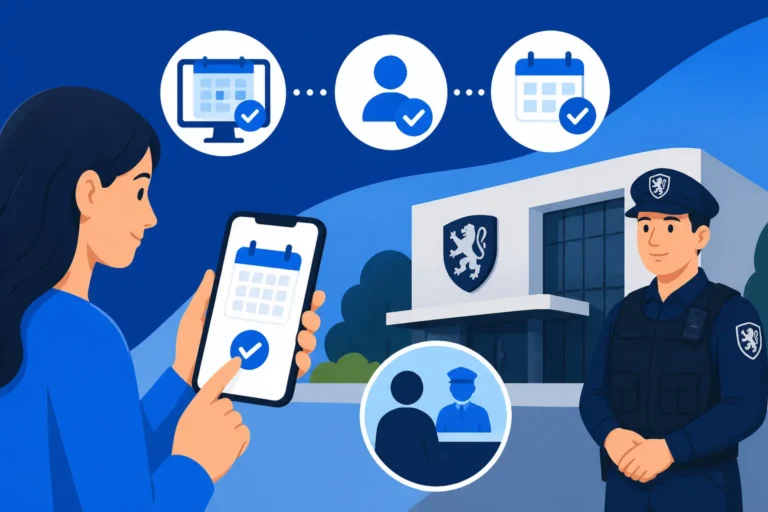
- Estonian Embassy or Consulate Abroad: If you are outside Estonia, you'll generally apply at the nearest Estonian representation in your home country or country of legal residence. You'll typically need to book an appointment.
- PPA Service Point in Estonia: If you are already in Estonia on a long-stay (Type D) visa – perhaps you came to look for work or start a job that requires short-term registration first – you might be able to apply at a PPA service point in Tallinn, Tartu, or other larger cities. However, this is usually only possible if your legal stay allows it and if you are submitting your application for the first residence permit in Estonia. Always verify this directly with the PPA, as rules can change. Booking an appointment at the How to Book an Appointment at the Police and Border Guard Board (PPA) is crucial, as walk-ins are rarely accepted.
The interview process: Depending on your nationality and the specifics of your case, you might be invited for an interview at the embassy/consulate or PPA service point. This is usually a straightforward chat to confirm details, verify your identity, and ensure you understand your obligations. Be prepared to discuss your job, why you want to work in Estonia, and your plans.
The Waiting Game and Next Steps
Once you've submitted your meticulously prepared application, the hardest part begins: the waiting.
Processing times: The PPA states an official processing time, which can range from two to three months, but realistically, it can take longer, especially if they require additional documents or if you're applying during peak seasons. It’s a nerve-wracking period, and unfortunately, there's not much you can do but patiently wait. The PPA website usually has a portal where you can check the status of your application, but don't expect daily updates. This can be a real test of patience, and it's completely normal to feel anxious during this phase.
What happens after approval:
If your application is approved, congratulations! You'll receive a notification. If you applied abroad, your residence permit card will be issued either at the embassy/consulate or, in some cases, you might be given a single-entry visa to travel to Estonia to pick up your card at a PPA service point. The card contains your biometric data and will be your official proof of residence and work authorization.
First registration requirements in Estonia:
Once you arrive in Estonia with your new permit, or pick up your card, one of your very first tasks will be to formally register your place of residence in the Estonian Population Register. This is a mandatory step and absolutely vital for everything else, including getting your unique How to Get Your Isikukood (Personal Code) and Why It Matters for Healthcare, which is like your golden ticket to Estonian life. Without registering your address, your residence permit won't be fully activated, and you won't be able to access many essential services. For more on this, check out our guide on Registering Your Place of Residence in Estonia: The Complete Guide.
Alternative Avenues: Short-Term Employment and Startup Visa
Not everyone needs or qualifies for a full temporary residence permit. Estonia offers a couple of other paths for specific circumstances.
Short-Term Employment Registration: A Quicker Option (Sometimes)
This route is often less talked about but can be a lifesaver for certain roles and situations. It's important to reiterate that this is not a residence permit, but rather a registration of your right to work in Estonia for a limited period.
When it applies:
- Seasonal Work: Common for agriculture or tourism during peak seasons.
- Specific IT Specialists: Often used for short-term projects or initial entry for highly skilled tech talent, sometimes before applying for a full residence permit.
- Teachers: Foreign language teachers can sometimes use this.
- Sports Professionals, Cultural Workers, Researchers: Specific categories are often eligible.
- Startup Employees: If you're working for an Estonian startup, you might be eligible under specific conditions.
Employer registers directly with PPA: The beauty of short-term employment registration is that it's often faster. Your employer registers your employment with the PPA directly. The PPA then checks if you have a valid visa or visa-free status to enter Estonia and, if so, registers your employment. You usually need to have a valid long-stay (Type D) visa to enter Estonia for this purpose, or be from a visa-exempt country.
Duration limits: Generally, you can be registered for short-term employment for up to 365 days within a 455-day period. This is crucial to remember; it’s not 365 days continuously if you leave and re-enter. There are slightly longer durations for highly qualified specialists, allowing up to 270 days within a 365-day period after you’ve used up your first 365 days.
Can it lead to a residence permit? Yes, sometimes! Many non-EU citizens who start with short-term employment registration (often on a Type D visa) use this as a stepping stone. If their employer is happy and the role is long-term, they can then apply for the temporary residence permit for employment while already in Estonia. This can be a smoother transition as you're already here and settled.
The Estonian Startup Visa: For Founders and Talent
Estonia is famous for its vibrant startup ecosystem and its e-Residency program, but the Startup Visa is a direct pathway for founders and key team members to actually relocate to Estonia.
Brief overview: The Startup Visa is designed to attract innovative entrepreneurs and their teams who want to build and grow their startups from Estonia. It's a special category that bypasses some of the traditional labor market tests, acknowledging the unique nature of startup employment.
Who it's for:
- Startup Founders: If you have an innovative business idea and want to establish your company in Estonia.
- Startup Team Members: If you're joining an Estonian startup that has already received endorsement.
Process: The key step here is getting an endorsement from Startup Estonia. This governmental body evaluates your startup's potential, innovation, and scalability. If your startup gets endorsed, you (and your team members, if applicable) can then apply for a long-stay (Type D) visa or a temporary residence permit based on entrepreneurship, with significantly fewer hurdles regarding labor market tests.
Specific benefits: The Startup Visa offers a faster track to residency for those in the tech and innovation sector. It removes the need for the employer to prove no local candidate exists, which is a massive advantage. For many talented individuals looking to dive into Estonia's booming tech scene, this is an excellent route. If you're considering this, our detailed guide on Understanding the Startup Visa for Founders in Estonia will be invaluable.
Important Considerations and Expat Realities
Beyond the paperwork, there are practical realities of moving to and working in Estonia that every non-EU citizen needs to consider. These are the things that make life here actually work.
Health Insurance: A Non-Negotiable
I mentioned it before, but it bears repeating: valid health insurance is not just a formality; it's a critical requirement for your residence permit application and your general well-being in Estonia.
Mandatory requirement: The Estonian Police and Border Guard Board (PPA) is very strict about this. Your insurance policy must cover standard medical treatments, accidents, and often, repatriation, for the entire duration of your requested permit.
Public vs. private options:
Once you have your residence permit and are officially employed and paying social tax in Estonia, you'll become eligible for the state health insurance provided by the Estonian Health Insurance Fund (Tervisekassa). This is excellent public healthcare coverage. However, there's usually a waiting period before your Tervisekassa coverage kicks in (often a month after your employment officially starts). For that interim period, and certainly for your initial application, you must have private health insurance. Many expats opt for private insurance providers like Cigna Global because their policies are designed for international living and are widely accepted by immigration authorities. They cover you from day one and can bridge any gaps before your public insurance becomes active.
Failing to have adequate health insurance can lead to your application being rejected or significant out-of-pocket costs if you fall ill during the initial weeks. Don't risk it; get it sorted. For a deep dive into the system, our comprehensive guide on The Complete Guide to Healthcare in Estonia for Expats (2027) is a must-read.
Finding Accommodation and Moving Logistics
Proving you have a place to live is a requirement, but actually finding that place can be its own adventure, especially if you're not yet in Estonia.
Proof of accommodation needed for residence permit: For your residence permit application, you'll need to show a rental agreement or a letter from your employer confirming accommodation. This is usually straightforward if you're already employed.
Challenges of finding rentals before arrival: The real challenge for many expats is finding suitable long-term rentals before they've even arrived or received their permit. Landlords often prefer to meet prospective tenants, and securing a place from abroad can be tricky. It's not uncommon for expats to book short-term Airbnbs or temporary accommodations for the first few weeks, then actively search for a permanent home once they're on the ground. Be prepared for this. Our guide on The Complete Guide to Renting an Apartment in Estonia (2027) offers practical advice for navigating this market.
Moving logistics: And then there's the actual move. If you're coming from far away, shipping your belongings can be a significant undertaking. Services like Sirelo offer platforms to compare international moving companies, helping you find reliable movers who can handle the logistics of getting your life from your home country to Estonia. It's a big step, so planning your move properly can save a lot of headaches.
The Isikukood: Your Estonian Identity
The Isikukood, or personal identification code, is arguably the most important number you'll receive in Estonia. It's a unique 11-digit number that links you to virtually every public and private service.
Why it's essential for everything: Without an Isikukood, you can't properly register with a family doctor, open a bank account easily, access your digital health records (Digilugu), or even set up utilities seamlessly. It's your digital key to Estonian society.
How to get it during the residence permit process: The good news is that when your temporary residence permit for employment is issued and your place of residence is officially registered in the Population Register, your Isikukood is usually assigned automatically. You don't apply for it separately once your residence permit is approved and your address is registered. This is one of those small but significant ways Estonia’s digital infrastructure streamlines things once you’re officially in the system. To understand its profound importance, consider reading How to Get Your Isikukood (Personal Code) and Why It Matters for Healthcare.
The journey to an Estonian work permit as a non-EU citizen certainly has its twists and turns, but with proper preparation, understanding the process, and a good dose of patience, it’s a perfectly achievable goal. Estonia truly is a fantastic place to live and work, and once you're past the initial hurdles, you'll find a welcoming and digitally advanced society.
Disclaimer
Please note that immigration laws and procedures are subject to change without prior notice. While I strive to provide accurate and up-to-date information, this guide is for informational purposes only and does not constitute legal advice. Always consult the official websites of the Estonian Police and Border Guard Board (PPA) or a qualified immigration expert for the most current and personalized guidance regarding your specific situation.