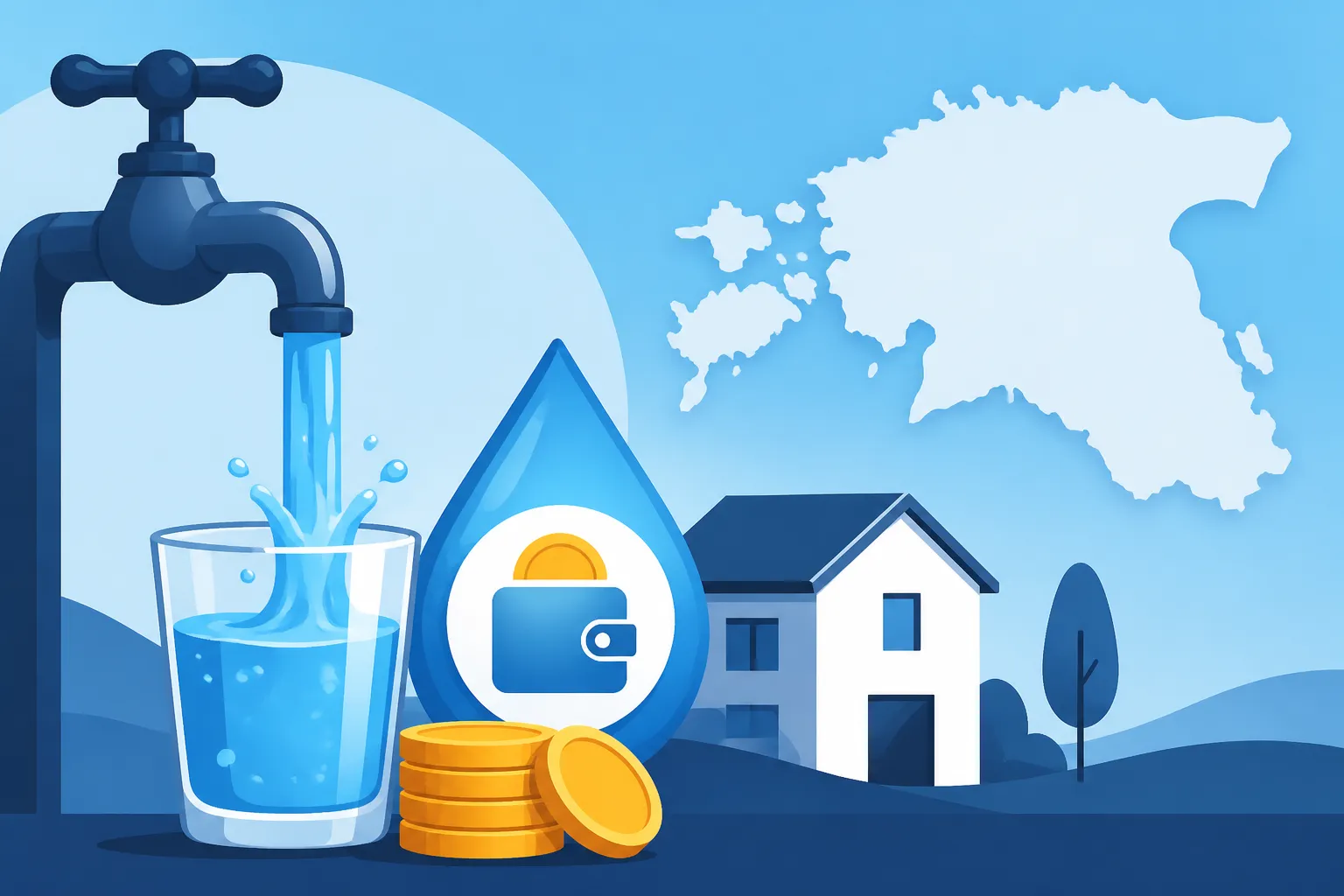
How Much Does Water Cost Per Month in Estonia?
One of the first things that hits you when you move to a new country like Estonia, especially if you're coming from a place with different utility billing structures, is trying to figure out how much the basics actually cost. Water, heating, electricity – these can feel like a labyrinth of numbers, and your water bill is certainly no exception. It’s not just the usage; there are often underlying fees that can surprise you. This guide will walk you through what to expect for your monthly water costs in Estonia, demystifying those bills so you can budget with confidence.
Understanding Your Water Bill in Estonia
When you first get your "kommunaalkulud" (utility bill) in Estonia, it can feel like you're deciphering an ancient text, especially if your Estonian is still a work in progress. Water isn't just "water" here; it's a combination of different charges that all contribute to the final amount you pay each month. It's easy to feel overwhelmed, but once you break it down, it starts to make sense.
Firstly, you're paying for the actual water you consume, which is measured in cubic meters (m³). This is the most straightforward part, but it's often split into cold water and hot water, with hot water typically costing more due to the heating component. Secondly, you're paying for "kanalisatsioon," or wastewater, which is the cost associated with treating and disposing of the water you've used. This is almost always directly linked to your water consumption, often charged at the same rate per cubic meter. But wait, there's more! Beyond your personal consumption, there are often fixed fees or shared costs that come through your apartment association (korteriühistu), especially if you live in an apartment building. These can cover things like communal water usage (e.g., for cleaning common areas) or infrastructure maintenance. If you're planning your move, perhaps even using a service like Sirelo to handle logistics, getting a handle on these recurring costs early on is a smart move.
Average Monthly Water Costs for Expats in Estonia
So, what’s the magic number? The truth is, there isn't one single answer, as your water cost can fluctuate based on a few key factors: where you live, how many people are in your household, and your personal consumption habits. However, I can give you some realistic ranges based on what expats typically experience.
In general, for a single person living alone in a standard apartment in Tallinn or Tartu, you might expect to pay anywhere from €10 to €25 per month for water and wastewater. This assumes average daily usage – showering, cooking, a bit of laundry. For a couple, this amount usually rises to €25 to €45 per month. For a family with children, especially if you're in a larger apartment or house, your monthly bill could range from €40 to €70+, or even higher depending on usage and location.
It's crucial to remember that these are just averages. A family of four who are diligent about water-saving might pay less than a single person who enjoys long, hot showers daily. Also, the city you live in can make a slight difference; while prices are somewhat regulated, there can be minor variations between municipalities or even different utility providers within the same city. Older buildings might have less efficient plumbing, leading to higher shared costs through the apartment association, while modern developments often boast better efficiency. Understanding these "kommunaalkulud" can sometimes feel like a puzzle, but it’s an essential part of your overall The Complete Guide to Cost of Living in Estonia for Expats (2026).
Breaking Down the Components of Your Estonian Water Bill
Let's dive deeper into the individual elements that make up that seemingly complex water bill you'll receive. Understanding each part helps you identify where your money is going and, more importantly, where you might be able to save.
Water Consumption Veetarbimine
This is the most straightforward part of your bill. "Veetarbimine" directly translates to water consumption. Both cold water ("külm vesi") and hot water ("soe vesi") are typically metered individually in most modern Estonian apartments. The cost is calculated per cubic meter (m³). As of early 2024, the average price for cold water across Estonia, including wastewater services, hovers around €2.00 to €3.50 per cubic meter. Hot water, however, is significantly more expensive. This is because it includes the cost of heating the water, which is often linked to the building's central heating system or a dedicated boiler. Hot water can easily cost anywhere from €6 to €10+ per cubic meter, sometimes even more depending on the energy source and efficiency of your building.
It's important to note that if your apartment doesn't have individual hot water meters, your hot water consumption might be estimated based on the number of residents in your apartment or allocated proportionally based on the building's total hot water usage, which can sometimes lead to unexpected costs. That's why understanding your rental agreement and what's included in your utility setup is crucial when you're The Expat Guide to Setting Up Utilities in Estonia.
Wastewater Kanalisatsioon
Often listed as "kanalisatsioon," this charge covers the collection, treatment, and disposal of the water that goes down your drains. In Estonia, the wastewater charge is almost universally tied to your fresh water consumption. This means for every cubic meter of cold or hot water you use and subsequently send down the drain, you'll be charged an equivalent amount for wastewater services. The rate for "kanalisatsioon" is usually bundled with the cold water charge or specified separately, but the volume is always based on your metered water intake.
So, if your cold water costs €1.50/m³ and wastewater is an additional €1.00/m³, your effective cold water price is €2.50/m³. This parity makes budgeting simpler, as you only need to monitor your total water consumption to estimate your combined water and wastewater expenses. It’s part of the broader category of Understanding Utility and Maintenance Costs Kommunaalkulud in Estonia you'll encounter.
Fixed Fees and Apartment Association Charges Korteriühistu Tasud
Now, this is where things can get a little less straightforward for expats. If you live in an apartment building, a significant portion of your monthly utility bill will come through your "korteriühistu," or apartment association. These charges can include a variety of fixed and variable costs, some of which are related to water:
- General Water Maintenance: Funds for maintaining the building's plumbing system.
- Communal Water Usage: Water used for cleaning common areas, watering shared gardens, or heating the building. This is usually split among all residents based on apartment size or number of occupants.
- Heating Component for Hot Water: As mentioned, the cost of heating the water often comes via the apartment association, as it's part of the central heating system. This can be a substantial part of your hot water cost.
- Readiness Fee/Subscription Fee: Some providers or apartment associations might have a small fixed fee for simply being connected to the water network, regardless of usage.
These "korteriühistu tasud" are a common feature of Estonian housing, and they can vary significantly between buildings. A newer, well-maintained building might have lower maintenance costs, while an older building undergoing renovations could have higher fees. It's really important to get a clear breakdown of these charges when you're considering a rental property. Don't be shy about asking your landlord for previous utility bills; it’s the best way to understand the full picture of your How Do I Understand My Kommunaalkulud Utility Bills in Estonia? and the apartment association’s role in them.
Strategies for Managing and Reducing Your Water Costs
Living in Estonia means embracing a certain level of practicality, and managing your utility costs is definitely part of that. While you might not be able to change the per-cubic-meter rate, there are plenty of ways to keep your monthly water bill in check.
Monitoring Your Usage
The digital revolution has made a lot of things easier in Estonia, including keeping an eye on your consumption. Many apartment buildings have digital water meters that can be read remotely, or you might need to submit your readings monthly to your landlord or apartment association.
- Regular Meter Checks: Even if readings are submitted digitally, it's a good habit to periodically check your physical water meters (usually found in your bathroom, kitchen, or a utility closet). This helps you detect any unusual spikes that might indicate a leak or an inaccurate reading.
- E-banking and Utility Portals: Most Estonian banks (like Swedbank, SEB, LHV) and utility providers offer excellent online banking and client portals where you can track your past bills and sometimes even your real-time consumption if your building has smart meters. Knowing how much you used last month helps you set a target for this month. Getting comfortable with these digital platforms is key to navigating life here. When you first arrive, ensuring you have reliable mobile data with an eSIM from a provider like Airalo can be incredibly helpful for accessing these online services and communicating with landlords.
- Ask for Bills: If you’re renting, always ask your landlord to see previous utility bills for the apartment. This gives you a historical baseline and helps you understand seasonal variations. Some apartment associations, like those in Tallinn or Tartu, have very clear breakdowns of costs.
Water-Saving Habits
This one seems obvious, but small changes can truly add up, especially with those higher hot water costs.
- Shorter Showers: This is the big one. Hot water is expensive. Cutting your shower time by even a few minutes each day will have a noticeable impact.
- Turn Off the Tap: While brushing teeth, shaving, or washing dishes, turn off the water when you're not actively using it. It’s simple, but effective.
- Full Loads for Appliances: Only run your dishwasher or washing machine when they are completely full. Modern appliances are generally quite water-efficient, but running half-empty loads is still wasteful.
- Fix Leaks Promptly: A dripping tap or a running toilet can waste hundreds of liters of water over a month. Report any leaks to your landlord or apartment association immediately. Not only will it save you money, but it prevents damage to the building.
- Efficient Toilets: If you have an older toilet, consider putting a brick or a water-filled bottle in the cistern to reduce the amount of water used per flush. Newer toilets often have dual-flush options – use the smaller flush whenever possible.
Understanding Your Apartment Association
The "korteriühistu" plays a massive role in your overall utility costs, including water. It's not just about what you use inside your four walls, but how efficiently the entire building operates.
- Ask Questions: If you’re a long-term resident, attend apartment association meetings (if you understand enough Estonian or have a translator). Ask questions about the building’s efficiency, planned renovations, and how communal costs are allocated.
- Building Efficiency: Older buildings often have outdated plumbing or insulation, leading to higher shared heating costs (which impact hot water prices) or greater water loss. Renovations by the apartment association can significantly improve efficiency, but they often come with temporary increases in fees. Knowing How Do I Pay the Korteriühistu Apartment Association Fee in Estonia? is just one part of the picture; understanding what you're paying for is key.
- Communal Usage Transparency: Ensure your apartment association provides a clear breakdown of communal water usage. Transparency helps ensure fair allocation and identifies potential issues.
Estimated Monthly Water Costs Table
To give you a clearer picture, here's a table summarizing estimated monthly water and wastewater costs in Estonia for different household sizes, assuming average usage in a modern apartment. Keep in mind these are indicative and actual costs may vary.
| Household Size | Cold Water & Wastewater (m³) | Hot Water & Wastewater (m³) | Estimated Total Monthly Cost | Notes |
|---|---|---|---|---|
| Single Person | 2-4 m³ | 1-2 m³ | €10 – €25 | Assumes mindful use, short showers. |
| Couple | 4-7 m³ | 2-4 m³ | €25 – €45 | Shared baths, moderate laundry. |
| Small Family (3) | 6-9 m³ | 3-5 m³ | €40 – €70 | Children's baths, increased laundry. |
| Larger Family (4+) | 8-12+ m³ | 4-7+ m³ | €60 – €100+ | High usage, multiple showers, regular laundry. |
Prices are estimates based on average rates of €2.50/m³ for cold water/wastewater and €8.00/m³ for hot water/wastewater in early 2024. Actual costs depend on your specific utility provider, apartment association fees, and personal consumption habits.
Hopefully, this breakdown makes your Estonian water bill a little less daunting. It’s all part of the expat learning curve, and with a little attention, you’ll be managing those kommunaalkulud like a local in no time! Remember, getting your How Do I Get an Isikukood Before Renting an Apartment in Estonia? and subsequently Registering Your Place of Residence in Estonia: The Complete Guide are fundamental steps that will also facilitate your utility setup.
Disclaimer
Please note that the information provided in this guide is for general informational purposes only and is based on general trends and data available at the time of writing. Utility costs, regulations, and specific provider rates in Estonia can change. While every effort has been made to ensure accuracy, individual situations may vary significantly. Always consult with your landlord, apartment association, or utility provider for the most accurate and up-to-date information regarding your specific water costs and billing.