How Do I Get an Estonian Driving Licence from Scratch?
Arriving in Estonia, full of excitement and maybe a little trepidation, you quickly realise that getting around efficiently often means having your own set of wheels. But if you’re like many of us who arrive without a valid EU/EEA driving licence, the prospect of getting an Estonian one from scratch can feel incredibly daunting, like trying to decipher an ancient runic text. This guide is here to strip away the mystery, walking you through every single step of obtaining your Estonian driving licence, from understanding the initial requirements to triumphantly holding that little plastic card in your hand.
Understanding the Estonian Driving Licence System for Newcomers
Estonia’s approach to driving licences is systematic, as you might expect from a country so digitally advanced. It's designed to ensure that anyone getting behind the wheel is thoroughly competent and understands the local rules of the road. For many expats, especially those coming from countries with vastly different driving cultures or left-hand traffic, starting the process from zero here can be a steep learning curve. But rest assured, it’s a well-trodden path, and with the right information, you’ll navigate it successfully.
Who Needs to Start from Scratch?
The critical question for many expats is whether they can simply exchange their existing licence or if they genuinely need to go through the entire process. Generally, if you hold a valid driving licence issued by an EU/EEA member state, you're usually in luck and can exchange it quite straightforwardly at the Estonian Transport Administration (Transpordiamet). However, if your licence is from outside the EU/EEA, the rules become a bit more nuanced.
If your non-EU/EEA licence is recognised under specific international agreements (like the Geneva or Vienna Conventions), you might be able to use it for a certain period, often up to 12 months from your registration in Estonia. After that, or if your licence isn't from one of these recognised countries, you're looking at starting from square one. This means enrolling in a local driving school, undertaking theory lessons, practical training, and passing both the theory and practical driving tests here in Estonia. It’s a full commitment, but it’s the only way to ensure you’re legal on Estonian roads long-term if your existing licence doesn't cut it. For a deeper dive into the general rules, check out the comprehensive guide on Driving in Estonia: Licences, Registration and Rules for Expats (2027).
The General Steps of the Process
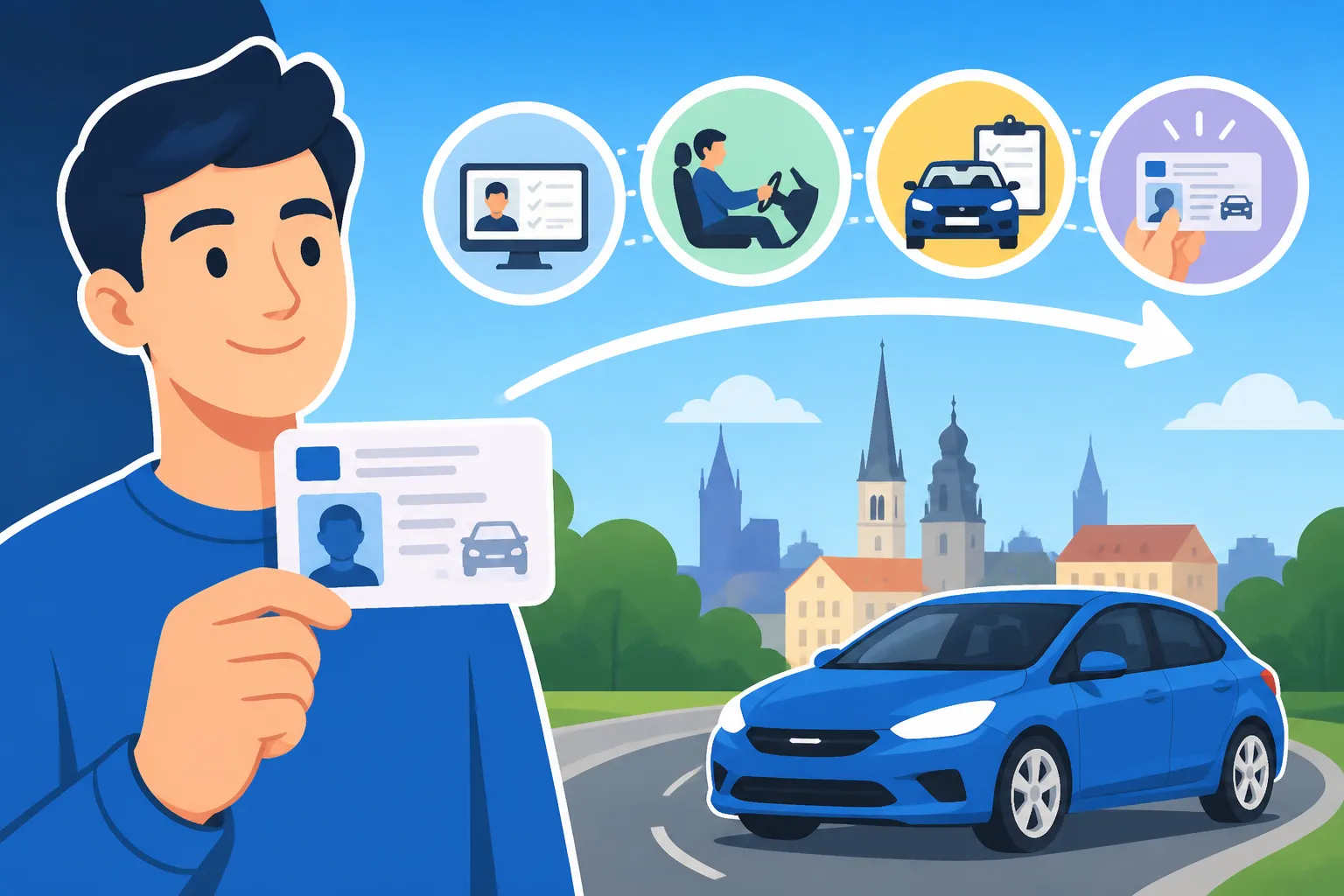
The journey to an Estonian driving licence, when starting from scratch, can be broken down into several key stages, each with its own set of requirements and challenges. It’s not just about learning to drive; it’s about navigating an administrative process, often in a new language.
- Medical Certificate: Before you even set foot in a driving school, you’ll need a valid medical certificate proving you’re fit to drive. This involves a visit to a general practitioner or a specialised medical commission. They'll check your eyesight, hearing, and overall health to ensure there are no conditions that would impair your ability to drive safely. This might feel like an extra hoop to jump through, but it’s a standard safety measure. Sometimes, your local family doctor (perearst) can issue this, but larger polyclinics often have a dedicated commission for driving permits.
- Driving School Enrolment: This is where the real learning begins. You’ll need to enrol in a recognised driving school (autokool). They will provide both the theoretical instruction and the practical driving lessons. Finding an English-speaking school or instructor is key for many expats, as the subtleties of road rules and traffic situations are best understood in a language you’re fluent in.
- Theory Training and Exam: The first major hurdle is the theory component. This involves classroom lessons (or increasingly, online modules) covering everything from traffic laws and road signs to first aid and environmental driving. After completing the required hours, you'll take a theory exam at the Estonian Transport Administration.
- Practical Driving Lessons: Once theory is underway, you’ll start your practical lessons with an instructor. These hours are crucial for developing your actual driving skills, learning to navigate Estonian roads, and understanding local driving etiquette.
- Practical Driving Exam: The final test of your skills. This is the road test conducted by an examiner from the Transport Administration. It’s designed to assess your ability to drive safely, independently, and in compliance with all traffic rules in real-world conditions.
- Licence Issuance: Pass both exams, and congratulations! You’ll then apply for your driving licence at the Transport Administration, often receiving it within a few days or weeks.
This process, while detailed, is logical. Each step builds on the last, ensuring you’re well-prepared for the responsibilities of driving. Having your Isikukood (Personal Code) is paramount for all these stages, as it's your unique identifier for all official interactions in Estonia.
Navigating Driving Schools and Theory Training
Choosing a driving school in Estonia can feel like picking a needle from a digital haystack, especially if you’re new to the country and not yet fluent in Estonian. However, it's a critical decision that will significantly impact your learning experience and success. Many expats find the sheer volume of information, often presented only in Estonian, to be an initial barrier.
Choosing the Right Driving School (Autokool)
When you're looking for an autokool, especially as an expat, there are several factors to consider beyond just the price tag. The cheapest option isn't always the best, particularly when it comes to something as vital as learning to drive safely.
Firstly, language support is non-negotiable for most. Look specifically for schools that advertise English-language theory courses and instructors. Some schools, especially in Tallinn and Tartu, cater specifically to expats and international students. Don't be shy about calling them up or sending an email (in English!) to inquire about their English-speaking staff and materials. Schools like Autokool Drive, though just an example, often have bilingual instructors and resources, which can make a world of difference. You'll want an instructor who can clearly explain complex traffic scenarios and nuances without you having to constantly reach for a translation app.
Secondly, consider the reputation and pass rates of the school. While official statistics on expat-specific pass rates are hard to come by, you can often find reviews online or ask in expat groups for recommendations. A school with a high overall pass rate often indicates effective teaching methods and experienced instructors.
Thirdly, think about flexibility and location. Are the theory lessons offered at times that suit your work schedule? Do they have practical lesson slots available when you are free? Is the school conveniently located near your home or workplace, or do they offer pick-up/drop-off services for practical lessons? For those exploring Estonia and using navigation apps, having a reliable mobile connection, perhaps with an eSIM from a provider like Airalo, can be a lifesaver when coordinating lessons or finding your way to a new driving range. It's often the little conveniences that make the entire process less stressful.
Finally, clarify what's included in the price. Some schools quote a low initial fee but then charge extra for everything from textbooks to additional practical lessons beyond the minimum required. A transparent breakdown of costs is crucial for budgeting. Remember, this is an investment in your safety and independence, so choosing wisely upfront will pay dividends later.
Diving into Theory: What to Expect
The theory component is the bedrock of your driving knowledge. In Estonia, it's comprehensive, covering far more than just road signs. You'll delve into the intricacies of traffic laws, including specific rules for roundabouts, trams, and pedestrian crossings – areas where rules can differ significantly from your home country. You'll also learn about vehicle mechanics, safe driving techniques, first aid procedures, and even the environmental impact of driving.
Most driving schools offer both in-person classroom lessons and online learning platforms. For expats, online platforms can be incredibly convenient, allowing you to study at your own pace and revisit complex topics. However, don't underestimate the value of classroom interaction, especially if there's an English-speaking instructor who can answer your specific questions. These discussions can clarify ambiguities that text alone might not.
The minimum required theory hours are typically 28 academic hours (a 'lesson hour' is usually 45 minutes). However, simply attending the minimum isn't enough; you'll need to absorb and understand the material deeply. Many schools will also incorporate practice tests into their curriculum, which are invaluable for gauging your readiness for the official exam. Expect to spend a significant amount of time studying outside of formal lessons.
Passing Your Theory Exam
Once your driving school gives you the green light (or more accurately, certifies your completion of the theory course), you’ll be eligible to register for the official theory exam at the Estonian Transport Administration. This exam is usually taken on a computer and consists of multiple-choice questions.
Here’s what to generally expect:
- Format: The exam typically has a set number of questions (often 30 or more), covering various categories like traffic rules, road safety, and vehicle knowledge. You'll have a time limit, and usually, a certain number of incorrect answers are allowed, but often with stricter limits on "critical error" questions.
- Language: Crucially for expats, the exam can be taken in Estonian, Russian, or English. Make sure to specify your preferred language when booking your exam appointment.
- Preparation: Your driving school materials are your primary resource, but don't hesitate to seek out additional practice tests online. Many apps and websites offer mock exams that mimic the official Transport Administration test. Practice, practice, practice! Understanding the specific phrasing of questions and how to interpret traffic situations from an Estonian perspective is vital.
- Booking: You book your exam time slot through the Transport Administration's e-service portal, which requires your Isikukood. Ensure you have all the necessary documents, including your medical certificate and driving school completion certificate, as they will be checked.
Passing the theory exam is a huge milestone. It not only means you've grasped the foundational knowledge but also allows you to progress fully into the practical driving phase.
Practical Driving Lessons and the Road Test
Once you've conquered the theory, it's time to translate that knowledge into real-world driving. The practical training in Estonia is designed to build confidence, competence, and a keen awareness of local driving conditions. This is where the rubber truly meets the road, quite literally.
Getting Behind the Wheel: Practical Training Hours
The practical driving component requires a minimum of 28 academic hours of driving instruction. These hours are usually divided into individual lessons with your chosen instructor. For many, these lessons are where the bulk of learning happens, especially for those who haven't driven much before or are adapting to new rules.
Your instructor will guide you through various scenarios, starting with basic vehicle control in low-traffic areas and gradually progressing to more complex situations like city driving, highway driving, parallel parking, and reversing manoeuvres. They'll also teach you how to navigate different road conditions, including Estonia’s often snowy and icy winters – a critical skill for anyone driving here.
Key aspects of practical training:
- Vehicle familiarity: You'll typically learn in a car provided by the driving school, which will have dual controls for safety. Getting comfortable with the vehicle's size, feel, and controls is essential.
- Road awareness: Your instructor will focus on developing your observational skills, helping you anticipate potential hazards, understand right-of-way rules (which can sometimes be tricky in Estonia, especially at unmarked intersections), and safely interact with other road users, including pedestrians, cyclists, and public transport.
- Manoeuvres: You'll spend considerable time mastering manoeuvres like parking (both parallel and reverse), turning in tight spaces, and starting on an incline. These are often distinct segments of the final road test.
- Independent driving: Towards the end of your training, your instructor will encourage more independent driving, providing less instruction and more guidance on decision-making, simulating the conditions of the actual road test.
It's very common for expats, particularly those from countries with different driving standards, to need more than the minimum required hours. Don't feel pressured to rush. It's far better to be over-prepared and confident than to save a few euros only to fail the test and have to pay for retakes and additional lessons. During this period, if you're navigating to various lesson locations or trying to learn the road network, having a reliable mobile data plan, perhaps with an eSIM from Airalo, can be really helpful for maps and communication.
The Dreaded Road Test (Sõidueksam)
The road test is the ultimate challenge. It’s conducted by an examiner from the Estonian Transport Administration and usually lasts about 45-60 minutes. It's designed to assess your ability to drive safely and competently in a variety of real-world traffic situations. This is where all your theory knowledge and practical skills come together under pressure.
What to expect during the exam:
- Vehicle Check: The examiner will usually start with some basic questions about the vehicle, like how to check the oil or where the horn is, or how to turn on the fog lights. You need to be familiar with the car you’re using.
- Manoeuvres: You'll be asked to perform specific manoeuvres. Common ones include parallel parking, reverse parking into a box, and sometimes a three-point turn or reversing around a corner. These are typically done in a designated practice area or a quiet street.
- Road Driving: The bulk of the test involves driving on public roads, where you'll encounter various traffic situations:
- City driving: Navigating intersections, changing lanes, obeying speed limits, and reacting to pedestrians and cyclists.
- Out-of-city driving: Potentially on higher-speed roads or highways, demonstrating your ability to merge, maintain speed, and handle curves.
- Specific challenges: The examiner might deliberately take you through areas known for tricky junctions or specific traffic signs to test your awareness.
- Independent Driving: Part of the test will involve following directions, but also a segment of independent driving, where you might be asked to drive towards a certain landmark without specific turn-by-turn instructions.
Common pitfalls for expats:
- Language barrier: While examiners might speak English, clear communication is key. If you're unsure of an instruction, it's better to ask for clarification than to guess.
- Nerves: It’s normal to be nervous, but try to stay calm. Practice mindfulness techniques if needed.
- Over-caution vs. hesitation: Examiners want to see safe driving, but also decisiveness. Hesitation at intersections or when merging can be marked as a fault.
- Cultural differences in driving: What might be considered acceptable driving in your home country could be a fault here. For example, some countries are more lenient on rolling stops; in Estonia, a full stop means a full stop.
The results are usually given immediately after the test. If you pass, you'll feel an immense sense of relief and accomplishment. If you don't, the examiner will provide feedback on your mistakes, which is invaluable for preparing for your next attempt. Don't be discouraged; many people don't pass on their first try, and it's a learning experience. You can rebook your exam through the Transport Administration portal.
Beyond the Test: Receiving Your Licence and Staying Legal
After the exhilaration (or exhaustion) of passing your practical exam, the final steps are relatively straightforward. You're almost there!
Collecting Your New Estonian Driving Licence
Once you’ve successfully passed both the theory and practical exams, the Estonian Transport Administration will issue your driving licence. You typically won't walk out with it the same day, but the process is usually quick and efficient.
- Application: You’ll likely apply for your licence immediately after passing the practical test at the Transport Administration office where you took your exam, or you can do it via their e-service portal. You'll need to submit a formal application, provide a photo (they usually take one on the spot or use one from the Population Register), and pay the state fee.
- Required Documents: Make sure you have your ID document (passport or residence card), your medical certificate, and confirmation of passing both exams (though this is usually already in their system). Your temporary residence permit or proof of registered address might also be needed.
- Processing Time: Typically, the licence is produced within a few business days, and you'll be notified when it's ready for collection. You can either pick it up in person at a Transport Administration service office or, in some cases, have it sent to your registered address by post.
- Provisional Period: Be aware that new drivers, especially those under 24, often receive a provisional or "probationary" licence first. This usually lasts for two years and comes with specific restrictions, such as a lower speed limit on certain roads (e.g., 90 km/h on highways where the regular limit is 110 km/h) and stricter penalties for traffic violations. It's essentially a period to prove you can drive responsibly. After this period, if you've maintained a clean driving record, you can apply for a full licence.
Holding that physical driving licence in your hand is a fantastic feeling – it’s a tangible symbol of your perseverance and newfound independence in Estonia.
Key Rules and Regulations for New Drivers
Obtaining your licence is just the beginning; understanding and adhering to Estonia’s traffic laws is crucial for your safety and to avoid penalties. As a new driver, you're expected to be extra vigilant.
- Speed Limits: Be mindful of speed limits. They are strictly enforced, and fines can be hefty. The general limits are 50 km/h in urban areas and 90 km/h outside urban areas, with some highways allowing 110 km/h in summer. As mentioned, provisional drivers often have slightly lower maximum speeds.
- Alcohol Limits: Estonia has a zero-tolerance policy for driving under the influence of alcohol. The legal limit is 0.00% blood alcohol content. Even a tiny amount can lead to serious consequences, including large fines, licence suspension, and even imprisonment.
- Seatbelts: Seatbelts are mandatory for all occupants, front and rear. Children must be in appropriate child safety seats.
- Headlights: Headlights must be on at all times, day and night, year-round. This is a common rule in Nordic and Baltic countries and often catches newcomers off guard.
- Winter Driving: If you get your licence in summer, remember that specific rules apply to winter driving. Winter tyres are mandatory from December 1st to March 1st (with some flexibility depending on weather conditions), and studded tyres have their own permissible period. Snow and ice make driving significantly more challenging, so adjusting your driving style, maintaining greater distances, and being extra cautious are vital.
- Digital Tools: Estonia leverages its digital infrastructure heavily. Always remember that your digital identity is key. Make sure your details on eesti.ee and Digital Government Services in Estonia are up to date, as many official notifications and services are linked there.
Familiarise yourself with the full traffic code. Ignorance of the law is never an excuse. Staying informed will ensure your driving experience in Estonia is safe and hassle-free.
Important Considerations and Common Expat Hurdles
Getting a driving licence in a new country is a significant undertaking, and it's perfectly normal to encounter a few bumps along the way. Estonia, with its unique administrative and cultural nuances, presents specific challenges for expats. Anticipating these can help you navigate the process more smoothly.
Language Barriers and Support
For many expats, the most significant hurdle isn't the driving itself, but the language. While many driving schools and instructors in larger cities like Tallinn and Tartu offer services in English, you might find yourself needing to interact with the Transport Administration (Transpordiamet) or other officials where English isn't always the primary language of communication.
- Driving School Communication: As mentioned earlier, actively seek out driving schools that explicitly offer English theory lessons and instructors. Don't just assume. A good instructor will not only teach you to drive but also explain local road etiquette and specific regulations in a way you understand. They are your primary source of direct, practical information in English.
- Transport Administration: While the Transport Administration's website (transpordiamet.ee) has English sections, and some staff speak English, for more complex queries or specific situations, you might encounter language difficulties. It's often helpful to bring an Estonian-speaking friend or colleague along for appointments if you're not confident in your Estonian.
- Official Documents: Most official documents, from your medical certificate application to the actual driving licence, will be in Estonian. Your driving school should help you understand these, but for other matters, you might need translation support. This is where local expat groups online can be a goldmine of information and advice on specific phrases or forms.
- Learning Estonian: While not a requirement for getting your licence, picking up some basic Estonian phrases, especially related to directions and traffic, will undoubtedly make your life easier both during lessons and on the road. It also helps you integrate into Estonian society more broadly. You might find resources on Learning Estonian: A Complete Guide to Language Courses and Levels useful.
Costs Involved and Budgeting
Getting a driving licence from scratch isn't free, and the costs can add up, making budgeting an important part of the planning process. Prices can vary significantly between driving schools and regions.
Here’s a general breakdown of potential costs (these are approximate and subject to change, so always verify with your chosen school and the Transport Administration):
| Item | Estimated Cost (Euros) | Notes |
|---|---|---|
| Medical Certificate | €20 – €50 | Varies by clinic/doctor. |
| Driving School Fees (Theory & Practical) | €600 – €1200 | Includes minimum required theory and practical hours. English instruction might be at the higher end. |
| Additional Practical Lessons | €30 – €50 per hour | Very common for expats to need extra lessons beyond the minimum. Budget for 5-10 extra hours at least. |
| Transport Administration Theory Exam | €20 – €30 | Fee for each attempt. |
| Transport Administration Road Test | €40 – €50 | Fee for each attempt. |
| Licence Issuance Fee | €25 – €30 | Once you pass everything. |
| Textbooks/Study Materials | €30 – €60 (optional extras) | Some schools include this; others charge extra. |
| Total Estimated Range | €700 – €1500+ | This is a broad range; individual costs will vary. |
Beyond the direct costs, consider the time investment. This isn't a quick process. From enrolment to holding your licence, it could take anywhere from a few months to over a year, depending on your schedule, learning pace, and the availability of exam slots. For those who are new to the country and still settling in, keeping an eye on your overall Cost of Living in Estonia is always a good idea, as these expenses will be part of your initial setup budget.
Another indirect cost could be transportation to and from your driving school and exam centres if they are not easily accessible by public transport. While you’re in Estonia setting up your life, perhaps with the help of international moving services like Sirelo, remember that getting your licence is a foundational step to truly experiencing independence in your new home. Plan your finances and time accordingly, and you'll find the process much less stressful.
The journey to getting an Estonian driving licence from scratch requires patience, dedication, and a bit of administrative navigation. However, with the right preparation and understanding of the steps involved, it’s an entirely achievable goal that will unlock a new level of freedom and independence during your expat life in Estonia.
Disclaimer
Please note that the information provided in this guide is intended for general informational purposes only and may not reflect the most current legal or administrative requirements. Regulations regarding driving licences, fees, and procedures in Estonia can change. It is always recommended to consult the official website of the Estonian Transport Administration (Transpordiamet) and your chosen driving school for the most accurate and up-to-date information. This guide does not constitute legal or professional advice.