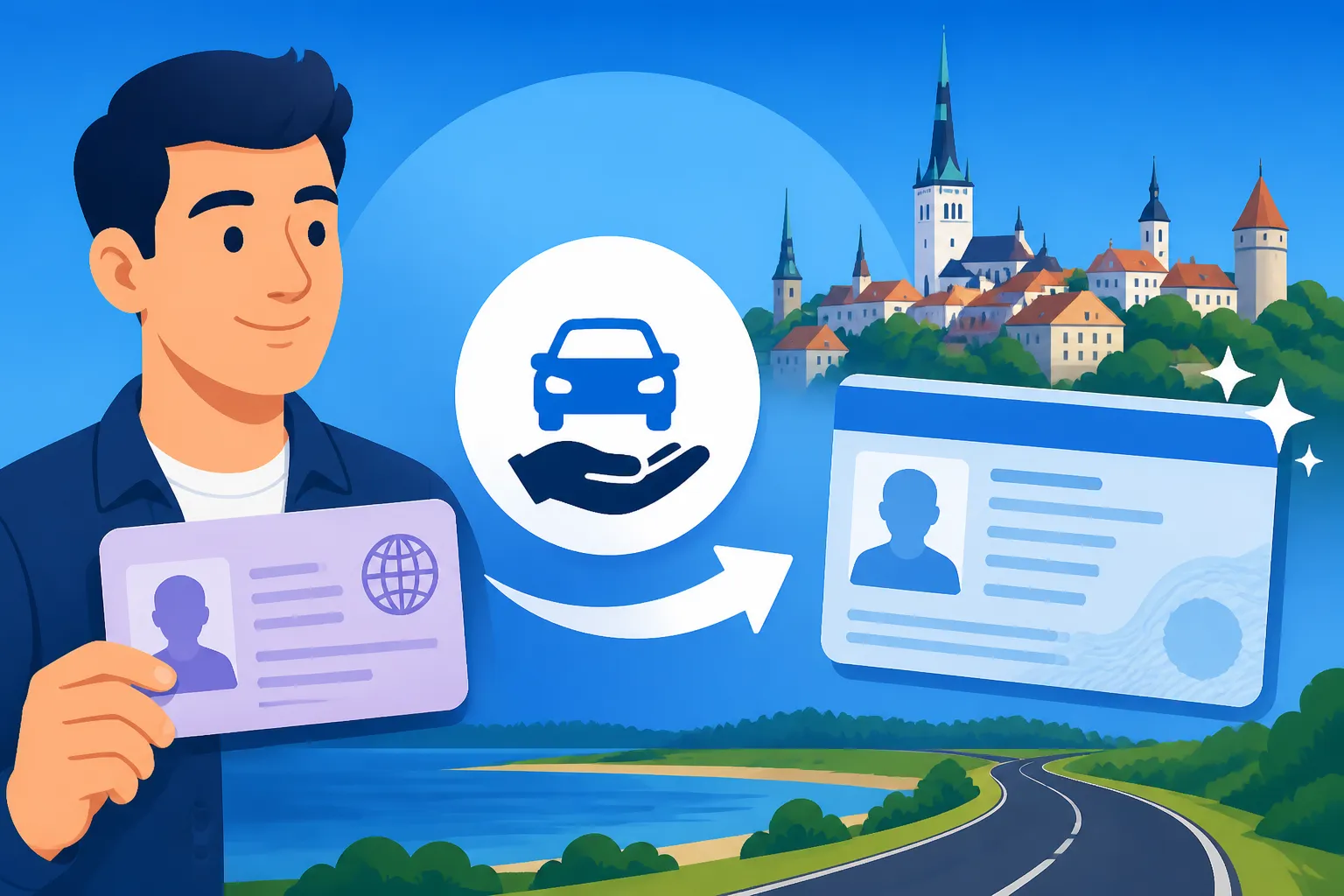
How to Exchange Your Foreign Driving Licence in Estonia
The bewildering maze of Estonian bureaucracy can be a real headache, and let's be honest, nothing feels more essential yet utterly confusing than figuring out your driving situation when you first move here. You’ve probably driven for years, maybe even decades, in your home country, and suddenly, you're faced with a whole new set of rules for something as fundamental as getting behind the wheel. This guide is here to untangle the complexities of exchanging your foreign driving licence in Estonia, offering a realistic, step-by-step walkthrough so you can navigate the process with a bit more confidence and a lot less frustration.
Understanding Estonia's Driving Licence Rules for Expats
Navigating the rules for driving licences in Estonia as an expat can feel like deciphering ancient runes, especially when you're just trying to get from point A to point B. It’s not just about whether your licence is valid; it’s about understanding for how long and under what conditions you can use it, and when the Estonian state politely, but firmly, expects you to get a local one. This is one of those administrative hurdles that can genuinely impact your daily life, from commuting to work to simply exploring this beautiful country.
The 12-Month Rule and Initial Validity
Let’s start with the most crucial piece of information for many of us coming from outside the European Union or European Economic Area: the infamous 12-month rule. When you first establish your residence in Estonia – which means you’ve registered your address in the Population Register and secured a residence permit – your valid foreign driving licence is generally recognised for a period of twelve months. This grace period starts from the date your residence is officially recorded here. It feels generous at first, a year to settle in, but believe me, that year flies by faster than a Tallinn tram on a clear day.
During this initial 12-month window, you're generally good to go. You can drive using your existing licence, often alongside an International Driving Permit (IDP) if your original licence isn't in English, Estonian, or another widely understood language. However, this is strictly a temporary arrangement. Once those twelve months are up, your foreign licence is no longer considered valid for driving in Estonia. This isn't just a suggestion; it’s a legal obligation. If you continue to drive beyond this period without exchanging your licence, you risk fines, potential insurance issues in case of an accident, and a whole lot of unnecessary stress if pulled over by the police. It’s better to mark that 12-month deadline on your calendar with big, bold letters.
For those of us from EU/EEA countries, the situation is thankfully much simpler. Your driving licence is generally recognised throughout Estonia as long as it's valid, and there’s no mandatory exchange requirement based on residence. You can continue to use your home country's licence until it expires, or if it's lost, stolen, or damaged while you're residing here. It’s one of the few administrative perks for our EU/EEA friends.
Who Needs to Exchange Their Licence and Who Doesn't?
So, who falls into which camp? It really boils down to where your original licence was issued and your residency status in Estonia.
EU/EEA Citizens: If your driving licence was issued by a member state of the European Union or the European Economic Area (Norway, Iceland, Liechtenstein), you are in a relatively comfortable position. You do not generally need to exchange your licence for an Estonian one. Your home country licence is fully valid here. The only times you would typically need to interact with the Estonian Transport Administration (Transpordiamet) regarding your licence are:
- Loss, Theft, or Damage: If your EU/EEA licence goes missing or gets damaged while you’re residing in Estonia, you can apply for an Estonian equivalent. This process is usually administrative, and you won't typically need to retake tests.
- Expiry: When your EU/EEA licence is due to expire, you can choose to renew it through the Estonian authorities if you are a permanent resident here. Again, this is generally a straightforward renewal process, not a full re-testing.
- Some expats might choose to exchange their EU/EEA licence purely for convenience, perhaps to consolidate their identification documents or for ease with local digital services. It’s an option, but not a requirement.
Non-EU/EEA Citizens: This is where the process becomes more involved, and often, more frustrating for many expats. If your driving licence was issued by a country outside the EU/EEA, you are legally obliged to exchange it for an Estonian one after you have been residing in Estonia for 12 months. This is non-negotiable if you intend to continue driving.
The key distinction here is "residing." It’s not about how long you’ve been in Estonia as a tourist, but how long you’ve been registered as a resident in the Population Register, typically linked to your temporary residence permit in Estonia or right of residence. If you’re here on a short-term visa or as a pure tourist, your foreign licence, potentially with an IDP, is sufficient for your stay (up to the duration permitted by your visa or Schengen rules). But for anyone settling down, that clock starts ticking.
International Driving Permits (IDPs) are often confused with actual driving licences. An IDP is essentially just a multilingual translation of your existing national driving licence. It allows authorities in foreign countries to understand your driving qualifications. It is not a standalone licence and must always be carried with your original national driving licence. While useful for the initial 12 months for non-EU/EEA residents or for tourists, an IDP does not exempt you from the 12-month exchange rule. It’s a temporary aid, not a long-term solution. Many expats have learned this the hard way, thinking their IDP would cover them indefinitely, only to find themselves in a bind.
Understanding these distinctions from the outset will save you a lot of headache. Don't fall into the trap of thinking your licence from back home will serve you forever, especially if you're from outside the EU/EEA. The Estonian system is quite clear on this, and enforcement can be strict.
The Step-by-Step Process for Non-EU/EEA Licence Exchange
Okay, so you've realised the 12-month clock is ticking, or perhaps it's already expired (oops!). Now, for the nitty-gritty of actually getting an Estonian driving licence. This is where many expats encounter the true Estonian administrative spirit – thorough, digital where possible, but still requiring quite a bit of personal legwork. It's not a walk in the park, but with this roadmap, you'll be well-prepared.
Gathering Your Documents: The Estonian Bureaucracy Starter Pack
Before you even think about stepping foot into a Transport Administration service bureau, you need to arm yourself with a specific set of documents. Missing even one can send you right back to square one, costing you valuable time and another trip. Trust me, you want to avoid that.
Here’s your essential checklist:
- Valid Foreign Driving Licence (Original): This is paramount. You need to present the original document. If it's expired or revoked, it won't be accepted. You'll likely surrender this licence when you get your Estonian one, so be prepared to say goodbye to it.
- Proof of Identity: Your valid passport is the most common and widely accepted form of identification. If you have an Estonian ID card or residence permit card, these are also suitable. This proves who you are.
- Estonian Residence Permit/Right of Residence: This is crucial to demonstrate your legal right to reside in Estonia for longer than the initial tourist period. Your residence permit card or a printout from the Population Register showing your registered address will suffice. This confirms why you're applying for an Estonian licence. You can learn more about this in Registering Your Place of Residence in Estonia: The Complete Guide.
- Medical Certificate (Tervisetõend): Ah, the infamous medical certificate. This isn't just any doctor's note; it's a specific form confirming you are medically fit to drive in Estonia. You cannot exchange your licence without it. You need to visit an Estonian family doctor (perearst) or a private clinic that offers driver's medical examinations. Clinics like Confido or SYNLAB are popular choices for expats, as they often have English-speaking staff. Your doctor will assess your vision, hearing, general health, and review any existing medical conditions. Expect to pay a fee for this, as it's not covered by Tervisekassa for licence applications. Make sure to specifically ask for a "juhiloa tervisetõend" (driving licence medical certificate). Finding an English-speaking doctor can be a challenge but is crucial here; for more help, check out How to Find an English-Speaking Doctor in Estonia.
- Passport-Style Photos: While many service bureaus can take your photo digitally on-site for a small fee, it's always a good idea to have a few physical passport-sized photos just in case, or at least be prepared for the on-site photo.
- State Fee Payment Receipt: There’s a state fee for the licence exchange. You’ll need to pay this beforehand, typically via bank transfer through your Estonian bank account, or at an ATM. Keep the payment confirmation or receipt. The exact amount can be found on the Transport Administration's website (Transpordiamet).
- Certified Translation (if applicable): If your foreign driving licence is not in Estonian, English, or Russian, you will need to provide a certified translation into Estonian. This is not always required for licences in widely recognised languages, but it's best to check with the Transport Administration directly based on your country of origin. Better safe than sorry to avoid delays.
This might seem like a lot, but preparing diligently here will save you immense hassle down the line. Remember, bureaucracy thrives on precision.
The Dreaded Driving Theory and Practical Exams
This is often the most surprising and, let's be honest, disheartening part for many non-EU/EEA expats: the requirement to re-take both the theory and practical driving tests. Many countries have agreements for mutual recognition of licences, but Estonia, for a wide range of non-EU countries, does not. You might have driven for 20 years without a single accident, but in Estonia's eyes, you're essentially starting over with their tests.
Why the Tests? The official reason is to ensure all drivers on Estonian roads are familiar with local traffic laws, regulations, and driving conditions, which can differ significantly from other parts of the world. While you might be an excellent driver, the nuances of Estonian road signs, speed limits, specific rules regarding trams, or right-of-way at unmarked intersections can be unique. It’s their way of ensuring road safety for everyone.
Which Countries Are Exempt? Unfortunately, the list of non-EU/EEA countries whose licences are exempt from re-testing is very short and subject to change based on bilateral agreements. As of my last check, it primarily includes a select few like Switzerland, Japan, South Korea, and some others with specific reciprocal agreements. For the vast majority of non-EU/EEA countries, you will need to take both tests. Always double-check the most current information on the Transpordiamet website, as these agreements can evolve.
Preparing for the Theory Test:
The theory test (liiklusteooria eksam) is a computer-based multiple-choice exam. It covers Estonian traffic laws, road signs, road markings, and basic vehicle knowledge. It's available in Estonian, English, and Russian.
- Resources: There are excellent online resources to help you prepare. Websites like Liiklustestid.ee offer practice tests that mimic the real exam format. Many apps are also available for smartphones. Seriously, invest time in these. Even if you think you know it all, the Estonian specifics can trip you up.
- Study the Official Rules: The Estonian Road Traffic Act (Liiklusseadus) is your bible. Make sure you understand priority rules, especially concerning trams in Tallinn, pedestrian crossings, and specific signalling requirements.
Preparing for the Practical Test:
The practical test (sõidueksam) is administered by an examiner from the Transport Administration and is notoriously rigorous. It assesses your ability to drive safely, independently, and in compliance with all traffic rules.
- Driving Instructor: Even if you're an experienced driver, consider taking a few lessons with a local, English-speaking driving instructor. They can point out common pitfalls, familiarise you with the test routes in your chosen city (Tallinn, Tartu, Pärnu, etc.), and highlight specific Estonian driving habits and expectations of the examiner. This is invaluable, especially for things like parallel parking standards or specific turns.
- Practice, Practice, Practice: The test typically includes city driving, parking manoeuvres (parallel, reverse box), and emergency braking. The examiner will be looking for smooth operation, awareness of surroundings, correct signalling, and adherence to speed limits and traffic laws.
- Language Barrier: The practical test is usually conducted in Estonian or Russian. If you're not proficient, you might need to arrange for an interpreter, or find an examiner who speaks English. Discuss this when booking your test.
This part of the process can be stressful and costly, but it's a hurdle you absolutely must clear. Don't underestimate it.
Submitting Your Application and Awaiting Your New Estonian Licence
Once you have your documents in order and, for non-EU/EEA citizens, have successfully passed both the theory and practical driving tests, you're ready to submit your application.
Where to Apply: All applications related to driving licences are handled by the Estonian Transport Administration (Transpordiamet). They have service bureaus in major cities across Estonia, including Tallinn (e.g., Mäepealse 18), Tartu, Pärnu, Jõhvi, and others.
- Booking an Appointment: It's highly, highly recommended to book an appointment in advance, especially in Tallinn and Tartu, to avoid long queues and potentially wasted trips. You can usually do this through the Transpordiamet's online booking system. This system is generally available in English.
The Application Process:
- Visit the Service Bureau: Arrive for your appointment with all your required documents. Be prepared for a wait, even with an appointment, as things can sometimes run behind.
- Submit Documents: The service specialist will review all your paperwork, including your foreign licence, medical certificate, ID, and proof of residence. They will confirm your passed test results in their system.
- Photos and Biometrics: If you haven't brought your own photos or if they need a digital version, they will take your photo on-site. They might also take your fingerprints.
- Confirm Details: You'll review and confirm the details for your new Estonian driving licence.
- Surrender Foreign Licence: For non-EU/EEA exchanges, you will generally be required to surrender your foreign driving licence. It will either be sent back to your home country's issuing authority or retained by the Transpordiamet. This is why you can't just keep both.
Processing Times:
The official processing time for an Estonian driving licence is usually up to 10 working days, though it can sometimes be faster, especially if all your documents are pristine and there are no complications. You'll typically be notified when your new licence is ready for collection at the same service bureau where you applied.
This final step is usually the most straightforward, assuming you've navigated all the previous hurdles successfully. Once you have that shiny new Estonian driving licence in your hand, you'll feel a significant sense of accomplishment and, more importantly, freedom on the roads!
Special Considerations for EU/EEA Licences and Specific Scenarios
While the most complex situation often involves non-EU/EEA licence holders, there are still specific considerations for those with EU/EEA licences and other unique driving situations. It's never as simple as "you have a licence, you can drive," especially in a new country.
EU/EEA Licences: When and Why to Exchange
For citizens of the European Union and European Economic Area, the rules are generally much more lenient regarding driving licences. Your licence is recognised across the EU/EEA, meaning you can use your home country's licence in Estonia without needing to exchange it for an Estonian one. This simplifies life immensely for many expats. However, there are still specific circumstances when you should or might choose to exchange it:
- Lost, Stolen, or Damaged Licence: If your EU/EEA driving licence is lost, stolen, or severely damaged while you are officially residing in Estonia, you must apply for an Estonian driving licence. You cannot get a replacement from your home country if you are a registered resident elsewhere in the EU/EEA. This process is typically administrative, requiring proof of identity, residence, and a police report if stolen. You will generally not be required to retake driving tests.
- Expiry of Your Licence: When your EU/EEA driving licence is approaching its expiry date, you can renew it through the Estonian Transport Administration if you are a registered resident. Again, this is usually a renewal process, not a re-examination, provided your previous licence was valid. The new Estonian licence will then be valid for the standard Estonian period (usually 10 years for car licences).
- Voluntary Exchange: Some EU/EEA expats choose to exchange their licence even when not required. Why?
- Convenience: Having an Estonian-issued licence can simplify interactions with local authorities (e.g., police, insurance companies), as all the details are in Estonian.
- Consolidation: If you're planning to stay long-term, having an Estonian licence makes it feel more integrated with your other Estonian identification documents.
- Digital Services: While not always strictly necessary, having an Estonian ID card and driving licence can sometimes streamline access to various Estonian e-services, though your EU/EEA ID card and Mobile-ID often provide similar access.
It’s a personal choice if not mandatory, but if you do decide to exchange, the process is considerably less arduous than for non-EU/EEA licences, as it typically bypasses the need for re-testing.
Driving with an International Driving Permit IDP and Short-Term Stays
Many expats arrive with an International Driving Permit (IDP), and it's important to clarify its role. An IDP is not a standalone driving licence; it is merely an official translation of your existing national driving licence into several languages. It's intended to facilitate communication between you and foreign law enforcement or rental agencies.
- Always Carry Both: If you are using an IDP, you must always carry it alongside your original national driving licence. The IDP is useless on its own.
- Limited Validity: An IDP typically has a validity period of one year from its issue date. This makes it suitable for tourists or those on very short-term stays (within the 12-month grace period for non-EU/EEA residents).
- Not a Long-Term Solution: Critically, an IDP does not exempt non-EU/EEA residents from the requirement to exchange their driving licence after 12 months of residence in Estonia. It is a temporary measure, not a substitute for a locally recognised licence once you become a resident.
- Tourists: For tourists visiting Estonia, an IDP, combined with your national licence, is often the easiest way to drive, especially if your licence is not in English or a commonly understood language. Ensure your IDP is issued by an authority recognised by the UN conventions on road traffic (most commonly the AAA in the US or similar organisations worldwide).
So, while an IDP can be incredibly helpful when you first arrive or for short visits, understand its limitations. It's a bridge, not a permanent solution for long-term residents.
Learner's Permits and First-Time Drivers in Estonia
What if you've never held a driving licence before, or your foreign licence doesn't qualify for exchange? Then you'll need to go through the full process of obtaining a first-time Estonian driving licence. This is a journey many young Estonians undertake, and it's quite structured.
- Minimum Age: The minimum age to start driving lessons for a B-category (car) licence is typically 16, but you can only get a full licence at 18.
- Driving School: You must enrol in a registered driving school (autokool) in Estonia. The curriculum includes both theoretical instruction and practical driving lessons.
- Theory Course: This involves classroom hours covering the Road Traffic Act, vehicle mechanics, first aid, and environmental awareness.
- Practical Training: You'll undertake a prescribed number of practical driving lessons with a certified instructor. This often includes specific modules like night driving and driving on slippery roads.
- Supervised Driving: Before taking the final practical test, you typically need to complete a period of supervised driving with a qualified instructor or an experienced driver, logging a certain number of hours.
- Exams: You will then take the theory and practical exams administered by the Transport Administration, similar to those faced by non-EU/EEA licence exchangers, but often with the added pressure of being a complete novice.
This is a comprehensive process designed to ensure new drivers are thoroughly prepared for Estonian road conditions. It’s distinct from exchanging a licence, but it’s the path you’ll take if your foreign licence isn’t recognised or you’re starting from scratch. Be prepared for a significant time and financial commitment.
Costs, Challenges, and Insider Tips for a Smoother Process
The journey to getting your Estonian driving licence, especially when exchanging from a non-EU/EEA country, isn't just about documents and tests; it's also about managing costs, navigating unexpected challenges, and keeping your sanity. Having lived through these bureaucratic hoops, I can share some insights that might make your experience a little less bumpy.
Breaking Down the Costs Involved
Let’s talk money. This process isn't free, and the costs can add up, especially if you need to take driving lessons. Understanding the financial outlay upfront helps you budget and avoid surprises.
Here’s a general breakdown of potential costs (these are estimates and can fluctuate, so always check the latest fees on the Transpordiamet website and with clinics/driving schools):
- State Fee for Licence Exchange:
- This is the basic administrative fee for issuing your new Estonian driving licence.
- Estimate: €26
- Medical Certificate (Tervisetõend):
- The cost for the medical examination from a family doctor or private clinic. This is not covered by the Estonian Health Insurance Fund (Tervisekassa) for driving licence purposes.
- Estimate: €30 – €70 (can vary significantly between public family doctors and private clinics like Confido)
- Theory Test Fee:
- The fee for taking the computer-based theory examination at the Transport Administration.
- Estimate: €30
- Practical Test Fee:
- The fee for the practical driving examination. This is usually the most expensive single test fee.
- Estimate: €50 – €60
- Driving Lessons (if needed):
- If you're from a non-EU/EEA country and need to re-take the practical test, even experienced drivers often benefit from a few refresher lessons with a local instructor. Each lesson typically lasts 45-90 minutes.
- Estimate: €30 – €60 per lesson (you might need 2-5 lessons, so budget €60 – €300)
- Certified Translation:
- If your original licence needs a certified translation.
- Estimate: €20 – €50 (depending on the language and length)
Total Estimated Cost (Non-EU/EEA, including a few lessons): You're looking at a range of roughly €200 to €500+, depending on how many lessons you take and where you get your medical certificate. For EU/EEA citizens exchanging due to loss/expiry, the cost is significantly lower, mainly just the state fee and possibly the medical certificate.
Common Expat Frustrations and How to Overcome Them
Expats often find that getting things done in Estonia often comes with its unique set of frustrations. The driving licence exchange is no exception.
- Language Barrier: While English is widely spoken in Tallinn and Tartu, you might encounter service specialists or driving instructors who are more comfortable in Estonian or Russian.
- Tip: Always try to book appointments online (where English interfaces are usually available). For in-person interactions, have a translation app ready on your phone, or if possible, bring a local friend for crucial appointments. Many government websites, like Transpordiamet, have good English sections, so utilize them fully.
- The Surprise of Needing to Re-Test: For many non-EU/EEA drivers, the requirement to re-take both theory and practical tests comes as a shock, especially after years of driving experience. It can feel demeaning or unfair.
- Tip: Validate your feelings, but don't let it deter you. Estonian roads do have unique rules and driving culture. Approach the tests with humility and genuine curiosity to learn the local specifics, rather than seeing it as a re-examination of your general driving ability. Remember, it's about their rules.
- Waiting Times: Appointments for tests or at service bureaus, especially during peak times, can have waiting lists.
- Tip: Start the process well in advance of your 12-month deadline. Book appointments as soon as you can. Be proactive!
- The Medical Certificate Bureaucracy: Getting the "Tervisetõend" can be a mini-adventure in itself. Some family doctors might be less familiar with the process for foreigners, or appointments can be hard to get.
- Tip: Opt for larger private clinics like Confido or SYNLAB in Tallinn or Tartu. They are more accustomed to expats and the specific requirements for driving licence medical certificates, often offering English-speaking services. Call ahead to confirm the service and book an appointment.
- Finding English-Speaking Driving Instructors: While not impossible, finding a driving instructor who is fluent and comfortable teaching in English can take some searching.
- Tip: Ask in expat Facebook groups in Estonia. Word-of-mouth is often the best way to find reliable, English-speaking professionals. Online driving schools might also list instructors with language capabilities.
Practical Tips from a Fellow Expat
Having been through the wringer myself, here are a few hard-earned pieces of advice:
- Don't Procrastinate: That 12-month grace period for non-EU/EEA licences will evaporate faster than a Tallinn summer. Start gathering documents, studying, and booking appointments at least 3-4 months before your deadline. Seriously.
- Embrace Digital: Estonia is famous for its e-services. While you can't exchange your licence fully online, use the Transpordiamet's website for booking appointments, checking requirements, and finding relevant information. For communication, a local SIM card with enough data is a lifesaver. Companies like Airalo can provide eSIMs for immediate connectivity upon arrival, which is incredibly useful for navigating applications, translating documents on the go, and booking crucial appointments.
- Study Estonian Road Rules Diligently: Even if you've been driving for ages, the theory test is designed to catch out those who haven't studied the Estonian rules. Pay particular attention to priority signs, tram rules, and parking regulations. Liiklustestid.ee is your friend.
- Take Local Driving Lessons: For the practical test, I cannot stress this enough. A few hours with an Estonian driving instructor will pay dividends. They'll teach you the specific manoeuvres, test routes, and what examiners look for. They’ll highlight local nuances you wouldn’t even think of, like the specific way you approach a roundabout or react to pedestrians in certain zones.
- Be Patient and Persistent: Estonian bureaucracy can test your patience. There might be unexpected delays or requests for additional documents. Remain polite, patient, and persistent. Most officials are trying to help, even if communication is sometimes challenging.
- Ensure Your Residence is Registered: This is foundational for almost any administrative process in Estonia, including getting your driving licence. Make sure your address is officially registered in the Population Register. This links back to your Isikukood (personal code) and is critical for confirming your status as a resident. If you’re also managing a move, remember that services like Sirelo can help coordinate your relocation logistics, ensuring other essentials are taken care of so you can focus on these administrative tasks.
- Know Your Rights and Obligations: Familiarise yourself with the specifics on the Transpordiamet website. Knowing exactly what's required means you can confidently challenge any misinformation or clarify doubts.
By approaching the process with preparation, patience, and a healthy dose of realism, you'll soon be holding that Estonian driving licence, ready to explore the beautiful Estonian countryside and cityscapes with peace of mind.
Licence Exchange Requirements Comparison
To summarise the key differences, here's a handy table outlining the general requirements for EU/EEA vs. Non-EU/EEA driving licence exchanges in Estonia. Keep in mind that specific bilateral agreements can exist for certain countries, so always verify with the Transpordiamet for the most up-to-date information.
| Requirement/Condition | EU/EEA Driving Licence Holders | Non-EU/EEA Driving Licence Holders |
|---|---|---|
| Mandatory Exchange? | No, generally valid until expiry/loss. | Yes, mandatory after 12 months of residence in Estonia. |
| Initial Validity | Fully valid indefinitely (or until expiry of licence). | Valid for 12 months from date of residence registration. |
| When to Exchange | If lost, stolen, damaged, or at expiry while resident. | After 12 months of residence, or voluntarily earlier. |
| Theory Test Required? | No, generally not required. | Yes, generally required (unless specific bilateral agreement exists). |
| Practical Test Required? | No, generally not required. | Yes, generally required (unless specific bilateral agreement exists). |
| Medical Certificate | Yes, required for exchange/renewal. | Yes, required. |
| Surrender Old Licence? | Yes, if exchanged (replacement issued). | Yes, original foreign licence must be surrendered. |
| Translation Needed? | No, generally not needed for EU/EEA standard format. | Yes, if not in Estonian, English, or Russian. |
| State Fee | Yes, for exchange/renewal. | Yes, for exchange. |
| IDP Usefulness | Not typically needed for driving in Estonia. | Useful for initial 12 months, but not a permanent solution. |
| Primary Authority | Estonian Transport Administration (Transpordiamet) for exchange. | Estonian Transport Administration (Transpordiamet). |
This table should give you a clear overview of what to expect based on your licence's origin. Being prepared for the tests is the biggest differentiator, both in terms of time and cost.
Disclaimer
The information provided in this guide is intended for general informational purposes only and does not constitute legal or professional advice. Driving licence regulations in Estonia are subject to change and may vary based on individual circumstances and international agreements. While every effort has been made to ensure the accuracy and timeliness of the information, readers are strongly advised to consult the official website of the Estonian Transport Administration (Transpordiamet) or seek independent legal counsel for the most current and specific requirements applicable to their situation. We accept no responsibility for any loss or inconvenience caused by reliance on this information.