How Do I Set Up Waste Collection and Recycling in Estonia?
Ah, the wondrous world of waste management in Estonia! If you’ve just arrived and found yourself staring at a confusing array of bins, or perhaps no bins at all, completely bewildered by what goes where, you are absolutely not alone. Many of us expats have been there, trying to decipher municipal websites in Estonian or feeling guilty about tossing everything into the "segajäätmed" (mixed waste) bin because it's simply the easiest option. This guide is here to untangle the confusion and walk you through exactly how to set up waste collection and recycling in Estonia, making it a little less painful and a lot more eco-friendly.
The Basics of Waste Management in Estonia: It's Not Always What You Expect
When you first land in Estonia, especially if you're coming from a country with a different waste management system, it can feel like you've been dropped into a puzzle with missing pieces. The system here is robust and aims for efficiency and environmental responsibility, but it doesn't always advertise itself loudly in English. Understanding the fundamental structure is your first step to mastering the bins.
Who is Responsible for Waste Collection?
Here's where it can get tricky for new arrivals. Unlike some places where you, as an individual resident, directly contract with a waste collection company, Estonia often operates on a more centralized model. Primarily, it's the local municipality that dictates the rules and organises waste collection in its administrative area. They usually achieve this by tendering contracts to various licensed waste management companies.
If you're living in an apartment building – which is the case for most expats in Tallinn or Tartu – your direct point of contact for waste services won't be a waste company. Instead, it’s almost certainly your building's apartment association, known as a korteriühistu. These associations are responsible for managing the common affairs of the building, and that very much includes waste collection. They sign the contracts with the waste companies, arrange for the bins, and handle the payments, which are then included in your monthly utility bill. It can be a relief that you don't have to navigate contracts yourself, but it also means the process can feel a bit opaque. You might just see a bill line item without understanding the intricacies of the collection schedule or sorting rules. To truly get a handle on how this works, it’s worth Understanding Apartment Association (Korteriühistu) Fees in Estonia.
For those living in private houses or renting individual homes, the situation shifts slightly. You, or your landlord, will typically be directly responsible for arranging waste collection. This means you'll need to contact a waste management company yourself and set up a contract for the collection of mixed waste and, ideally, sorted waste as well.
General Waste Mixed Waste in Estonia
This is often the default, the easy button, the bin that catches everything when you're not quite sure where else it should go. In Estonian, it’s called segajäätmed. These are the black or grey bins you'll see around apartment buildings or outside private homes. Essentially, mixed waste refers to anything that doesn't fit into the various recycling categories and isn't hazardous.
While it's convenient, throwing everything into the mixed waste bin isn't ideal for a couple of reasons. Firstly, it's less environmentally friendly, as valuable, recyclable materials end up in landfills or incinerators. Estonia is actively trying to increase its recycling rates, and every little bit helps. Secondly, and perhaps more pertinently for your wallet, mixed waste collection is typically the most expensive type of waste disposal. The more you put in this bin, the more frequently it needs to be emptied, and thus the higher the costs for your apartment association or for you personally if you have a direct contract. This is one of the key reasons why understanding kommunaalkulud (utility costs) can be so crucial, as proper sorting can actually reduce your overall monthly outgoings. You can learn more about how these costs are structured in Understanding Utility and Maintenance Costs (Kommunaalkulud) in Estonia.
The goal, then, is to minimize what goes into the mixed waste bin by diligently sorting your recyclables.
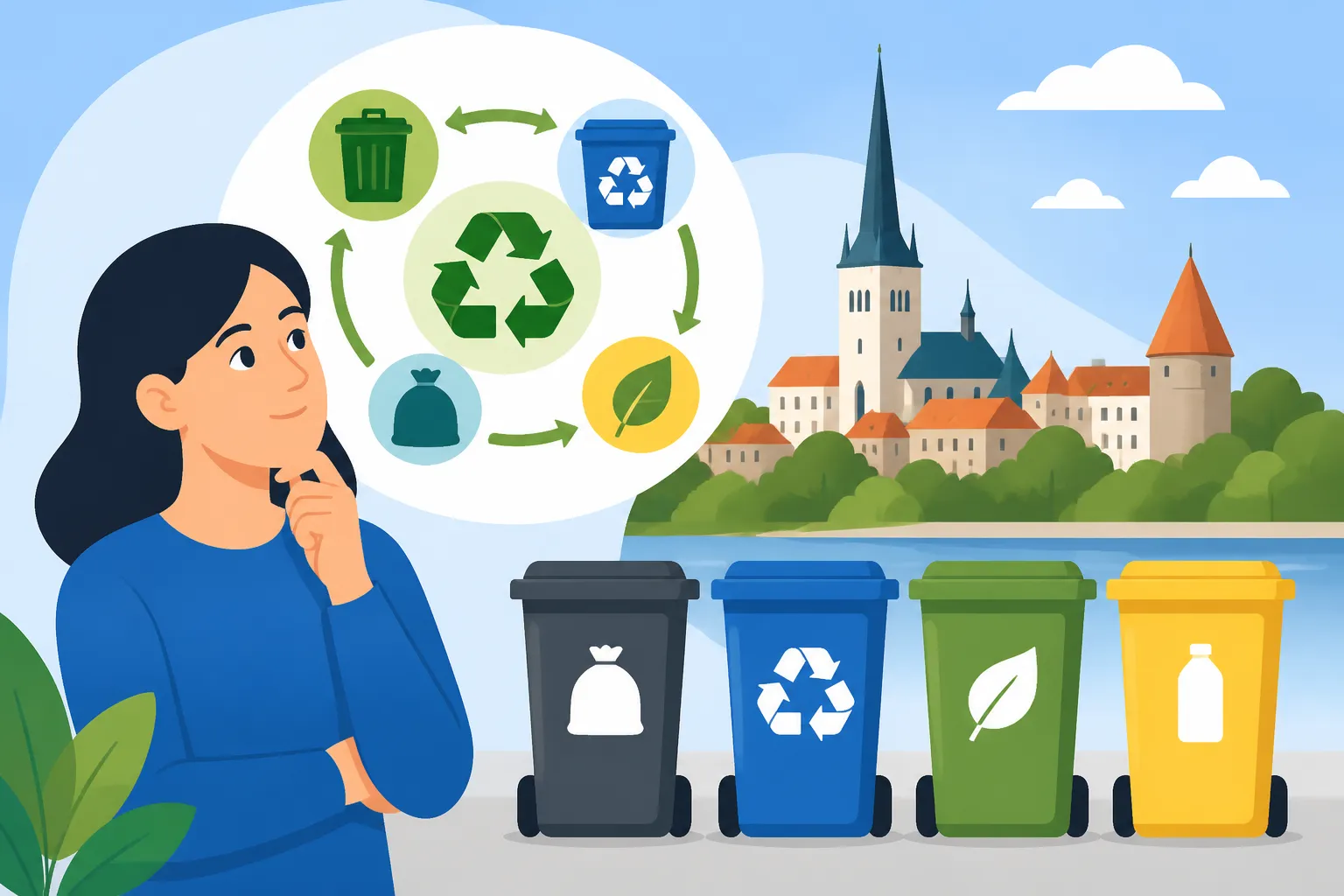
Deciphering Estonia's Recycling System: A Multi-Bin Approach
Estonia has a comprehensive recycling system, but it requires participation and a bit of learning on your part. It's not just a single "recycling" bin; you'll encounter several different types of containers for various materials.
Packaging Waste Pakendijäätmed – Your Everyday Recycling
This is perhaps the most common category you'll deal with daily, covering a huge array of household items. Packaging waste is generally divided into two main streams, each with its own designated collection points:
- Glass Packaging (Klaaspakend): These are typically green or sometimes white bins, found at public collection points or sometimes within apartment building waste areas. Into these go all your empty glass jars (jam, pickles, sauces) and glass bottles (drinks, olive oil). Crucially, they should be clean and empty. Labels are generally fine to leave on. What doesn't go in? Ceramic, porcelain, drinking glasses, window glass, or mirrors – these have different compositions and can contaminate the glass recycling stream.
- Mixed Packaging (Segapakend): This is where most of your other everyday packaging will go. These bins are often yellow or sometimes green, and they’re designed for a mixture of materials. Here’s what generally belongs:
- Plastic Packaging: Empty plastic bottles (shampoo, cleaning products), plastic food containers (yogurt pots, butter tubs), plastic bags, and films. Again, the golden rule is clean and empty. A quick rinse is usually sufficient. No heavily soiled packaging, and certainly no medical waste or hazardous materials.
- Metal Packaging: Empty tin cans (food, drinks), aluminum foil, and aluminum trays. Make sure they are also clean.
- Drink Cartons: Empty cartons for milk, juice, or other beverages. Rinse them out and flatten them if possible to save space.
- Paper and Cardboard Packaging: This often includes smaller cardboard boxes from food items, paper bags, and general paper packaging that isn’t specifically categorised as "paper and cardboard" (which usually means newspapers, magazines, etc. – see next section).
These mixed packaging bins are really important for diverting a lot of household waste from general mixed waste. They are usually widely available at public collection points, often alongside glass recycling bins. Your apartment building might have a dedicated mixed packaging bin as well.
Paper and Cardboard Paber ja Papp
Beyond packaging, there's a separate category for general paper and cardboard products. You’ll often find dedicated blue bins for paber ja papp at apartment buildings or public recycling points. What can you toss in here?
- Newspapers, magazines, catalogues, and advertising leaflets.
- Office paper, notebooks, and other clean paper products.
- Clean cardboard boxes (e.g., cereal boxes, shoeboxes) that aren't excessively greasy or dirty. Flatten them to save space!
What should not go in? Wet or dirty paper, paper towels, tissues, carbon paper, photographs, waxed paper, or heavily stained cardboard (like a greasy pizza box). These items contaminate the paper recycling process and should instead go into mixed waste or, if organic, potentially organic waste.
Organic Waste Biolagunevad Jäätmed – The Green Revolution
Estonia, like many Nordic countries, places a strong emphasis on composting organic waste. This is for good reason: food waste in landfills produces methane, a potent greenhouse gas. Organic waste bins, called biolagunevad jäätmed, are typically brown or sometimes green. They're becoming increasingly common, especially in apartment complexes, and are a must-have for private homes.
What goes in?
- All food scraps: fruit and vegetable peels, coffee grounds, tea bags, leftover cooked food (including meat and bones).
- Small amounts of garden waste: grass clippings, leaves.
- Paper towels and napkins (if lightly soiled).
You should usually collect this waste in a biodegradable bag before placing it in the bin. Check with your apartment association or municipality for specific guidelines. If you are living in a house, having your own compost bin is a great way to handle this, especially for garden waste. For those who are meticulous about their waste, properly managing organic waste can significantly reduce the volume in your mixed waste bin, and therefore help manage your overall monthly kommunaalkulud.
Hazardous Waste and Special Items Ohtlikud Jäätmed ja Erijäätmed
This is the category that most often trips expats up, and it's also the most critical for environmental safety. You absolutely cannot throw hazardous waste into your mixed waste or regular recycling bins. These items require special handling due to their potential to harm the environment or human health.
Common hazardous and special wastes include:
- Batteries: All types, from small household batteries to car batteries.
- Electronics (WEEE – Waste Electrical and Electronic Equipment): Old phones, laptops, toasters, kettles, light bulbs (especially fluorescent ones).
- Medicines: Expired or unused prescription and over-the-counter medications.
- Paints, solvents, chemicals: Leftover household chemicals, cleaning products, motor oils.
- Large appliances: Fridges, washing machines, TVs.
So, where do they go?
- Pharmacies (Apteek): Many pharmacies will accept old medicines for safe disposal.
- Supermarkets/Electronics Stores: Larger supermarkets often have collection points for small batteries, and electronics stores may accept old electronics when you buy new ones.
- Waste Stations (Jäätmejaamad): These are your primary go-to for most hazardous and special wastes. Every major municipality will have at least one jäätmejaam. These facilities are equipped to handle a wide range of materials, from large furniture to building waste and hazardous chemicals. Often, residents can dispose of certain types and quantities of waste for free, while others may incur a small fee.
- Special Collection Drives: Municipalities sometimes organize specific days for collecting hazardous waste directly from residential areas. Keep an eye on local government websites or apartment association notices.
Understanding how to manage these items is not just about compliance; it's about protecting Estonia's beautiful environment.
Practical Steps for Expats: Getting Your Waste Sorted
Now that you know what to sort, let’s talk about how to actually get it done, especially for new expats. This is where the rubber meets the road, and sometimes, where the frustration really sets in.
For Apartment Dwellers: Start with Your Korteriühistu
If you live in an apartment building, your first and most crucial step is to connect with your apartment association, or korteriühistu, or simply your building manager. They are the gatekeepers to your building's waste management system.
What to ask:
- Where are the bins located? Sounds obvious, but sometimes they’re tucked away in a courtyard or basement.
- What are the specific sorting guidelines for this building? While there are general rules, some buildings might have more or fewer types of bins. For example, some might have separate paper and cardboard bins, while others might combine it into mixed packaging.
- What is the collection schedule? Knowing when bins are emptied can help you manage your waste, especially organic waste that can start to smell.
- How are larger items disposed of? If you have old furniture or broken electronics, ask about the procedure. The association might arrange special collections or direct you to a jäätmejaam.
Don't be shy about asking. It's their job to manage these things, and it’s better to ask than to guess and risk contaminating a recycling stream or incurring fines for the building. If there's a language barrier, try using a translation app or asking an Estonian-speaking friend or colleague to help you draft an email or make a call. Remember, waste management costs are part of your utilities, so it's directly related to How Do I Pay My Utility Bills in Estonia?.
For House Owners/Renters: Direct Contracts and Municipal Rules
If you’re lucky enough to have your own private house or are renting one, the responsibility falls more directly on your shoulders. You'll need to arrange contracts with a waste collection company. This means delving into local municipal rules and finding approved service providers.
- Check Your Municipality's Website: Every local government in Estonia has regulations on waste management. For example, if you reside in Tallinn, visit the Tallinn City Government's website (tallinn.ee), or for Tartu, check tartu.ee. Look for sections on "jäätmekäitlus" (waste management) or "jäätmed" (waste). These sites will list the licensed waste collectors operating in your area and outline mandatory sorting requirements for private households. They will also often have maps of public recycling points.
- Contact Waste Management Companies: Common providers in Estonia include Ragn-Sells, Eesti Keskkonnateenused, Cleanaway, and Tallinna Jäätmete Taaskasutuskeskus. These companies offer services for mixed waste, organic waste, and often offer recycling bins for paper and packaging as well. You'll choose bin sizes and collection frequencies based on your needs. For those managing a new household setup, resources like Sirelo can often provide general relocation advice that touches on setting up essential services like waste collection in different countries, offering a good starting point for your research.
- Mandatory Collection: Be aware that in many municipalities, regular collection of mixed waste is mandatory for all registered properties. You can't just opt out. You'll typically pay a monthly fee based on the size of your bin and how often it's emptied.
Understanding the specific rules of your municipality is crucial, as they can vary regarding mandatory separation for organic waste, for example. Your isikukood (personal code), which you likely obtained as part of your residency, is usually necessary for setting up such contracts. If you’re still getting oriented with the administrative side of things, our guide on How Do I Get an Isikukood Before Renting an Apartment in Estonia? can be a helpful read.
Locating Public Recycling Points and Waste Stations
Even if your building has some recycling bins, you’ll almost certainly need to use public recycling points for certain types of waste, especially glass, or for items like electronics.
- Online Maps: The best way to find these is through online maps provided by your local municipality. For instance, Tallinn has an interactive "jäätmekaart" (waste map) that shows locations for all types of recycling points, jäätmejaamad (waste stations), and even places to dispose of textiles. Search your city's name + "jäätmepunktid" or "jäätmekaart."
- Waste Stations (Jäätmejaamad): These are large facilities designed for a broader range of waste than street-side bins. This is where you take bulky waste (old furniture, construction debris), larger electronics, hazardous waste that pharmacies or shops don't accept, and sometimes even textiles or used tires. Most jäätmejaamad have clear signage for different waste types, and staff are usually available to guide you (though English proficiency might vary). It's a good idea to check their opening hours and specific accepted materials before you go. Remember to bring proof of residency (like your ID card), as some services might be free only for local residents.
Understanding Fees and Charges
Waste management isn't free, but how you’re charged can be confusing.
- Mixed Waste: This is almost always charged. For apartment dwellers, it's rolled into your
kommunaalkulud(utility bills). For house owners, it's a direct bill from your waste collector. The cost depends on the size of your bin and the frequency of collection. - Recycling (Packaging, Paper, Glass): Disposing of these items at public collection points is typically free for residents. If your apartment building has dedicated bins for these, the cost of their collection is absorbed into your apartment association fees. This is a significant incentive to sort correctly – reducing your mixed waste volume saves money for your building, and ultimately, for you.
- Organic Waste: If your apartment has an organic waste bin, its collection cost is also part of the common utility fees. For house owners, it's an additional service you contract for.
- Hazardous and Special Waste: Small quantities from residents are often accepted for free at jäätmejaamad. Larger or commercial quantities, or specific complex wastes, might incur a fee. It's always best to check the specific jäätmejaam's website or call ahead.
By making an effort to sort, you're not just being environmentally responsible; you're also being financially savvy!
Common Challenges and Expat Tips for Waste Management in Estonia
Let's be real, navigating a new country's waste system isn't always smooth sailing. There are unique challenges, especially for those of us new to Estonia.
The Language Barrier and Finding Information
This is probably the biggest hurdle. Most official municipal websites, detailed sorting instructions, and even the signs on the bins themselves are primarily in Estonian. It can be incredibly frustrating to try and figure out what a "biojäätmed" bin actually means when you're just trying to get rid of your banana peels.
Tips for overcoming this:
- Google Translate (or similar apps): Keep your phone handy! Use the camera translation feature to decipher signs on bins or instructions on websites.
- Estonian Friends/Colleagues: Don't hesitate to ask for help. Most Estonians are happy to assist, especially when it comes to something as practical as waste.
- Apartment Association Contact: If you're struggling to understand written instructions, try to speak directly with your
korteriühisturepresentative. They might be able to explain things in English or at least point you to a specific resource. To help with all aspects of living in Estonia and staying connected, using a reliable data service like Airalo can ensure you always have access to translation apps and online information, whether you're at home or trying to locate a recycling point in a new neighbourhood. - Expat Groups: Join local expat Facebook groups. Someone else has undoubtedly had the same question, and you'll often find collective wisdom and helpful tips there.
Space Constraints in Smaller Apartments
Many apartments in Estonia, especially in city centers, are not huge. Trying to fit multiple bins for mixed waste, packaging, paper, and organic waste can quickly make your kitchen feel like a recycling depot.
Practical tips for small spaces:
- Compact Bins: Invest in slim, stackable, or wall-mounted bins.
- Collapsible Containers: Use bags or collapsible containers for specific waste types, emptying them frequently.
- Frequency is Key: Make more frequent trips to your building's communal bins or public recycling points. This keeps your indoor bins from overflowing and reduces smells, especially for organic waste.
- Under-Sink Solutions: Utilise under-sink space with small, designated containers.
- Balcony Space: If you have a balcony, a well-sealed organic waste bin can be placed there, especially in colder months. Just ensure it's pest-proof. Finding affordable housing in cities like Tartu often means smaller living spaces, so these tips become even more relevant when trying to maintain order and cleanliness.
Dealing with Confusion and Varying Rules
It’s important to acknowledge that waste management rules can vary quite a bit between municipalities (e.g., Tallinn vs. Tartu vs. a smaller town), and even between different apartment associations within the same city. What’s allowed in one mixed packaging bin might be slightly different in another. This inconsistency can be incredibly frustrating.
- Patience and Persistence: Don't get discouraged. It's a learning curve.
- When in Doubt, Ask: Seriously, it's better to clarify than to mis-sort.
- Default to Mixed (But Try Not To): If you are truly, absolutely 100% unsure after trying to find information, and it's not hazardous waste, then your mixed waste bin is the last resort. But really, make an effort to sort first!
- Focus on Your Local Area: Once you've settled your Registering Your Place of Residence in Estonia: The Complete Guide, you'll know which municipality's rules apply to you, which helps narrow down the information you need.
By following these steps, you'll soon find that navigating Estonia's waste collection and recycling system becomes second nature. It might seem like a lot at first, but with a bit of effort, you'll be a sorting pro in no time, contributing to a cleaner Estonia and possibly even saving a bit on those utility bills!
| Waste Type | What Goes In | Where It Goes (Typical) | Key Rule |
|---|---|---|---|
| Mixed Waste | Non-recyclable, non-hazardous items | Grey/Black bins (apartment buildings, private houses) | Minimize volume by sorting others |
| Glass Packaging | Clean glass jars, bottles (food & drink) | Green/White bins (public points, apartment buildings) | Clean & empty; no ceramics, mirrors, window glass |
| Mixed Packaging | Clean plastic, metal, drink cartons, paper packaging (food & non-food) | Yellow/Green bins (public points, apartment buildings) | Clean & empty; rinse if necessary |
| Paper & Cardboard | Newspapers, magazines, clean office paper, clean non-packaging cardboard | Blue bins (public points, apartment buildings) | Dry & clean; no dirty cardboard (pizza boxes) |
| Organic Waste | Food scraps (cooked/uncooked), coffee grounds, tea bags, small garden waste | Brown/Green bins (apartment buildings, private houses) | Biodegradable bags; no plastic, no liquids |
| Hazardous Waste | Batteries, electronics, light bulbs, medicines, chemicals, paints | Jäätmejaamad (waste stations), pharmacies, special drives | NEVER in mixed waste! Requires special disposal |
| Bulky Waste | Old furniture, construction debris, large appliances | Jäätmejaamad (waste stations) | Check fees and acceptance rules |
Disclaimer
The information provided in this guide is intended for general informational purposes only and is subject to change. While every effort has been made to ensure accuracy, waste management regulations and service providers in Estonia can vary by municipality and may be updated. Expats are strongly advised to consult official municipal websites (e.g., tallinn.ee, tartu.ee), their apartment association (korteriühistu), or licensed waste management companies for the most current and specific information applicable to their exact location and circumstances. This guide does not constitute legal or administrative advice.