Can I Drive in Estonia with a Foreign Licence?
Moving to a new country like Estonia, one of the many daunting questions that pops up is how on earth you’re going to navigate getting around, especially if you plan on driving. The thought of dealing with foreign bureaucracy for something as fundamental as a driver’s licence can feel overwhelming, like trying to decipher an ancient text. This guide is here to walk you through everything you need to know about driving in Estonia with a foreign licence, from initial driving rights to the nitty-gritty of exchanging your licence, so you can hit the road with confidence, not confusion.
Initial Driving Rights for Expats in Estonia
Alright, let's cut to the chase: can you just hop in a car and drive with the licence you brought from home? The answer, as with most things in expat life, is "it depends." Estonia, like other EU countries, has a tiered system that differentiates between short-term visitors and those who are settling down for the long haul. Understanding where you fit into this picture is the first crucial step.
Tourist and Short-Term Stay Rules
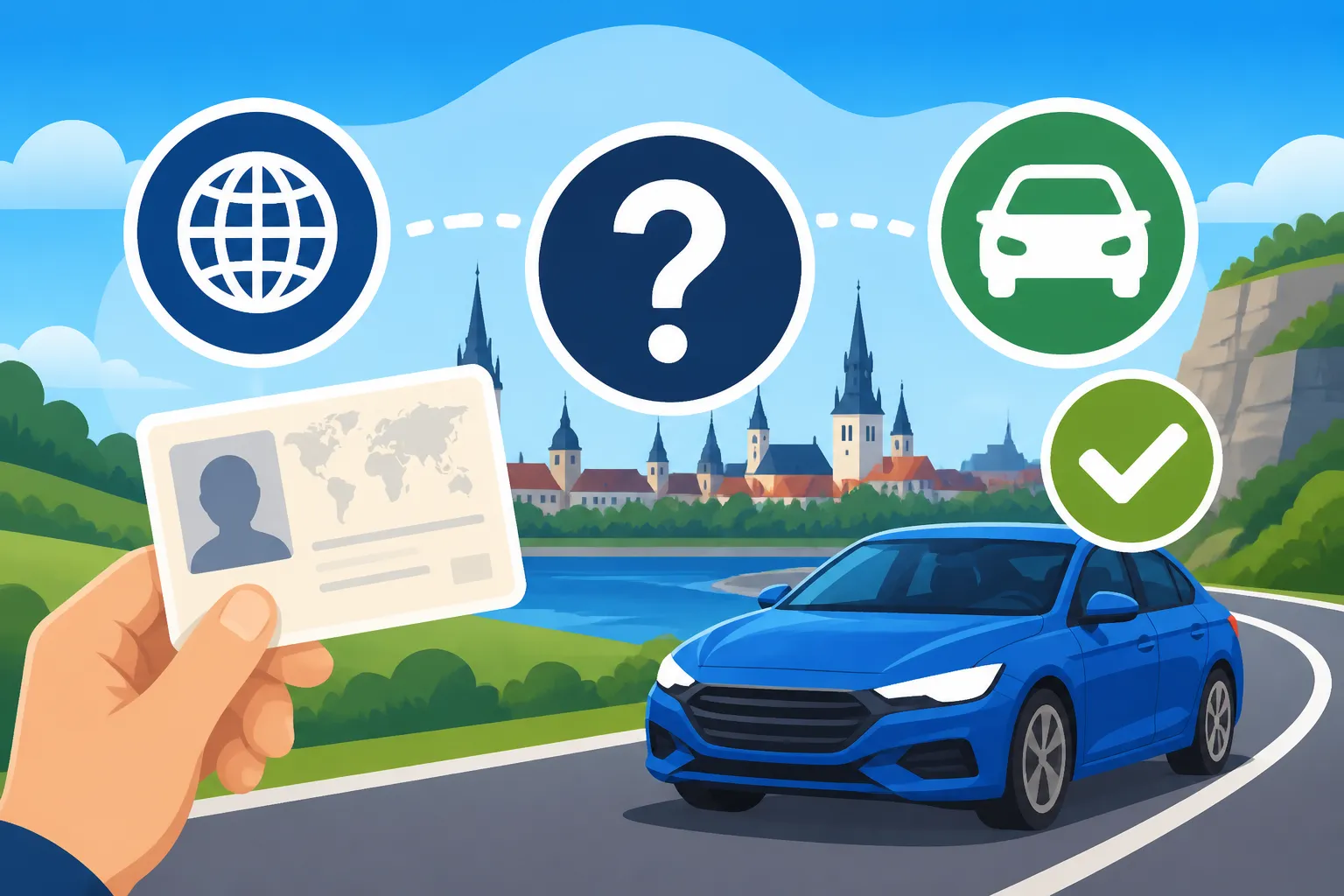
If you’re just visiting Estonia for a holiday, a business trip, or a short-term project, you’re usually in the clear. For tourists and those staying for a period shorter than six months, your valid foreign driving licence is generally accepted. This applies whether you're from an EU/EEA country or a non-EU/EEA country. The key here is "valid" – make sure your licence isn't expired and that it's in good condition. If your licence isn't in English, Estonian, or Russian, it's highly recommended to carry an International Driving Permit (IDP) alongside your national licence. The IDP acts as a translation and provides official verification of your driving privileges in a universally recognizable format. It saves a lot of headaches if you ever get pulled over or, heaven forbid, are involved in a minor fender bender. Think of it as your international driving passport, providing clarity to local authorities who might not be familiar with the specifics of your home country's document.
This initial period of driving freedom is a godsend for many new arrivals, allowing you to settle in, explore, and run errands without immediately having to grapple with the Estonian Transport Administration (Transpordiamet). It means you can rent a car at Tallinn Airport or use a car-sharing service in Tartu almost immediately after stepping off the plane, which is incredibly convenient. However, it's important not to get too comfortable and forget that this is a temporary arrangement. The grace period is there to ease your transition, not to indefinitely delay compliance with local regulations.
New Resident Grace Period
Now, if you're planning to make Estonia your home, whether for work or study, the rules shift. Once you officially register your place of residence in Estonia, the clock starts ticking. For most foreign nationals who are establishing residency, you generally have a grace period of 12 months from the date of your residence registration to continue driving on your foreign licence. This is a critical point that many expats overlook or misunderstand, often leading to stressful situations down the line. After this 12-month period, your foreign licence may no longer be considered valid for driving in Estonia, and you’ll be expected to have either exchanged it for an Estonian one or obtained one here.
This 12-month window is a precious commodity. It gives you time to get your other affairs in order, like figuring out your new job, registering for healthcare, and finding a suitable place to live. During this time, you should start researching the process for exchanging your licence, especially if you're from a country with more complex exchange requirements. Don't procrastinate on this, as the process can take some time, involving appointments, potential language exams, or even driving tests. The Estonian authorities are generally quite clear about this grace period, and ignoring it can lead to significant problems, which we'll delve into later. For those eager to explore the country and not just Tallinn, this grace period is key to being able to freely drive around, perhaps making a trip down to Pärnu or up to Narva, without immediate worry.
Exchanging Your Foreign Driving Licence in Estonia
So, the grace period is ticking away, or maybe you've been here longer than 12 months and just realized you should have dealt with this already (don't worry, you're not alone, it happens to the best of us!). The next step is usually to exchange your foreign driving licence for an Estonian one. This process varies significantly depending on where your original licence was issued.
EU/EEA Licence Exchange
If your driving licence was issued by an EU (European Union) or EEA (European Economic Area) member state, you’re in luck – this is generally the most straightforward scenario. The principle of mutual recognition means that these licences are widely accepted across member states. You don't have to exchange it immediately upon becoming a resident, as your valid EU/EEA licence is recognised for as long as it's valid, even if you’re a resident. However, many expats still choose to exchange it for practical reasons, or if their original licence is about to expire and they prefer to renew it in Estonia.
To exchange an EU/EEA licence, you'll need to head to the Estonian Transport Administration (Transpordiamet). You typically won't need to take any new driving tests – neither theoretical nor practical. The main requirements usually include presenting your valid original licence, your identity document (passport or ID card), proof of medical fitness (a valid health certificate obtained in Estonia), and paying a state fee. The process is relatively simple and involves validating your existing driving privileges against Estonian standards. It’s essentially an administrative conversion, ensuring your details are in the Estonian national register. This makes things much easier for things like insurance claims or if you ever need to replace a lost or stolen licence, as all your information will be locally accessible.
Non-EU/EEA Licence Exchange
This is where things can get a bit more complex, and frankly, a source of considerable frustration for many non-EU expats. If your licence is from outside the EU/EEA, whether you’re from the US, Canada, Australia, India, or any other third country, the rules are stricter. Estonia does have bilateral agreements with some non-EU countries that allow for a direct exchange without additional testing. However, these agreements are not universal. It's vital to check with the Transpordiamet directly or consult their website to see if your country has such an agreement. For example, countries like Ukraine and Japan often have direct exchange possibilities due to specific agreements.
If your country does not have a direct exchange agreement with Estonia, you will, unfortunately, be required to pass both a theoretical knowledge test and a practical driving test in Estonia. Yes, even if you've been driving for 20 years without a single accident, you'll likely have to prove your competency again. This can be a real pain point, involving significant time, effort, and expense. You'll need to study Estonian traffic laws, which can differ from what you're used to, and take lessons with a local driving school to familiarize yourself with the testing standards and routes. The language barrier can also be an issue, although tests are often available in English or Russian. Remember, it’s not just about knowing how to drive, but how to drive according to Estonian regulations. This is particularly challenging for many, but it's a hurdle that must be cleared to drive legally after your initial grace period.
The Exchange Process Step-by-Step
Regardless of whether you're from an EU/EEA country or a non-EU/EEA country requiring tests, the general steps for exchanging your licence follow a similar trajectory once you're ready to proceed. It often begins with ensuring all your basic administrative details are in order.
First and foremost, you'll need an Estonian personal identification code, your Isikukood. This is foundational for pretty much any official transaction in Estonia, including dealing with the Transport Administration. If you don't have one yet, it's one of the first things you'll need to sort out. You can find detailed guidance on How to Get Your Isikukood Personal Code and Why It Matters for Healthcare. Once you have your Isikukood, you need to obtain a medical certificate. This involves a visit to an Estonian doctor who will assess your general health and eyesight to certify that you are fit to drive. This is not just a formality; it's a proper medical check-up.
Next, you gather all your necessary documents. This typically includes your valid original foreign driving licence, your Estonian ID card or passport, and your medical certificate. For non-EU/EEA licence holders, you'll need to register for and pass the theoretical and practical driving exams if required. This often means enrolling in a local driving school for preparation, especially for the practical test. The Estonian traffic rules have some specific nuances, such as compulsory daytime running lights and very strict alcohol limits, that you'll need to master. Then, you book an appointment with the Transport Administration (Transpordiamet). While Estonia is very digital, for this specific transaction, an in-person visit is usually necessary. You'll submit your application, provide your documents, and pay the state fee. The state fee for issuing a new licence can change, so it's always best to check the current rates on the Transpordiamet website.
Once your application is processed and, if applicable, your tests are passed, you'll receive your new Estonian driving licence. This usually happens via postal mail, so make sure your registered address is up-to-date in the population register. You can check the status of your residence registration and ensure all your details are correct by referencing a guide like Registering Your Place of Residence in Estonia The Complete Guide. This new licence is a full Estonian driving licence, valid for the standard periods and renewable within Estonia. Keep in mind that depending on your original licence, the Estonian one might have an expiry date that corresponds to the initial licence or a standard Estonian period. For a deeper dive into the overall process, make sure to check out How to Exchange Your Foreign Driving Licence in Estonia.
Practical Considerations and Local Nuances
Beyond just the licence itself, driving in Estonia comes with its own set of rules, expectations, and practicalities that every expat should be aware of. It's not just about having a legal document; it's about understanding the local driving culture and administrative ecosystem.
Understanding Estonian Traffic Laws
Estonian traffic laws are, in many ways, similar to those in other European countries, but there are some critical differences that can catch foreigners off guard. For instance, headlights must be on at all times, even during the day, year-round. This is a non-negotiable rule. The alcohol limit for drivers is practically zero (0.00% blood alcohol content), meaning even a small amount can lead to serious penalties. Winter tyres are mandatory from December 1 to March 1, and studded tyres are permitted during this period. The use of studded tyres is something you need to be aware of, especially if you're importing a car or buying one locally.
Speed limits are generally 50 km/h in urban areas and 90 km/h on rural roads, with some motorways allowing 110 km/h in summer. Be particularly vigilant about speed cameras, which are common and often well-marked, but still catch many drivers out. Road etiquette is generally polite, but assertive. Indicators are used, and drivers usually keep to the right lane on multi-lane roads. Public transport, particularly trams and buses in Tallinn, always have priority, so be mindful when driving near their routes. Familiarizing yourself with these nuances is key not just to staying legal, but to staying safe. You can get more comprehensive information in our guide on Driving in Estonia Licences, Registration and Rules for Expats.
Vehicle Registration and Insurance Requirements
If you're planning on driving your own car, whether imported or purchased locally, you'll need to register it with the Estonian Transport Administration and ensure it's properly insured. This is a separate process from your licence exchange but equally important. All vehicles must have compulsory traffic insurance (liikluskindlustus) from an Estonian insurance provider. Without it, you cannot legally drive on Estonian roads, and the fines are steep. The cost of insurance can vary based on the vehicle type, your driving history, and where you live.
For those importing a vehicle, the process can be quite involved, including inspections, customs duties, and various administrative fees. If you're moving your entire life, including your car, from another country, services like Sirelo can be incredibly helpful for coordinating the logistics, especially for larger items or vehicles. They can connect you with reliable movers who understand international shipping complexities. Once your vehicle is in Estonia, it will need to pass an initial inspection (ülevaatus) to ensure it meets Estonian technical standards before it can be registered. You'll also need to pay road tax and other vehicle-related costs, which are important to factor into your budget. Details on these costs can be found in Understanding Road Tax and Vehicle Costs in Estonia.
Navigating Digital Services
Estonia is famous for its e-governance, and driving-related services are no exception. Once you have your Estonian ID card and an Isikukood, you can access many services online through the e-eesti.ee portal or the Transport Administration's self-service environment. This includes checking your driving licence details, vehicle information, and paying fines. This digital convenience is truly a blessing, cutting down on physical visits to government offices. However, it does require a bit of familiarity with the system, and sometimes a basic understanding of Estonian for certain functions.
Being digitally connected is also crucial for navigation. While getting around, you'll rely heavily on GPS apps, and having a reliable mobile data plan is essential. For new arrivals or those traveling frequently, considering an eSIM from providers like Airalo can be a smart move. It allows you to stay connected from the moment you land, giving you immediate access to maps and essential information without the hassle of buying a local physical SIM card right away. This can be invaluable when you're trying to find your way to the Transport Administration office or a driving school for your tests.
Here’s a quick overview of the key differences in licence exchange:
| Feature | EU/EEA Driving Licence Holders | Non-EU/EEA Driving Licence Holders (without agreement) |
|---|---|---|
| Initial Validity | Valid indefinitely as a resident (until expiry), but exchange recommended for practical reasons. | Valid for 12 months from residence registration date. |
| Exchange Required | Optional, but recommended before expiry or for renewal. | Mandatory after 12 months of residence. |
| Tests Required | Generally no theoretical or practical tests. | Theoretical and practical driving tests usually mandatory. |
| Medical Certificate | Yes, an Estonian medical certificate is required. | Yes, an Estonian medical certificate is required. |
| Documents Required | Original valid licence, ID, medical certificate, state fee. | Original valid licence, ID, medical certificate, state fee. |
| State Fee | Yes, for the issuance of the new Estonian licence. | Yes, for the licence issuance, plus potential test fees. |
| Timeframe | Relatively quick administrative process. | Can be lengthy due to test preparation and booking availability. |
What Happens If You Don't Exchange Your Licence?
Ignoring the regulations regarding your driving licence in Estonia can lead to some genuinely unpleasant consequences. It's not just a minor infraction; it can quickly escalate into serious legal and financial trouble. Many expats try to "fly under the radar" or simply forget, only to find themselves in a difficult spot later.
Legal Ramifications and Fines
If you continue to drive in Estonia with a non-EU/EEA licence beyond the 12-month grace period, or if your EU/EEA licence expires and you haven't renewed it locally, you are essentially driving without a valid licence. This is a serious offence under Estonian law. Getting caught can result in significant fines, which can be hundreds of euros, depending on the circumstances and how long you've been driving illegally. The Police and Border Guard Board (Politsei- ja Piirivalveamet or PPA) takes traffic violations seriously, and ignorance of the law is not an acceptable defence.
Beyond fines, repeated offences or involvement in an accident while driving illegally can lead to even more severe penalties, including vehicle impoundment and even criminal charges in certain situations. It could also complicate your immigration status or future residence permit renewals. It’s simply not worth the risk. Imagine getting pulled over for a routine check, and instead of a quick glance at your documents, you're facing a hefty fine and a stern lecture because your licence has been invalid for months. It's a stressful situation that is entirely avoidable by going through the proper exchange process.
Insurance Validity Issues
Perhaps even more concerning than fines are the potential problems with your vehicle insurance. Most insurance policies specify that the driver must hold a valid driving licence recognized in the country of driving. If your foreign licence is no longer valid in Estonia because you've exceeded the grace period, your insurance policy might be considered void in the event of an accident. This means that if you cause an accident, your insurance company could refuse to cover the damages, leaving you personally liable for all costs.
Think about the financial implications: repair costs for both your vehicle and any third-party vehicle, medical expenses for injured parties, and potential legal fees. These can quickly amount to tens of thousands of euros, creating a catastrophic financial burden that could take years to recover from. Even if you're not at fault, dealing with insurance companies can be a nightmare if there's any ambiguity about your licence's validity. They will always look for reasons to deny claims. So, while you might think you're saving time or money by not exchanging your licence, you could be opening yourself up to far greater risks. Protecting yourself means ensuring you meet all legal requirements, and that includes your driving licence.
Personal Safety and Practical Difficulties
Finally, driving with an invalid licence can lead to practical difficulties and compromised personal safety. If you're involved in a serious incident, having an invalid licence can complicate everything, from police reports to medical assistance. It adds an unnecessary layer of stress and potential legal entanglement to an already traumatic situation. Moreover, even simple tasks like renting a car for a weekend getaway or registering for a car-sharing service might become impossible, as these services require a valid, local, or properly recognized international driving licence.
While it might seem like a bureaucratic headache, exchanging your foreign driving licence for an Estonian one is a crucial step towards fully integrating into life here. It ensures you're legally compliant, protected by insurance, and can navigate the roads without constant worry. It's one less thing to keep you up at night, letting you focus on enjoying your expat adventure in this beautiful country.
Disclaimer
Please note that this guide provides general information based on current Estonian laws and regulations for expats and tourists. Driving and licensing laws can change, and individual circumstances may vary. While we strive to keep this information up-to-date, it is always recommended to consult the official websites of the Estonian Transport Administration (Transpordiamet) or seek legal advice for the most accurate and personalized guidance.