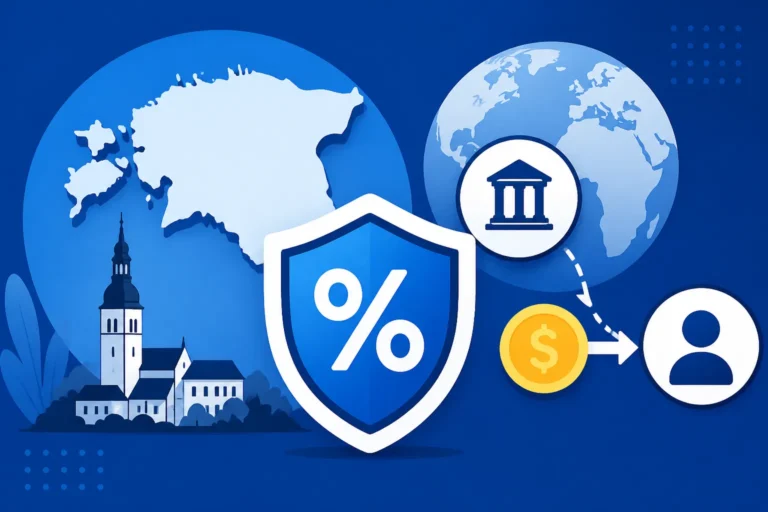
Do I Pay Corporate Tax If My OÜ Retains Its Profits in Estonia?
One of the biggest head-scratchers for expats navigating the business landscape here in Estonia is often the corporate tax system. You might be used to quarterly or annual corporate tax bills back home, but then you hear whispers about Estonia having "0% corporate tax" and your mind starts to race. This guide is here to untangle that mystery, specifically addressing the burning question: Do you pay corporate tax if your OÜ (that's an Osaühing, or Private Limited Company) retains its profits in Estonia? The short answer, which we'll dive into with all the glorious detail it deserves, is generally no, not on retained profits.
Understanding Estonia's Unique Corporate Tax Principle
Let's cut right to the chase because this is the cornerstone of why Estonia's system often sounds too good to be true. Unlike most countries that levy corporate income tax on profits as they are earned, Estonia operates on a radically different principle: corporate income tax is only levied on distributed profits. This means that if your OÜ earns a profit and decides to keep that money within the company – perhaps to reinvest, save for future projects, or simply hold onto it – you pay absolutely no corporate income tax on those retained earnings.
This isn't a loophole; it's a deliberate policy designed to encourage businesses to reinvest profits and stimulate economic growth within Estonia. Imagine the cash flow benefits for a startup or a growing business! Instead of a significant portion of your hard-earned profits disappearing into tax coffers each year, you have those funds available to fuel your company's expansion, hire more staff, develop new products, or weather economic uncertainties. It’s a powerful incentive that has attracted many foreign entrepreneurs and companies to set up shop here, making it a truly unique offering in the European Union.
The Cash Flow Advantage
This 'tax on distribution only' model provides a significant cash flow advantage that any entrepreneur will appreciate. In traditional tax systems, even if you planned to reinvest every euro of profit back into your business, you'd first have to pay corporate tax on it. That money is gone before it can even contribute to your growth. Here in Estonia, those funds remain entirely within your company's accounts.
Think about it this way: if your OÜ generates €100,000 in profit, and you choose not to distribute any of it, that entire €100,000 stays in your company's bank account. You can use it to buy new equipment, expand your marketing efforts, hire an extra developer, or save it up for a rainy day. This immediate availability of capital can be a game-changer, especially for businesses in their growth phase, allowing for quicker adaptation and investment cycles without the constant pressure of corporate tax deductions eating into your working capital. It’s one of the reasons why Estonia is so appealing for startups and dynamic small and medium-sized enterprises.
What Constitutes 'Distributed Profit'?
So, if retained profits aren't taxed, what is? The short answer is anything that leaves the company for the benefit of its owners or for non-business purposes. The primary form of distributed profit is, of course, dividends. When your OÜ declares and pays out dividends to its shareholders, that's when the corporate income tax clock starts ticking.
But it's not just dividends. The Estonian Tax and Customs Board (Maksu- ja Tolliamet) also considers other outgoings as taxable distributions if they are not clearly for the benefit of the business itself. This can include things like certain fringe benefits (if not taxed at the employee level), gifts, donations, entertainment expenses that exceed certain thresholds, or even payments that are deemed to be non-business related. The key is that the tax event occurs at the point of distribution or disbursement from the company, rather than at the point of earning the profit. This requires careful accounting and a clear understanding of what constitutes a business expense versus a personal benefit or a distributed profit. It’s always wise to consult with an accountant to ensure you’re classifying everything correctly, especially if you're new to the local nuances.
How Retained Profits Work for Your OÜ
Now that we understand the core principle, let's look at the practical side of retaining profits for your OÜ. When your business generates revenue and after all expenses are paid, you're left with a profit. If your management board (which is often just you, the founder, in smaller OÜs) decides not to issue dividends or make any other taxable distributions, then that profit simply rolls over as retained earnings. It boosts the equity of your company, strengthening its financial position without triggering a corporate tax liability.
This allows for strategic financial planning. You can build up reserves for future investments, create a buffer against economic downturns, or fund ambitious expansion plans using your own untaxed profits. It's a powerful tool for long-term growth and stability, directly incentivized by the tax system. For many expats starting businesses, this system drastically simplifies financial projections and offers a competitive edge, freeing up capital that would otherwise be locked away in taxes. You don't need to worry about complex corporate tax calculations on your annual profits; your focus can remain on growing your business.
Zero Corporate Tax on Undistributed Earnings
Let's reiterate the most exciting part for entrepreneurs: as long as profits remain within your Estonian OÜ, they are not subject to corporate income tax. This means no annual corporate tax declaration purely for retained earnings, and no cash outflow to the tax authorities just because your business was profitable. This is a fundamental difference from systems where profits are taxed at the corporate level and then again when distributed to shareholders (often through dividend tax).
The tax rate on distributed profits in Estonia is generally 20% on the gross amount of distributed profit (which effectively means 20/80 or 25% of the net amount paid out as dividends, calculated slightly differently than you might be used to). However, if you distribute profits regularly, your OÜ might qualify for a reduced rate of 14% on dividends, provided certain conditions are met, followed by an additional 7% personal income tax on the recipient. But critically, these rates only apply if you decide to distribute. If you don't, that 20% or 14% stays right where it is – in your company. This distinct approach is a major draw for foreign investors and entrepreneurs seeking to expand their operations.
Reinvesting Profits vs. Distributing for Personal Use
The decision to retain or distribute profits is a strategic one, often balancing business growth needs with personal financial requirements. If your goal is aggressive growth, reinvesting profits makes perfect sense. The money stays in the company, untaxed at the corporate level, and can be used to acquire assets, hire talent, or develop new products and services. For many startups, this is the default mode of operation for years, allowing them to build significant value before any substantial distributions are considered.
On the other hand, if you need to draw income from your OÜ for personal living expenses, you will need to distribute profits, typically as dividends. This is when the corporate tax (and potentially personal income tax for the recipient) kicks in. You essentially decide when the tax event occurs. This flexibility means you have more control over your personal and company cash flow, allowing you to time distributions to align with your personal tax situation or the company's financial health. It’s important to plan this carefully, possibly with the help of an accountant or a service like Taxes for Expats, to optimize your overall tax burden. This isn't just about avoiding tax, it's about smart financial management that supports both your business and your personal life.
Scenarios and Implications of Distribution vs. Retention
Let’s walk through some real-world scenarios to illustrate the implications of choosing to distribute or retain profits in your OÜ. This decision isn't always straightforward and often depends on your current financial situation, your company's growth stage, and your long-term objectives. Understanding these scenarios can help you make informed choices that align with your overall business and personal financial strategy in Estonia.
The Growth-Focused OÜ
Imagine you've just launched a promising tech startup in Tallinn. Your OÜ is generating a healthy profit, but you're in a hyper-growth phase. You need to hire more developers, invest in cutting-edge software, and ramp up your marketing efforts to capture market share. In this scenario, retaining all profits within the company is incredibly advantageous. The funds remain untouched by corporate tax, giving you maximum capital to fuel your expansion.
For instance, if your OÜ makes €50,000 in profit this year, and you decide to put all of it back into the business, that entire €50,000 is available for reinvestment. You don't pay any corporate tax on it. If you were operating in a traditional tax jurisdiction with, say, a 20% corporate tax rate, you'd have to pay €10,000 in tax, leaving you with only €40,000 for reinvestment. This significant difference can allow you to grow faster, reach milestones sooner, and ultimately build a more valuable company. This is where Estonia's system truly shines for ambitious founders.
The Owner-Operator's Dilemma
Now, consider an owner-operator of a small consulting OÜ. You are the sole shareholder and need to draw a regular income for your living expenses. While the ideal might be to retain all profits for growth, personal necessity dictates distributions. In this case, you would declare dividends. Let’s say your OÜ makes €40,000 in profit, and you need €20,000 for personal use.
When you distribute that €20,000 as dividends, the OÜ will pay corporate income tax on that amount (at 20/80 or 25% if it's the standard rate). The remaining €20,000, if retained, remains untaxed at the corporate level. This scenario highlights the trade-off: you pay tax only on what you take out. The rest can stay and build the company's value. You have direct control over when and how much tax is paid, which is a powerful lever for personal financial planning. This flexibility is a breath of fresh air compared to many other countries where you feel forced to extract profit to justify its existence, often paying tax on it even if you don't really need it. This system helps you manage both your individual tax burden, as covered in topics like Understanding Income Tax Tulumaks in Estonia The Full Expat Guide, and your company's financial health.
Building Reserves and Future Planning
Another vital scenario involves building up financial reserves. Even if your OÜ isn't in a hyper-growth phase, having a healthy cash buffer is just good business sense. This can be for emergencies, a planned future large purchase, or simply to ensure stability. Estonia's corporate tax system naturally supports this.
For example, a marketing agency OÜ might experience seasonal fluctuations in income. By retaining profits during peak seasons, they build a reserve that can see them through leaner periods without incurring corporate tax. This reserve can also be used for long-term investments, such as purchasing office space or developing new service lines years down the road. The beauty is that the capital grows within the company without erosion from corporate tax until it's actually put to a personal use or disbursed in a taxable manner. This long-term strategic advantage is a significant benefit to operating an OÜ here.
Practical Considerations for Expats with an OÜ
Living and working in Estonia as an expat with your own OÜ brings a unique set of administrative and financial considerations. While the tax benefits are clear, navigating the local systems still requires attention to detail. This section will guide you through some key practicalities to ensure you’re making the most of your OÜ while remaining fully compliant.
Registering Your OÜ and Initial Steps
First things first, you'll need to establish your OÜ. Estonia is famous for its digital infrastructure, and registering a company can be surprisingly quick and straightforward, especially if you have an e-Residency card. However, there are still crucial steps to follow, from choosing a name to drafting the articles of association and registering it with the Commercial Register. Once your OÜ is officially established, you'll need to set up its initial accounting and get familiar with the Maksu- ja Tolliamet (Estonian Tax and Customs Board).
It's vital to get your Isikukood (personal identification code) if you don't already have one, as it's foundational for nearly all administrative interactions. You can find detailed steps on How to Set Up an OÜ Private Limited Company in Estonia to ensure you start on the right foot. Don't skip the initial consultations with a local accountant; they can save you a world of trouble down the line and ensure your setup is tax-efficient from day one.
Accounting and Reporting Requirements
Even with 0% corporate tax on retained profits, your OÜ still has accounting and reporting obligations. You must keep accurate records of all income and expenses, maintain proper books, and submit annual reports. These reports are crucial as they provide a clear picture of your company's financial health and confirm your profit retention strategy. The fiscal year in Estonia typically follows the calendar year, and the annual report must be submitted to the Centre of Registers and Information Systems.
You'll also interact with the e-MTA portal, the online system for managing taxes. While you might not be filing corporate income tax returns on retained profits, you will need to declare other taxes, such as social tax if you pay yourself a salary, or VAT if your OÜ is VAT-registered. Getting familiar with Understanding the e-MTA Online Tax Portal in Estonia is invaluable. Professional accounting services are highly recommended for expats, as they can navigate the nuances of Estonian accounting standards and ensure timely submissions, preventing any headaches or penalties.
Banking and Financial Management
Once your OÜ is registered, opening a business bank account is essential. While Estonia has excellent local banks like LHV, Swedbank, and SEB, foreigners might face initial hurdles without a strong local connection or physical presence. However, it's not impossible, and more options are becoming available.
Using a platform like Wise (formerly TransferWise) can be incredibly useful for your OÜ, especially if you deal with international clients or suppliers. Wise offers multi-currency accounts, competitive exchange rates, and easy international transfers, which can significantly simplify managing your business finances across borders. It integrates well with Estonian banking practices and can be a fantastic tool for an internationally-focused OÜ. You can learn more about local options in How to Open a Bank Account at an Estonian Bank as a Foreigner. Remember, managing your company's finances efficiently is key to leveraging the tax advantages Estonia offers.
Navigating Dividend Distributions and Personal Income Tax
If you decide to pay yourself dividends, it’s important to understand the associated taxes. As mentioned, the OÜ will pay corporate income tax on the distributed amount. However, this often completes the tax obligation for the individual recipient if they are an Estonian tax resident. For non-residents or those with complex international tax situations, things can get trickier due to potential double taxation treaties.
For example, if you are a tax resident of another country while operating your Estonian OÜ, you might need to declare those dividends in your home country. This is where professional advice becomes critical. Services specializing in Taxes for Expats can help you navigate these complexities and ensure you're not paying more tax than necessary. Understanding your personal tax residency status, as detailed in Tax Residency in Estonia A Definitive Guide for Expats 2026, is paramount before making significant dividend distribution decisions.
Understanding Social Tax and Salaries
While corporate income tax on retained profits is zero, if you decide to pay yourself a salary from your OÜ, you will be subject to social tax (sotsiaalmaks) and unemployment insurance contributions. Social tax is a crucial contribution towards your health insurance, pension, and other social benefits in Estonia. This means that while dividends are taxed at the company level, salaries are taxed at the individual level (with employer contributions), and they provide you with social safety nets.
Many expats choose to pay themselves a minimal salary to ensure social tax contributions are made, thus securing access to the Estonian public healthcare system and other benefits. The minimum social tax obligation changes annually, so it's essential to stay updated. This decision between salary and dividends impacts not just your current cash flow but also your long-term social security and healthcare access, which is extensively covered in our guide on Understanding Social Tax Sotsiaalmaks Contributions in Estonia.
Key Takeaways on OÜ Corporate Tax and Retained Profits
So, let's bring it all together. The answer to "Do I pay corporate tax if my OÜ retains its profits in Estonia?" is a resounding no. This unique feature of the Estonian tax system is a deliberate incentive for businesses to grow and reinvest their earnings. It means more capital stays within your company, available for expansion, innovation, or building a robust financial buffer.
However, this doesn't mean your OÜ is entirely free from tax obligations. When you decide to distribute those profits, primarily as dividends, that's when the corporate income tax of 20% (or potentially 14% under certain conditions) is applied. Additionally, if you pay yourself a salary, social tax and other employment-related taxes will apply, which are crucial for your social security and healthcare coverage in Estonia. Managing these aspects requires careful planning and often the assistance of local tax professionals to ensure compliance and optimize your tax efficiency. This system, while different, offers incredible advantages for expats looking to build and scale a business here in the Baltics.
| Aspect | Retained Profits in OÜ | Distributed Profits (Dividends) from OÜ |
|---|---|---|
| Corporate Income Tax (CIT) | 0% (No CIT levied) | 20% (or 14% under regular distribution conditions) |
| Cash Flow Impact | Maximizes capital for reinvestment, reserves | Reduces capital within the company |
| Tax Event | No immediate tax event | Tax event occurs upon distribution |
| Purpose | Business growth, asset acquisition, emergency fund | Shareholder income, personal use |
| Accounting/Reporting | Must be accurately reflected in annual reports | Must be declared and corporate tax paid by OÜ |
| Shareholder Personal Tax | No direct personal tax implication | Additional 7% personal income tax if 14% CIT applies |
| Social Security Benefits | Does not directly contribute to social benefits | Does not directly contribute to social benefits |
Disclaimer
The information provided in this guide is for general informational purposes only and does not constitute professional tax, legal, or financial advice. While we strive to keep the information up-to-date and accurate, tax laws and regulations in Estonia can change. Expats are strongly advised to consult with a qualified Estonian tax advisor or accountant for advice tailored to their specific situation. Reliance on any information provided in this guide is solely at your own risk.