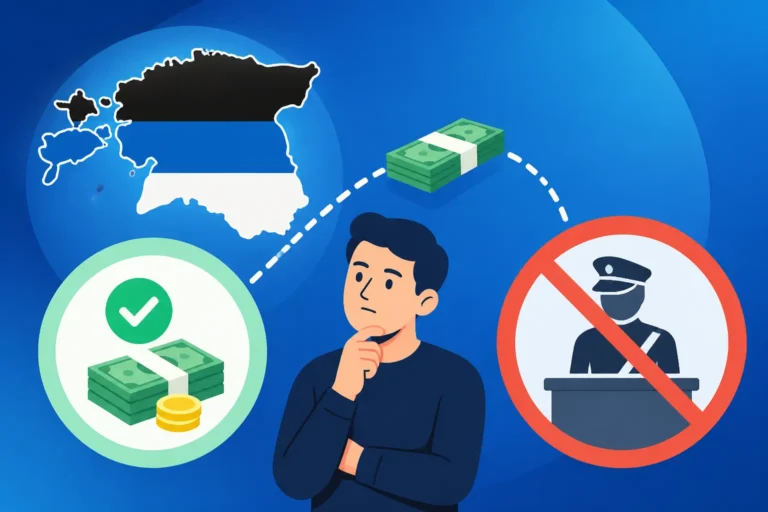
Understanding Income Tax (Tulumaks) in Estonia: The Full Expat Guide
Oh, the joy of moving to a new country and discovering its tax system! If you're anything like me, the phrase "income tax" probably conjures images of endless forms, bewildering jargon, and a vague sense of impending financial doom. Estonia, with its celebrated e-government and flat tax, often presents itself as refreshingly simple, but even simplicity has its nuances, especially when you're an expat trying to figure out how your earnings here (and elsewhere) are handled. This comprehensive guide is here to untangle the Tulumaks (income tax) system in Estonia, giving you the full expat-friendly lowdown so you can navigate it with confidence.
Demystifying Estonian Income Tax for Expats
When you first arrive in Estonia, you'll hear a lot about the "flat tax." It sounds almost too good to be true, doesn't it? After wrestling with progressive tax systems in other countries, a single rate can feel like a breath of fresh air. But like many things in life, the devil is in the details, and understanding those details is crucial for anyone making a life here.
What is Tulumaks Anyway?
Tulumaks, or income tax, is a fundamental pillar of Estonia's public finance system, much like in any other developed nation. However, its structure is what often sets it apart and piques the interest of both businesses and individuals considering a move here. At its core, Tulumaks is levied on the income an individual earns, whether that's through employment, self-employment, capital gains, or rental income. But unlike many countries where tax rates climb higher the more you earn, Estonia famously applies a single, flat rate to all taxable income above a certain threshold.
This flat-rate system, currently set at 20%, is often lauded for its simplicity and transparency. For an expat coming from a country with multiple tax brackets, where calculating your marginal tax rate requires a degree in advanced mathematics, Estonia's approach feels almost revolutionary. It means that whether you earn €1,000 or €10,000 above the tax-free allowance, the same 20% rate applies. This can be particularly attractive for higher earners who might face significantly steeper rates elsewhere. However, it's not always a straightforward win for everyone. Those on very low incomes might find the flat rate less beneficial compared to a highly progressive system that offers more substantial relief at the lowest tiers. Still, the underlying principle is to make the tax system easier to understand, more predictable, and less burdensome administratively – a goal Estonia has largely achieved through its digital-first approach.
The simplicity, however, can sometimes mask complexities that particularly affect foreigners. For instance, understanding what constitutes taxable income in Estonia might differ from your home country's definitions. Rules around stock options, fringe benefits, or even income from foreign sources can have specific Estonian interpretations. Moreover, while the rate is flat, the application of various deductions and allowances, and the way these interact with the overall tax liability, still requires careful attention. It’s not just about applying 20% to your gross salary; it’s about understanding the journey from gross income to net taxable income, and that's where some of the expat-specific questions tend to arise.
Who Pays Tulumaks: Understanding Tax Residency
This is perhaps one of the most critical distinctions an expat needs to grasp when it comes to Tulumaks: are you considered an Estonian tax resident or a non-resident? This status dictates not only what income is taxable here but also the extent of your tax obligations. Misunderstanding this can lead to headaches, potential double taxation, or even unintentional non-compliance.
Generally, you are considered an Estonian tax resident if you reside in Estonia for at least 183 days during any 12-month period starting or ending in the tax year, or if Estonia is your permanent home. "Permanent home" isn't just about owning property; it's about where your "centre of vital interests" lies – think family, main employment, and social ties. It's not always cut and dry, especially for digital nomads or those who frequently travel for work. If Estonia is deemed your tax residence, you are subject to Tulumaks on your worldwide income. This means income earned anywhere in the world – be it salary from a foreign employer, rental income from a property back home, or dividends from international investments – must be declared to the Estonian Tax and Customs Board (MTA).
On the other hand, if you are deemed a non-resident, your tax obligations in Estonia are significantly narrower. Non-residents are generally only taxed on their Estonian-sourced income. This could include income from employment performed in Estonia, income from business conducted here, or rental income from property located within Estonia. Your foreign-sourced income, in this scenario, would typically not be subject to Tulumaks. This distinction is incredibly important for many expats, particularly those on shorter assignments or those maintaining strong financial ties to their home countries. You can delve deeper into this labyrinth of rules by exploring our guide on Tax Residency in Estonia: A Definitive Guide to Expats (2026). The crucial takeaway is to ascertain your tax residency status early in your relocation journey and, if in doubt, seek professional advice, as it forms the very foundation of your tax obligations in Estonia.
The Flat Tax Rate: Simplicity with Nuances
The 20% flat tax rate is Estonia's calling card for individual taxation, often highlighted as a key attractive feature for both locals and newcomers. But as any expat who has lived through different tax systems will tell you, a flat rate doesn't necessarily mean zero complexity. It's essential to understand the headline figure, but also the crucial elements that interact with it, such as the tax-free allowance, which can significantly alter your effective tax rate.
The Headline: A Flat 20%
Let's start with the big one: the 20% flat income tax rate. This is applied to an individual's taxable income, which is essentially your gross income minus any allowable deductions and the tax-free allowance. What this means in practice is that every euro you earn above the annual tax-free threshold is taxed at this consistent rate. There are no escalating percentages as your income rises, no complex calculations involving different brackets, and no "super-tax" for high earners. From a purely administrative standpoint for the tax authority, it streamlines the collection process significantly, and for individuals, it offers a high degree of predictability. You know exactly what percentage of your taxable income will go towards Tulumaks.
For many expats, especially those used to systems where income can be taxed at rates upwards of 30%, 40%, or even 50% in the highest brackets, this 20% flat rate can seem incredibly appealing. It means more of your hard-earned money stays in your pocket, regardless of how successful you become. This can be a major draw for professionals, entrepreneurs, and those in high-paying sectors like IT. However, it's worth noting that Estonia also has other contributions that come out of your gross salary, such as social tax and unemployment insurance premiums, which are separate from Tulumaks. These deductions, while not income tax, do reduce your net income and should be factored into your overall financial planning. The flat rate itself does not distinguish between different income levels; a person earning €2,000 taxable income a month pays 20% of that, and a person earning €10,000 taxable income a month also pays 20%. This uniform application is the essence of the flat tax, aiming to be fair across the board without disincentivizing higher earnings.
The Tax-Free Income Allowance (Maksuvaba Tulu)
While the 20% flat rate is constant, the presence of the tax-free income allowance, or Maksuvaba Tulu, is a critical component that softens the impact of Tulumaks, especially for those on lower to middle incomes. This allowance ensures that a portion of your annual income is completely exempt from income tax, effectively lowering your overall tax burden. Understanding how it works is vital for every expat.
As of recent changes, the general tax-free income allowance in Estonia can be up to €700 per month or €8,400 per year. However, and this is where it gets a little tricky, this allowance is not universally applied to everyone in the same way. It's designed to decrease as your annual income increases. If your annual income is between €14,400 and €25,200, the tax-free allowance gradually decreases. If your annual income exceeds €25,200, your tax-free allowance is zero. This progressive reduction is Estonia's way of ensuring that while the tax rate is flat, there is still some consideration for income distribution, providing more relief to lower and middle-income earners without resorting to a multi-bracket system.
For employed individuals, employers typically take this allowance into account when calculating monthly income tax withholdings. You usually need to submit a declaration to your employer to apply the allowance, ensuring you're not overtaxed each month. For self-employed individuals, or those with various income sources, this allowance is applied during the annual tax return process. It’s absolutely essential to ensure this is correctly accounted for, as it directly impacts your net income. For a deep dive into how this allowance functions and how you can maximize it, check out our guide on Understanding the Tax-Free Income Allowance (Maksuvaba Tulu) in Estonia. This mechanism demonstrates that while Estonia champions simplicity, it also incorporates mechanisms to ensure a degree of fairness within its flat tax framework.
Income Sources Subject to Tulumaks
It's not just your primary salary that Estonia's income tax system looks at. As a tax resident, the Estonian Tax and Customs Board (MTA) is interested in your worldwide income. This means all sorts of earnings, from your monthly paycheck to that tidy profit you made on some shares, and even income from a side hustle, could fall under the Tulumaks umbrella. For expats, understanding these different categories is key to accurate reporting and avoiding any unwelcome surprises.
Employment Income: Your Regular Paycheck
For most expats, employment income from an Estonian employer is the most straightforward source of income. This includes your regular monthly salary, any bonuses, holiday pay, and often, certain fringe benefits that an employer might provide. The beauty of the Estonian system for employees is that much of the heavy lifting is done by your employer. They are responsible for calculating and withholding Tulumaks, social tax, and unemployment insurance premiums from your gross salary each payday, then remitting these directly to the state.
When you receive your payslip in Estonia, you'll see your gross salary, followed by deductions for social tax (sotsiaalmaks), unemployment insurance (töötuskindlustusmakse), and then Tulumaks. What you get in your bank account is your net salary. It’s a pretty seamless process that most expats will appreciate, especially if they’ve had experiences in countries where employees are responsible for quarterly estimated tax payments. However, even with this system, it's crucial for you to understand what’s being deducted. For instance, while social tax contributes to your health insurance and pension, it’s not income tax, but it significantly impacts your net earnings. We have a detailed article on Understanding Social Tax (Sotsiaalmaks) Contributions in Estonia that explains this crucial deduction further.
It's also worth noting that certain benefits provided by employers, such as company cars, accommodation, or even certain training, might be considered "fringe benefits" (erisoodustused) and are subject to a separate taxation regime at the employer's level. While these aren't directly deducted from your salary as Tulumaks, they are part of the overall cost of employment and indirectly affect how employers structure compensation. Being aware of these elements helps you fully grasp your total compensation package and its tax implications.
Self-Employment and Business Income (FIE and OÜ)
For the entrepreneurial expat, Estonia offers intriguing structures for self-employment and business, each with distinct income tax implications. The two most common forms are the FIE (füüsilisest isikust ettevõtja), similar to a sole proprietor, and the OÜ (osaühing), a private limited company.
If you operate as an FIE, you are essentially a self-employed individual, and your business income is treated largely as personal income. After deducting business-related expenses from your gross income, the resulting net profit is subject to the 20% Tulumaks, similar to how employment income is taxed. FIEs also have social tax obligations and unemployment insurance obligations, but these are calculated differently than for employees and are generally paid by the FIE themselves. The administrative burden can be a bit heavier for FIEs, as you're responsible for tracking your income and expenses, and correctly calculating your tax base. This structure is often favoured by freelancers, consultants, or small business owners who want a straightforward setup without the complexities of a corporate entity. For a complete overview of setting up and managing your taxes as an FIE, refer to Self-Employment in Estonia: The FIE and OÜ Guide for Foreigners.
The OÜ, or private limited company, offers a fundamentally different approach to taxation that is a major draw for many entrepreneurs globally. Estonia's corporate tax system operates on the principle that corporate profit is only taxed when it is distributed, typically as dividends. This means that if your OÜ earns profit but reinvests it back into the business or simply retains it within the company, there is no corporate income tax payable. Only when you decide to take that profit out as a dividend does it become subject to corporate income tax at a rate of 20/80 of the net amount of distributed profits (which effectively translates to 20% of the gross profit before distribution). This deferred taxation model makes Estonia incredibly attractive for startups and growing businesses, allowing them to reinvest capital without immediate tax penalties. However, for a non-resident individual receiving dividends from an Estonian OÜ, there can be additional withholding tax rules to consider, depending on tax treaties. To truly understand this innovative system, our article Understanding Estonia's Corporate Tax System: Tax Only on Distributed Profit (2027) is an invaluable resource.
Other Taxable Income Streams
Beyond salaries and business profits, expats in Estonia may have other sources of income that are subject to Tulumaks. Being aware of these is crucial for comprehensive tax planning and compliance.
Capital gains are a significant area. If you sell property, shares, or other assets for a profit, this gain is generally subject to the 20% income tax. This includes profits from the sale of securities, mutual funds, and even cryptocurrencies. However, there are important exemptions and rules. For example, the sale of your primary residence (which you have used as your main home for at least two years) is usually tax-exempt, provided you haven't sold another tax-exempt residence within the last two years. Likewise, specific rules apply to the sale of inherited property. Navigating capital gains can be intricate, and for those interested in the details, Understanding Capital Gains Tax in Estonia offers a thorough explanation. The key is meticulous record-keeping of purchase and sale prices, as well as any associated costs, to accurately calculate your taxable gain.
Rental income is another common stream for expats who might own property either in Estonia or in their home country (if they are Estonian tax residents). Rental income from Estonian properties is subject to the 20% Tulumaks, with certain deductions allowed for expenses related to the property (e.g., maintenance, property management fees). If you're an Estonian tax resident and own rental property abroad, that foreign rental income also needs to be declared, though double taxation treaties typically prevent you from being taxed twice on the same income. Similarly, interest income from savings or investments, and dividends from foreign companies, also fall under the taxable income umbrella for tax residents. While many Estonian banks automatically withhold tax on interest, for foreign sources, it's often your responsibility to declare and pay the Tulumaks. Even smaller, less common income sources like royalties or certain types of social benefits might be subject to tax, making a thorough review of all income streams essential.
Navigating the Estonian Tax System: Maksu- ja Tolliamet (MTA)
The Estonian Tax and Customs Board, or Maksu- ja Tolliamet (MTA), is the government agency you'll interact with for all things tax-related. While the name might sound a bit formal, MTA is at the forefront of Estonia's digital governance, making interactions surprisingly streamlined – once you get the hang of it. For an expat, understanding how to use their online services is paramount, as most processes are designed to be completed digitally.
Your Digital Gateway: The e-MTA Portal
Forget the stacks of paper forms and long queues that might characterize tax offices in other countries. In Estonia, your primary interaction with the MTA will be through the e-MTA portal, an impressively robust and user-friendly online platform. This portal truly is a digital gateway to your tax affairs, embodying Estonia's commitment to e-governance and making administrative tasks more efficient.
Once you gain access, the e-MTA portal allows you to do a multitude of things. You can view your current tax status, see detailed breakdowns of taxes paid by your employer, check on any outstanding tax liabilities, and, most importantly, submit your annual income tax return. The system often pre-fills much of your data, drawing information directly from employers, banks, and other institutions, which is a massive time-saver. You can literally review your pre-filled return, add any missing foreign income or deductions, and confirm it with just a few clicks. This level of automation can feel almost magical to expats used to more manual systems.
However, for all its convenience, the e-MTA portal can still present an initial learning curve, especially for non-Estonian speakers. While key sections are often available in English, navigating through specific forms or understanding certain terminology might require a bit of patience or the help of a local colleague or friend. But trust me, once you get past that initial hurdle, you'll wonder how you ever managed without such a comprehensive digital tool. It genuinely simplifies what can otherwise be a daunting task. For a more detailed walkthrough and tips on using this powerful tool, be sure to check out our guide on Understanding the e-MTA Online Tax Portal in Estonia. It really is the cornerstone of managing your finances here.
Getting Your Isikukood: The First Step
Before you can even dream of logging into the e-MTA portal, or doing pretty much anything official in Estonia for that matter, you need your Isikukood, or personal identification code. This unique 11-digit number is your digital fingerprint in Estonia and is absolutely indispensable for interacting with any public or private service, including the tax system. Without it, you’re essentially a ghost in the system, unable to properly register your tax residency, open a bank account, or even get a local phone number.
The Isikukood is issued by the Population Register and is automatically assigned to you when you receive an Estonian residence permit or register your right of residence as an EU citizen. For those on a long-stay (Type D) visa or working remotely under the Digital Nomad Visa, you will also be issued an Isikukood as part of your registration process after arrival. It's often one of the very first administrative hurdles an expat faces, but it unlocks virtually every other service. Once you have it, you can then proceed to register with the Estonian Tax and Customs Board, though often this happens automatically once your Isikukood is in the system and linked to, for example, your employment.
Think of your Isikukood as your golden ticket to integrating into Estonian society and its digital ecosystem. It's not just for taxes; it's for healthcare, banking, utilities, and pretty much everything else. Getting it promptly after your arrival should be a top priority. Without it, you won't be able to access e-services like e-MTA, meaning essential tax-related activities become impossible. To understand the full process of obtaining this vital number and its importance for your tax obligations, have a look at our guide on How to Get an Isikukood and Register with the Estonian Tax Board. It truly is the essential first step on your administrative journey in Estonia.
Filing Your Annual Income Tax Return in Estonia
Ah, the annual tax return. Even in Estonia's famously digital system, the words can send a shiver down one's spine. But rest assured, the process here is designed to be as painless as possible, especially for those with straightforward employment income. For expats with more complex financial situations, such as foreign income or significant deductions, it requires a bit more attention, but it's still far less daunting than in many other countries.
When and How to File
The good news first: the annual income tax return in Estonia is due by March 31st of the year following the tax year. So, for income earned in 2025, you'd file by March 31st, 2026. This gives you a decent window to gather any necessary documents and review your information.
The "how" is where Estonia truly shines. As mentioned earlier, the process is predominantly done online via the e-MTA portal. What typically happens is that by mid-February each year, the MTA will have pre-filled much of your tax return with data they've received directly from employers, banks, and other institutions. This includes your salary, social tax contributions, unemployment insurance payments, and often even interest earned from Estonian bank accounts. Your task is then to log into the e-MTA portal using your Estonian ID card, Mobile-ID, or Smart-ID, review the pre-filled information, and make any necessary additions or corrections.
For many expats with simple employment contracts, this means a quick login, a check to confirm everything looks correct, and then a click to submit. It can literally take minutes. However, if you have foreign income, capital gains, rental income, or wish to claim specific deductions that aren't automatically included, you'll need to manually add these sections and input the relevant data. The system guides you through this, prompting you for different types of income or expenses. Once you've added everything, the portal automatically calculates your tax liability or refund. If you're due a refund, it's typically paid out within a few weeks. If you owe additional tax, you'll receive instructions on how to pay. For a full, step-by-step guide on this process, our article on Filing Your Annual Tax Return in Estonia: The Complete Walkthrough (2027) is an essential read.
Common Deductions and Allowances for Expats
While the flat tax rate and pre-filled returns simplify things, understanding the available deductions and allowances can further reduce your Tulumaks liability. It's not just about the Maksuvaba Tulu; there are several other categories that expats might be able to claim, ensuring you don't pay more tax than necessary.
One of the most common deductions relates to housing loan interest. If you've taken out a loan to purchase a home in Estonia, a portion of the interest paid can be deducted from your taxable income. This is a significant benefit for homeowners and can make a tangible difference to your annual tax bill. Another area where you can often claim deductions is for educational and training expenses. If you've invested in professional development, language courses, or even your children's tuition fees (under certain conditions), these costs may be deductible. Similarly, gifts and donations made to approved non-profit organizations or public institutions in Estonia are also generally deductible.
It's also worth noting family-related benefits. For instance, specific deductions for dependent children might apply, providing additional relief. Sometimes, even pension contributions to a third-pillar pension fund (a voluntary supplementary pension scheme) can be deductible. The key to successfully claiming these deductions is meticulous record-keeping. Always hold onto receipts, certificates, and any other documentation that proves your expenditure or eligibility. While the e-MTA portal is smart, it won't automatically know about every single deduction you're entitled to, especially for things like training or donations, so you'll need to input these manually when you file. Being proactive here can save you a decent sum. For a comprehensive list and explanation of what you can deduct, take a look at our guide on How to Claim Tax Deductions and Allowances in Estonia.
Reporting Foreign Income and Avoiding Double Taxation
This is where things can get particularly complex for expats. If you are an Estonian tax resident, you are obliged to declare your worldwide income, which means any income earned outside Estonia also needs to be reported to the MTA. This could be anything from rental income from a property in your home country, dividends from foreign stocks, interest from overseas bank accounts, or even a pension from a previous employer abroad. The challenge here is not just about reporting, but also about avoiding double taxation – being taxed on the same income both in Estonia and in your home country.
Thankfully, Estonia has an extensive network of double taxation treaties (DTTs) with many countries around the world. These treaties are designed precisely to prevent individuals from being taxed twice on the same income. The methods used in DTTs typically include the credit method (where the tax paid in one country is credited against the tax due in the other) or the exemption method (where income taxed in one country is exempt from tax in the other). When you declare foreign income on the e-MTA portal, there are specific sections for this, where you can also indicate any tax already paid abroad. The system then applies the rules of the relevant DTT.
However, interpreting these treaties and ensuring correct application can be tricky. Exchange rates, differing tax year definitions, and various types of income can all add layers of complexity. This is an area where professional advice can be invaluable. Companies like Taxes for Expats specialize in helping international individuals navigate cross-border tax issues and can provide expert guidance on how to correctly declare your foreign income and effectively utilize DTTs. While Estonia's system is streamlined, foreign income is often the exception to the rule of "easy." Do not shy away from seeking professional help if your foreign income situation is intricate. It’s far better to be safe than sorry when dealing with international tax compliance. Our comprehensive article on How to Avoid Double Taxation as an Expat in Estonia offers much more detail on this critical topic.
Practicalities and Common Expat Tax Scenarios
Moving to a new country invariably brings up unique tax questions, and Estonia is no exception. Beyond the standard employment income, many expats find themselves in situations that require a bit more specific guidance, from remote work arrangements to planning their departure, and knowing where to turn for assistance.
Working Remotely for a Foreign Company
The rise of remote work and Estonia's own Digital Nomad Visa has led to a significant number of expats living here while being employed by companies outside of Estonia. This scenario introduces a distinct set of tax obligations that differ from those of traditional employees of Estonian companies. It can feel like a grey area, but the MTA has increasingly clear guidelines.
If you are an Estonian tax resident working remotely for a foreign company, your employment income from that foreign entity is still subject to Tulumaks in Estonia on your worldwide income. The key difference is that your foreign employer is unlikely to be withholding Estonian income tax or social tax from your salary. This means the responsibility falls squarely on you to declare this income and pay the relevant taxes. You would typically do this through your annual income tax return via the e-MTA portal, manually adding your foreign employment income. You will need to calculate and pay your social tax contributions yourself, ensuring you're covered for health insurance and pension. This might involve registering as a self-employed individual (FIE) for the purpose of social tax, even if you’re not strictly running a business in Estonia.
Managing international payments is also a practical consideration here. Many expats use services like Wise (formerly TransferWise) to receive their salary in EUR, which can then be easily transferred to their Estonian bank account. These platforms often offer better exchange rates and lower fees than traditional bank transfers, making them a popular choice for digital nomads and remote workers. It’s crucial to understand your employment contract with your foreign company and your tax residency status in Estonia. Some foreign companies might have agreements in place to handle Estonian payroll, but this is rare. Most often, the onus is on the individual. This scenario can quickly become complicated, and it’s wise to understand these obligations from the outset. For more details on this specific situation, our guide on How to Handle Tax as a Remote Worker for a Foreign Company in Estonia is tailored precisely for you.
Leaving Estonia: Final Tax Obligations
Just as arriving in Estonia triggers certain tax responsibilities, so too does the act of leaving. It's not as simple as packing your bags and hopping on a plane; there are specific procedures to follow to ensure you properly conclude your tax affairs and avoid any lingering issues down the line.
The first step is to inform the Estonian Tax and Customs Board of your departure and change in tax residency status. This is crucial because your tax obligations will change from being a worldwide income taxpayer to potentially a non-resident, only taxed on Estonian-sourced income, or having no further tax obligations here at all. You'll typically need to file a "departure tax return" or ensure your final annual tax return correctly reflects your period of residency in Estonia. This usually means filling out the relevant sections in the e-MTA portal, indicating your date of departure and providing your new address abroad.
It's also important to consider any income that might arise after you've left but relates to your time in Estonia. For instance, if you receive a final bonus or a last salary payment after you've officially moved, you'll need to understand how that's treated. Similarly, if you maintain investments or rental properties in Estonia, you'll continue to have tax obligations as a non-resident for that Estonian-sourced income. Making sure you've paid all outstanding tax liabilities and received any refunds due to you is a critical part of a smooth exit. Don't leave loose ends; unresolved tax matters can cause issues if you ever decide to return to Estonia or even if the MTA needs to contact you later. Proper exit planning with a clear understanding of your final tax responsibilities will ensure a clean break.
Where to Get Help and Resources
Navigating a foreign tax system, even one as relatively streamlined as Estonia's, can be daunting. Thankfully, there are several resources available to help expats when they hit a snag or need specific advice.
Your first port of call should always be the official channels. The Estonian Tax and Customs Board (MTA) website is available in English and offers a wealth of information, FAQs, and detailed guides. The e-MTA portal itself has help sections and clear instructions, and you can often find what you need by carefully reading through the prompts. For direct questions, the MTA also has a dedicated customer service line and email support, where you can often get assistance in English. Don't hesitate to reach out to them directly with specific queries, as they are the definitive source of information.
However, for more complex situations, especially those involving international elements, cross-border income, or intricate business structures, seeking professional assistance is highly recommended. Tax advisors and accountants specializing in expat and international taxation can provide tailored advice, ensure compliance, and often help optimize your tax position. Companies like Taxes for Expats have specific expertise in situations that often confuse expats, dealing with topics like double taxation treaties, foreign pensions, and remote work arrangements. While there's a cost involved, the peace of mind and potential tax savings can far outweigh the expense. Finally, don't underestimate the power of expat communities. Online forums, social media groups, and local expat networks are often brimming with individuals who have faced similar challenges and can offer practical tips or recommendations for local service providers. Just remember to always verify advice from unofficial sources with official channels or a professional.
| Income Type | Tax Rate (for residents) | Key Considerations for Expats |
|---|---|---|
| Employment Income | 20% | Employer withholds tax; social tax also deducted; tax-free allowance. |
| FIE (Self-Employment) | 20% | Taxed on net profit; FIE responsible for calculating and paying all taxes. |
| OÜ (Corporate Profit) | 0% (retained); 20/80 (distributed) | Taxed only upon dividend distribution; can be highly tax-efficient. |
| Capital Gains | 20% | Applies to shares, crypto, property (with exemptions for primary home). |
| Rental Income | 20% | From Estonian properties; foreign rental income also declared by residents. |
| Foreign Income | 20% | Declared by tax residents; double taxation treaties apply. |
Disclaimer
The information provided in this guide is intended for general informational purposes only and does not constitute professional tax, legal, or financial advice. While we strive to keep the content up-to-date and accurate, tax laws and regulations in Estonia are subject to change. Expats are strongly advised to consult with a qualified Estonian tax advisor or the Estonian Tax and Customs Board (MTA) for advice tailored to their individual circumstances. We cannot be held responsible for any decisions made based on the information presented herein.