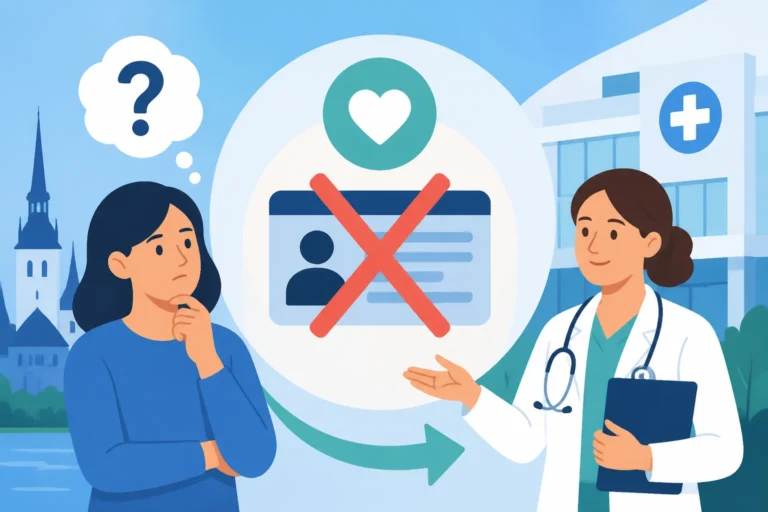
How Do I Register with the Tervisekassa If Employed by an Estonian Company?
Moving to Estonia and starting a new job is exciting, but let's be honest, the healthcare system can feel like a labyrinth, especially when you're trying to figure out if your new Estonian employer has actually sorted out your Tervisekassa health insurance. Many expats assume it's completely automatic from day one, only to find themselves in a stressful bind when they need a doctor. This comprehensive guide will walk you through exactly how to ensure you're correctly registered with the Estonian Health Insurance Fund (Tervisekassa) when employed by an Estonian company, from understanding your employer's role to verifying your coverage and navigating any initial waiting periods.
Understanding Tervisekassa and Your Employment Status
The Estonian healthcare system, primarily managed by the Tervisekassa (Estonian Health Insurance Fund), operates on a social insurance model. This means your eligibility for public health insurance is directly tied to the social tax contributions made on your behalf. For most employed individuals, this system is quite effective, but for new arrivals or those unfamiliar with the specifics, it can feel opaque.
The Social Tax Mechanism and Employer's Role
In Estonia, when you are legally employed by an Estonian company, your employer is responsible for paying social tax (sotsiaalmaks) on your salary. This social tax is a combined contribution that covers both state pension and health insurance. It’s not just a deduction from your paycheque; it’s a separate contribution your employer makes on top of your gross salary. Currently, the social tax rate is 33% of your gross salary, and a significant portion of this directly funds your health insurance.
The common misconception is that the moment you sign your employment contract, you're instantly covered. While the intention is for coverage to be seamless, the reality involves a slight delay linked to the actual declaration and payment of this social tax. Your employer registers your employment with the Estonian Tax and Customs Board (Maksu- ja Tolliamet, or MTA). Once your employment details are submitted and the first social tax payment is declared and processed, your health insurance status with Tervisekassa begins. This isn't just a courtesy; it's a legal obligation for your employer. Without these payments, you simply won't have Tervisekassa coverage. To get a deeper dive into the system, you might want to read our guide on how Estonia's Health Insurance Fund (Tervisekassa) Works: A Full Overview.
Essential Documents and Information You'll Need
While the registration itself is largely handled by your employer, there are foundational elements you absolutely need to have in place for the process to work smoothly. Without these, even the most diligent employer will hit roadblocks.
First and foremost is your personal identification code, or Isikukood. This unique 11-digit number is your digital identity in Estonia and is absolutely vital for almost every administrative process, including healthcare. It's how the Tervisekassa identifies you and links you to your social tax contributions. If you haven't secured one yet, you need to make it a top priority. Our guide on How to Get Your Isikukood (Personal Code) and Why It Matters for Healthcare can walk you through that process.
Secondly, ensure your place of residence is registered in the Estonian Population Register. This is often a condition for various public services, including full access to healthcare. While not always strictly required for initial Tervisekassa activation via employment, having your official address registered simplifies many things down the line, such as receiving official communications or registering with a family doctor. Your employer will usually need your correct details to register you with the Tax and Customs Board anyway. If you're unsure about this step, check out our article on Registering Your Place of Residence in Estonia: The Complete Guide.
Finally, while not a document you present to Tervisekassa yourself, thoroughly understand your employment contract. Knowing your official start date, salary, and employment type (e.g., full-time, part-time) helps you communicate effectively with your employer’s HR or payroll department if any issues arise. These details are what your employer reports to the MTA, which then triggers your health insurance.
The Step-by-Step Tervisekassa Registration Process (or Confirmation Process)
For new employees, especially those coming from countries where you might manually register for health insurance, Estonia's system can feel a bit hands-off. You won't typically be filling out a Tervisekassa application form yourself if you're employed. Instead, it's about confirming that the wheels are turning behind the scenes.
Your Employer's Role in Health Insurance Activation
The moment you start your employment contract with an Estonian company, your employer has a legal obligation to register you with the Tax and Customs Board (MTA) within a specific timeframe, usually immediately upon commencing work. This registration is called "employment registration" (töötamise registreerimine). This crucial step notifies the state that you are now an employee and that social taxes will be paid on your behalf.
Here's how it generally works:
- Employment Contract Signed: You and your employer sign the official contract.
- Employer Registers You: Your employer submits your employment details (including your Isikukood) to the MTA's e-portal.
- Social Tax Declaration: At the end of the first month of your employment, your employer declares your gross salary and the corresponding social tax to the MTA.
- Social Tax Payment: Your employer then pays this social tax to the state.
- Tervisekassa Activation: Once the social tax payment is processed and cleared by the MTA, Tervisekassa is notified, and your health insurance coverage becomes active. This usually happens on the 1st day of the month following the declaration and payment of your social tax. So, if you start work on January 15th, your employer declares and pays social tax by February 10th (for January's salary), your coverage would typically start on March 1st. This delay is a critical point that often catches new expats off guard. For more details on the financial side, you can read our article on Understanding Health Insurance Through Social Tax in Estonia.
How to Verify Your Tervisekassa Coverage
Given the indirect nature of the registration, it’s absolutely essential that you, the expat, proactively verify your own coverage. Don't just assume it's all fine and dandy. Estonia's digital infrastructure is fantastic for this, making it relatively straightforward once you know where to look.
The primary way to check your Tervisekassa coverage is through the state's digital health portal, known as e-Tervise or Digilugu. This is your personal health record and gateway to the Estonian healthcare system. To access it, you will need your Estonian ID card, Mobile-ID, or Smart-ID. Once logged in, you can navigate to the "Health Insurance" section, which clearly displays your active coverage status, its validity period, and your assigned family doctor (perearst) if you've already chosen one. This portal is a cornerstone of Navigating Estonia's Digital Healthcare System: An Expat's Roadmap (2026).
Alternatively, you can visit the Tervisekassa's official website. They often have an online query tool where you can enter your Isikukood to check your insurance status directly. Look for a section like "Kindlustuse kehtivuse kontroll" (Check insurance validity). If you prefer a more personal touch or need detailed clarification, you can always contact Tervisekassa directly via phone or email. Their customer service often has English-speaking staff who can assist you. Just be prepared to provide your Isikukood and explain your situation clearly.
It's paramount to perform this check soon after your anticipated coverage start date. If you see that your insurance is not active when it should be, don't panic, but do act quickly. The first point of contact should always be your employer's HR or payroll department, as they are the ones making the declarations and payments.
Navigating the Waiting Period and Potential Gaps
The biggest pitfall for many new expats is the waiting period. While your employer promptly registers your employment, the actual activation of your Tervisekassa health insurance isn't instantaneous. This gap can leave you vulnerable if you need medical attention.
Understanding the Waiting Period for New Residents
As we touched upon earlier, your Tervisekassa health insurance coverage for employment typically begins on the first day of the calendar month following the month for which your employer first declared and paid social tax.
Let’s illustrate with an example:
- You start work: October 15th
- Employer declares and pays social tax for October: By November 10th
- Your Tervisekassa coverage begins: December 1st
This means there's a period from October 15th to November 30th where you are employed, social tax is being accrued, but your Tervisekassa health insurance is not yet active. This waiting period can be anywhere from a few weeks to almost two months, depending on your start date within a given month. It’s not a reflection of your employer’s efficiency (usually), but rather how the Estonian system processes social tax contributions for health insurance activation. This is a crucial aspect of Understanding Health Insurance Waiting Periods for New Residents in Estonia.
This period is a source of considerable anxiety for many new arrivals. You’ve moved to a new country, you’re settling in, and the last thing you want is to fall ill or have an accident without knowing if you’re covered for basic medical care.
Bridging the Gap: Temporary Solutions and Private Insurance
So, what do you do during this initial uninsured period? This is where proactive planning is absolutely vital. Relying solely on Tervisekassa for immediate needs upon arrival is a gamble you don't want to take.
For short-term emergency coverage, if you are an EU/EEA or Swiss citizen, your European Health Insurance Card (EHIC) can provide access to medically necessary public healthcare at the same cost as a local. However, EHIC is not a substitute for comprehensive travel insurance, nor does it cover non-emergency care or planned treatments.
For everyone else, or for those who want more robust coverage than EHIC offers during this initial gap, private health insurance is your best friend. Many expats opt for a private policy that specifically covers the initial period before their Tervisekassa coverage kicks in. This provides immense peace of mind. Brands like SafetyWing offer travel and medical insurance plans designed for digital nomads and expats, which can be particularly useful for covering this transitional phase. While SafetyWing is not a replacement for Tervisekassa once you're officially covered, it serves as an excellent safety net for those first few weeks or months. It means if you get a nasty flu, break a bone, or need to see a doctor for an urgent issue, you won't be facing potentially crippling out-of-pocket expenses.
Remember, even basic emergency care can be costly if you're completely uninsured. While public hospitals will stabilize you in a life-threatening emergency regardless of your insurance status, you will still be billed for the costs. Having a private plan, even for a short duration, allows you to access necessary medical services without the stress of astronomical bills. When your Tervisekassa coverage eventually becomes active, you can then assess whether to continue with private insurance as a supplement for services not covered by the public system or to cancel it, depending on your needs. For a broader perspective on options, consider our article on Understanding Private Health Insurance Plans in Estonia.
Common Issues and Troubleshooting
Even with Estonia's digital prowess, things can occasionally go awry. Knowing how to troubleshoot common Tervisekassa issues will save you a lot of headaches.
What If My Coverage Isn't Active?
You've checked the e-Tervise portal, you've used the Tervisekassa website, and it's past the expected start date, but your coverage is still showing as inactive. What now?
- Contact Your Employer (HR/Payroll): This should always be your first step. Politely inquire about the status of your employment registration with the Tax and Customs Board (MTA) and the social tax payments made on your behalf. Ask for confirmation that your details, especially your Isikukood, were correctly submitted. Sometimes, a simple administrative error or a delay in processing by the employer can be the culprit. They should be able to confirm the dates of their declarations and payments.
- Verify Residence Registration: Double-check that your place of residence is accurately registered in the Estonian Population Register. While not always the direct cause of Tervisekassa issues for employed persons, it can sometimes create a hurdle or delay in the broader administrative ecosystem.
- Contact Tervisekassa Directly: If your employer confirms everything is in order and you're still not seeing active coverage, it's time to contact Tervisekassa customer service. Explain your situation, provide your Isikukood and your employment start date, and mention that your employer has confirmed social tax payments. They can look into their system and clarify if there's a processing delay on their end or if there's an underlying issue. Be prepared to be patient, but persistent.
- Proof of Employment: If you need to access urgent care during this limbo period and can't confirm Tervisekassa coverage, having a copy of your employment contract and perhaps a letter from your employer confirming your employment and social tax payments (or impending payments) might be helpful, though it's not a guarantee of coverage.
Moving from Private to Public Coverage
Many expats wisely opt for a temporary private health insurance plan, like those offered by SafetyWing, to cover the initial waiting period. Once your Tervisekassa coverage is active, you’ll need to make a decision about your private policy.
If you decide to rely solely on Tervisekassa, you simply need to cancel your private insurance. Most reputable private insurers offer flexible cancellation policies. It's crucial to confirm your Tervisekassa coverage is definitively active before canceling any private plan. Check the e-Tervise portal a couple of times over a few days to be absolutely sure.
Some expats, however, choose to maintain private insurance even after Tervisekassa coverage begins. Why? Because while Tervisekassa provides comprehensive public healthcare, private clinics and some specialist services can offer shorter waiting times, more flexibility in choosing doctors, and services that might not be fully covered by the public system (like extensive dental work for adults). Public vs Private Healthcare in Estonia: Which Should Expats Choose? delves into this decision-making process. Having private coverage can be a great way to supplement your public insurance, giving you the best of both worlds.
| Entity | Role in Tervisekassa Registration for Employees | Key Action for Expats |
|---|---|---|
| Employee (You) | Provides Isikukood, ensures residence registration. | Proactively verify coverage status. |
| Employer | Registers employment with MTA, declares & pays social tax. | Confirm registration and social tax payments if issues arise. |
| Tax & Customs Board (MTA) | Processes employment registration and social tax payments. | (No direct action for expat) |
| Tervisekassa | Activates health insurance coverage based on MTA data. | Provides status via e-Tervise portal and customer service. |
Understanding this interplay is key to navigating the Estonian healthcare system. Always assume personal responsibility for verifying your status, and don't hesitate to seek temporary private coverage, potentially through providers like SafetyWing, to bridge any initial gaps.
Disclaimer
The information provided in this guide is for general informational purposes only and does not constitute legal or medical advice. While we strive to keep the information up-to-date and accurate, regulations and procedures in Estonia can change. It is always recommended to verify information with official sources such as the Estonian Health Insurance Fund (Tervisekassa), the Police and Border Guard Board (PPA), the Tax and Customs Board (MTA), or consult with a legal professional or an insurance advisor for your specific situation.