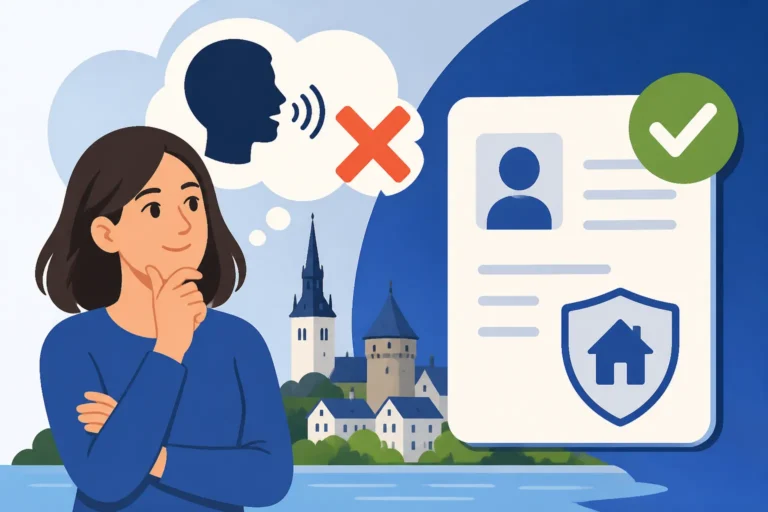
Can I Get Residence in Estonia Through Self-Employment?
Thinking about making Estonia your new home base, but you're not looking for a traditional 9-to-5? Many of us expats arrive with entrepreneurial dreams or a pre-existing freelance career, only to discover the maze of immigration rules for the self-employed can feel incredibly daunting. You're probably wondering if your independent professional life can actually qualify you for residence here, and if so, what hoops you'll need to jump through. This comprehensive guide is designed to demystify the process, offering practical advice and a realistic look at how self-employment can indeed be your pathway to living legally in Estonia.
Understanding the Self-Employment Residence Permit in Estonia
Let's be real, the idea of being your own boss in a new country like Estonia sounds fantastic – flexible hours, innovative environment, and the freedom to create your own path. But when it comes to immigration, "self-employment" isn't always as straightforward as "employed by a local company." Estonia, being quite digitally advanced and startup-friendly, does offer pathways for self-employed individuals, but it’s crucial to understand the specific categories and requirements. It's not just about proving you can work; it's about proving your work contributes to Estonia and is sustainable.
The Entrepreneur's Mindset vs. Bureaucracy
You might have a brilliant business plan, a solid client base, and years of experience, but the Estonian Police and Border Guard Board (PPA) needs to see this translated into their specific criteria. They are looking for evidence of genuine economic activity and a clear intention to operate your business primarily from Estonia, or at least contribute significantly to the Estonian economy. This isn't a "start a side hustle and get a visa" scenario. Instead, it's about demonstrating a viable, impactful, and financially stable self-employment endeavor. You’re expected to have a well-defined business idea, a robust financial plan, and, importantly, the ability to support yourself without relying on social benefits. It's often misunderstood that any form of self-employment automatically grants you a residence permit. In reality, the PPA assesses each case meticulously, looking for specifics that align with their immigration policy objectives, which tend to favor innovation, investment, and skilled talent.
Key Eligibility Requirements for the Self-Employed Permit
So, what exactly does the PPA look for? The main avenue for self-employed individuals seeking residence is often through a temporary residence permit for entrepreneurship. This permit category is designed for those who plan to operate a business or act as a sole proprietor (FIE) in Estonia. It’s not just about declaring you’re self-employed; you need to demonstrate that your business activities are significant and serve the economic interests of Estonia.
Firstly, you'll need a clear business plan. This isn't just a casual idea; it needs to be a detailed document outlining your venture, its market, financial projections, and how it will operate within Estonia. The PPA looks for novelty, potential for growth, and contribution to the Estonian economy, which might include creating jobs for locals or bringing in foreign capital. Secondly, you need sufficient financial means. This means proving you have the funds to live in Estonia and to invest in your business. The exact amount can vary, but generally, you need to show stable income or significant savings. For instance, to apply for a temporary residence permit in Estonia, you typically need to show sufficient funds to support yourself, which is generally considered to be above the average monthly salary in Estonia. Thirdly, you need to register your business in Estonia. This could be as a sole proprietor (FIE) or by establishing a private limited company (OÜ). Understanding the nuances between these legal forms is crucial, as they have different tax and administrative implications. For a deeper dive into these structures, you might find "Self-Employment in Estonia: The FIE and OÜ Guide for Foreigners" particularly helpful. Lastly, you must possess relevant experience or qualifications to run your proposed business. Simply put, they want to see that you actually know what you're doing in your chosen field.
It’s worth noting that if you're a startup founder, there's also the dedicated Estonian Startup Visa, which has different criteria, focusing more on innovation and scalability validated by the Startup Committee. For the purposes of this guide, we're focusing on the general self-employment or entrepreneurship residence permit, which is broader than the specific startup visa.
The Application Process: A Step-by-Step Walkthrough
Navigating the application process for a self-employment residence permit can feel like a bureaucratic labyrinth, especially when you’re dealing with it in a foreign language and system. It's not simply filling out a form; it requires meticulous preparation, careful attention to detail, and a good understanding of what the Estonian authorities expect. Many expats find this part the most frustrating, but with a structured approach, it becomes much more manageable.
Gathering Your Documentation: What the PPA Really Wants
The PPA is notoriously thorough, and they want to see a clear, coherent, and complete set of documents. Missing even a minor detail can lead to delays or rejection. Beyond the standard passport copies and application forms, you'll need:
- A Comprehensive Business Plan: This is arguably the most critical document. It should detail your business idea, market analysis, financial projections (for at least one year, ideally more), operational plan, and how your business benefits Estonia. Think about job creation, innovation, export potential, or specialized services.
- Proof of Funds: Bank statements, investment portfolios, or letters from financial institutions proving you have sufficient resources to support yourself and your business in Estonia. The amount required is not explicitly fixed but generally aligns with Estonia’s average living costs and expected business investments.
- Proof of Business Registration: If you've already registered your FIE or OÜ, provide the registration certificate. If not, outline your clear plan to do so. You can learn more about this in "How to Register as an FIE (Sole Proprietor) in Estonia".
- Educational Documents and Professional Experience: Copies of your degrees, certificates, and a detailed CV outlining your relevant work history. This helps the PPA assess your capability to run the proposed business.
- Health Insurance: You'll need proof of valid health insurance coverage. For new arrivals, private health insurance is often necessary until you qualify for the public system. Companies like Cigna Global offer expat-specific plans that can satisfy these requirements. For a full breakdown, check out "Health Insurance in Estonia: Mandatory, Private and Travel Options Explained" or "Understanding Private Health Insurance Plans in Estonia".
- Proof of Accommodation: A rental agreement or property ownership documents showing where you will live in Estonia.
- Marriage and Birth Certificates: If applying for family reunification as well, these documents are necessary.
- Criminal Record Check: Usually from your home country and any other countries where you've resided for a significant period.
Remember to have all non-Estonian documents translated into Estonian or English by a sworn translator if not already in one of those languages. It’s also wise to get multiple copies and keep digital backups.
Navigating the Application Submission and Interview
Once you’ve diligently gathered everything, the next step is submitting your application. This usually involves booking an appointment at a PPA service point in Estonia or an Estonian embassy/consulate in your home country. Be prepared for potentially long waiting times for appointments, so plan ahead! When you go for your appointment, you’ll submit all your documents, provide biometric data (fingerprints and photo), and pay the state fee.
After submission, there may be an interview. This is your chance to articulate your business plan and convince the PPA officer of your commitment and capability. Be prepared to discuss your business in detail, your financial projections, and your reasons for choosing Estonia. They might ask about your past experience, your market research, and how you plan to integrate into the local business ecosystem. Be confident, clear, and honest. The processing time can vary, but generally, you should expect to wait a few months. It's a waiting game that often tests the patience of even the most zen expats. After approval, you'll typically be invited to collect your residence card. At this point, you'll also officially get your Isikukood (personal identification code), which is crucial for almost everything else in Estonia. "How to Apply for an Isikukood as Part of Your Residence Process" covers this in detail.
Life as a Self-Employed Resident: Beyond the Permit
Securing your residence permit is a huge milestone, but it's just the beginning of your journey as a self-employed expat in Estonia. The realities of running a business and living independently here involve understanding local tax obligations, navigating the healthcare system, and ensuring your long-term financial stability. It's a whole new set of responsibilities, but with proper planning, it’s entirely manageable.
Financial Realities: Taxes and Income for the Self-Employed
Estonia has a unique and relatively straightforward tax system, especially for businesses, which can be quite appealing for the self-employed. The corporate income tax system, for example, taxes profit only when it's distributed, not when earned. However, as an FIE or a shareholder receiving dividends from your OÜ, you'll have personal income tax considerations.
As an FIE, you’ll pay income tax on your business profit, social tax, and unemployment insurance contributions. The Estonian Tax and Customs Board (Maksu- ja Tolliamet) is surprisingly efficient, with most declarations handled online through the e-MTA portal. You'll need to accurately track your income and expenses, and understanding deductible expenses is key to optimizing your tax burden. For a deeper understanding, "How Much Tax Does an FIE Pay in Estonia in 2026?" and "The Complete Guide to Taxes in Estonia for Expats (2026)" are indispensable resources. Remember, proper record-keeping is not just good practice, it's a legal requirement. When it comes to filing your annual income tax return, even as a self-employed person, the process is largely pre-filled, making it one of the easiest tax systems for expats once you get the hang of it. You can find more specific guidance in "How to File Your Annual Income Tax Return in Estonia".
Healthcare and Social Security: Your Safety Net
For the self-employed, understanding healthcare and social security is paramount. Unlike employees whose social tax is automatically paid by their employer, you, as an FIE or an OÜ owner, are responsible for ensuring your contributions. If you pay social tax at the minimum required amount (which is tied to the minimum wage), you typically become eligible for public health insurance through the Estonian Health Insurance Fund (Tervisekassa). This is a critical benefit, covering most medical services, including doctor visits, specialist care, and hospital treatment.
However, there's often a waiting period for new residents or those just starting to pay social tax. During this interim, or if your income fluctuations mean you don't consistently meet the social tax threshold, having private health insurance, like those offered by Cigna Global, is not just wise, it's often a mandatory requirement for your residence permit application. This ensures you're covered for unexpected medical needs from day one. You can read more about the public system in "Registering with the Tervisekassa in Estonia: The Complete Expat Guide (2026)" and how your social tax contributions play a role in "Understanding Health Insurance Through Social Tax in Estonia". It’s important to stay on top of your contributions to maintain continuous health insurance coverage.
Common Pitfalls and Pro Tips for Self-Employed Expats
Even with all the preparation, the journey of gaining residence through self-employment in Estonia can present its own unique set of challenges. It’s easy to get lost in the details or underestimate certain aspects. Learning from others' experiences and being proactively prepared can make a world of difference.
Avoiding Application Mistakes
One of the biggest mistakes applicants make is not providing enough detail or evidence in their business plan. The PPA wants to see a real business, not just a vague idea.
- Lack of Specificity: Don’t just say you’re a "consultant." Specify what kind of consulting, who your target clients are, how you plan to acquire them, and why Estonia is the ideal base for this.
- Insufficient Financial Proof: Underestimating living costs or business start-up expenses is a common pitfall. Ensure your financial projections are realistic and backed by sufficient capital or projected income.
- Incomplete Documentation: As mentioned, missing a single document, or submitting one that’s not correctly translated or certified, can lead to significant delays. Double-check everything against the PPA's official checklists.
- Poor Language Skills for Interview: While many PPA officers speak English, making an effort to learn some basic Estonian or preparing well for the interview in English will certainly leave a better impression. It shows commitment to integrating.
Consider seeking professional help if you're unsure. Immigration lawyers or consultants specializing in Estonian residence permits for entrepreneurs can guide you through the intricacies and ensure your application is as strong as possible.
Building Your Network and Support System
Moving to a new country and starting or continuing self-employment can be isolating. Estonia, while digitally advanced, is still a relatively small country, and networking is incredibly valuable.
- Local Business Networks: Join expat groups, industry-specific meetups, and chambers of commerce. Organizations like Work in Estonia or the Estonian Chamber of Commerce and Industry can be great starting points. Attending events hosted by startup hubs like Lift99 or Tehnopol can also provide invaluable connections.
- Professional Services: Establish relationships with local accountants and legal advisors. They can provide crucial insights into Estonian business practices, tax laws, and compliance, helping you avoid costly mistakes. This is especially important when deciding between an FIE or an OÜ.
- Expat Communities: Connect with other expats who have gone through similar processes. Online forums, social media groups, and local expat events in Tallinn or Tartu can offer a wealth of shared experiences, tips, and moral support. Many people also share their experiences with moving logistics through platforms like Sirelo, which can be useful if you're planning a full relocation of your household goods. Building a robust local network not only helps your business but also eases your personal integration into Estonian life. It’s about creating a sense of belonging and finding people who understand the unique challenges and triumphs of expat entrepreneurship.
Disclaimer
Please remember that immigration laws and requirements are subject to change. While every effort has been made to provide accurate and up-to-date information, this guide is for informational purposes only and does not constitute legal advice. Always consult with the official sources such as the Estonian Police and Border Guard Board (PPA) or a qualified immigration lawyer for personalized guidance regarding your specific situation.