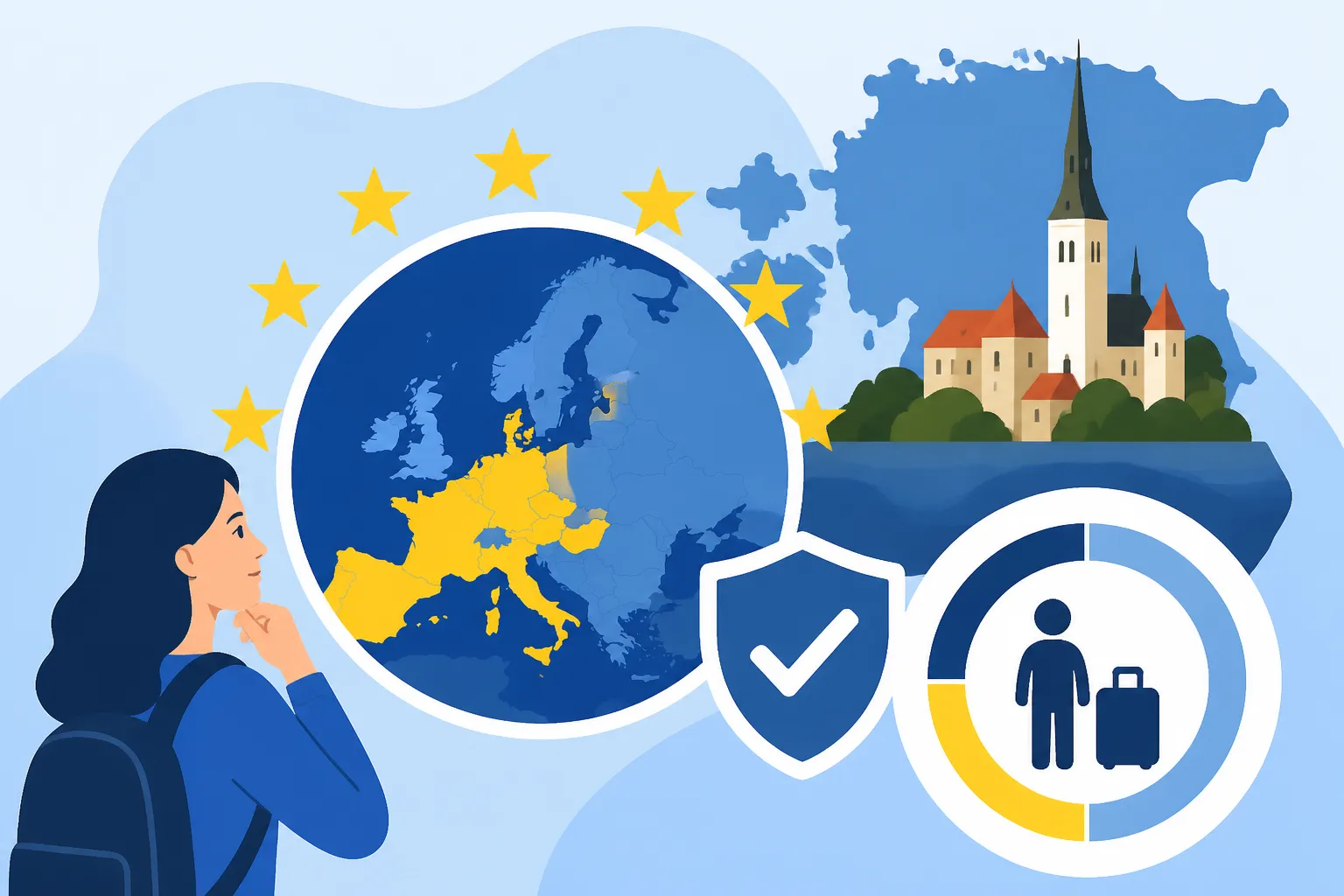
Understanding Schengen Rules and the 90/180 Limit for Estonia
The frustration of wanting to explore every corner of Estonia, from Tallinn's medieval charm to Tartu's intellectual vibe, only to be constantly looking over your shoulder at a ticking clock – the infamous Schengen 90/180-day rule – is a real buzzkill for many visitors and aspiring expats. This guide is here to untangle the complexities of Schengen regulations, help you understand exactly what the 90/180-day limit means for your time in Estonia, and illuminate the legitimate pathways for those yearning for a longer stay.
The Schengen Area Explained: More Than Just a Map
When you first hear "Schengen," your mind might jump to a hazy map with a bunch of European countries colored in. But for anyone travelling or planning to live in Estonia, it's far more than just geography; it's a critical legal framework that dictates how long you can stay and under what conditions. Understanding this framework is the absolute first step to avoiding any unwanted surprises or, worse, unintended overstays. It’s a common stumbling block for newcomers, so please, let’s break it down together.
What Exactly is the Schengen Area?
The Schengen Area is essentially a passport-free zone comprising 27 European countries that have abolished passport and all other types of border control at their mutual borders. Think of it as one massive territory for the purposes of international travel. Once you're in, you can generally move between member states without showing your passport, much like travelling between states in the US or provinces in Canada. Estonia, being a proud member, adheres to these rules wholeheartedly. This freedom of movement is fantastic for tourism and business travel, but it comes with a strict set of regulations for non-EU/EEA nationals regarding how long you can actually stay within this collective zone. It's not just about Estonia; it's about the entire bloc. So, if you spend 30 days in France, those days count towards your Schengen limit for Estonia too.
This system was designed to simplify travel and foster economic integration, but it can be a real headache if you don't grasp its unified nature. Many expats arrive thinking they have 90 days for Estonia, only to realize their recent European holiday has eaten into that allowance. The Schengen borders are external; once you cross into one Schengen country, you're considered to have entered the entire area. This means the clock starts ticking from your first entry into any Schengen state, not just Estonia. This single-entry zone concept is perhaps the most crucial takeaway when you're planning your trip or short-term stay.
Schengen Visas: Who Needs One, Who Doesn't?
Navigating the visa requirements for entering the Schengen Area can feel like deciphering ancient runes, especially depending on your nationality. Generally, citizens of the European Union (EU), the European Economic Area (EEA — which includes Iceland, Liechtenstein, and Norway), and Switzerland enjoy freedom of movement. They don't need a visa to enter or reside in Estonia, although they typically need to register their right of residence if staying longer than a certain period, usually a few months. This is a very different process from a visa application and is often much simpler.
For non-EU/EEA citizens, it gets more complex. Many countries have visa-waiver agreements with the Schengen states. This means citizens from countries like the United States, Canada, Australia, Japan, and several others can enter the Schengen Area without a visa for short stays. However, and this is a big "however," this visa-free entry is subject to the strict 90/180-day rule. It's not a green light to stay indefinitely; it's a limited privilege. If your nationality does require a Schengen visa (often referred to as a Type C visa), you'll need to apply for one at the embassy or consulate of the Schengen country that is your main destination or where you will first enter the zone. The application process can be detailed, requiring proof of funds, travel insurance, accommodation, and a clear itinerary. Always check the specific requirements for your nationality well in advance of your travel dates.
Unpacking the Infamous 90/180 Day Rule
Ah, the 90/180-day rule. It sounds simple, doesn't it? "You can stay for 90 days in any 180-day period." But if you’ve spent any time talking to fellow expats or browsing online forums, you’ll quickly discover it’s the source of immense confusion and anxiety. This isn't just a guideline; it's a hard-and-fast rule enforced by border agencies across all Schengen states, including Estonia. Misunderstanding it can lead to serious headaches, from denied entry to fines and even future travel bans, so let's really dig into how this beast works.
How the 90/180 Day Rule is Calculated (and Miscalculated)
The rule states that a non-EU/EEA national can stay for a maximum of 90 days within any 180-day period. The crucial part often missed is the "rolling" nature of the 180-day period. It's not a fixed calendar period. Instead, on any day you are present in the Schengen Area, you must look back 180 days from that specific date to count your total days of stay. If that total exceeds 90, you are in violation. This isn't a simple "enter, stay 90 days, leave for 90 days, re-enter" scenario. It requires constant vigilance and accurate tracking of your entry and exit dates.
Imagine you enter Estonia on January 1st and stay for 60 days. You then leave on March 1st. You’ve used 60 days. Now, if you want to re-enter, say, on April 15th, the border guard will look back 180 days from April 15th. They will count the days you spent in the Schengen area during that period. The 60 days from January 1st to March 1st would still be within that 180-day window. You would then only have 30 more days available. This rolling calculation means that every entry and exit stamp matters, and keeping meticulous records is paramount. There are online Schengen calculators available that can help you track this, but always treat them as a guide, not a definitive legal statement. The ultimate authority lies with the border control officer at your point of entry or exit.
Consequences of Overstaying Your Welcome
Trust me, you do not want to overstay your welcome in Estonia or any Schengen country. The consequences can be severe and long-lasting, turning what might have been an innocent mistake into a significant problem for your future travel plans. Border control in Estonia, like its counterparts across the Schengen Area, takes these rules very seriously. They have access to centralized databases of entry and exit records, so trying to "wing it" or hoping they won't notice is a very risky gamble.
The immediate consequences can include fines, which vary by country but can be substantial. You might also face deportation, which is not only incredibly stressful and expensive but also leaves a black mark on your immigration record. Perhaps the most impactful consequence is a ban from the Schengen Area for a certain period, usually several years. This means you wouldn't be able to visit Estonia or any other Schengen country for leisure, business, or even to apply for a long-term visa. This can be devastating for those with family, friends, or business interests in the region. Furthermore, an overstay could impact future visa applications for other countries outside of Schengen, as immigration authorities often share information. It’s simply not worth the risk. If your plans change and you find yourself needing to stay longer, you absolutely must explore legitimate long-term visa or residence permit options before your 90 days are up.
Navigating Estonia as a Non-Schengen National
So, you're not an EU citizen, and you're keen on exploring Estonia. Wonderful! This country has so much to offer, and its unique blend of Nordic, Baltic, and Eastern European influences is truly captivating. However, it's vital to approach your stay with a clear understanding of the rules that apply to you. Estonia is part of the Schengen zone, which means the general rules apply, but there are nuances depending on your intentions for staying.
Tourist Stays and Short Visits
For most non-EU/EEA nationals, a short visit to Estonia for tourism, family visits, or even short business trips falls under the standard Schengen rules. If your nationality is visa-exempt, you can simply arrive at the border, typically present your passport, and you'll be granted entry for a short stay, subject to the 90/180-day rule. Remember, this means you can enjoy Estonia for up to 90 days within any 180-day period. This is perfect for exploring Tallinn's Old Town, hiking in Lahemaa National Park, or enjoying the vibrant culture of Tartu.
During these short stays, you generally cannot work, study long-term, or establish residency. Your purpose of visit must align with the terms of your visa-free entry or your Schengen (Type C) visa. This means no trying to pick up odd jobs "under the table" or enrolling in a semester-long university course. Such activities would constitute a violation of your immigration status and could lead to serious problems down the line. It’s all about maintaining a clear, consistent purpose for your visit. Many people are eager to explore The Complete Guide to Cost of Living in Estonia for Expats (2026) during these initial visits, but remember, the cost of living doesn't translate into extended stay rights without the right paperwork.
What if I Need More Time? The D-Visa Explained
The 90/180-day Schengen limit is often the first hurdle for those who fall in love with Estonia and want to extend their stay. This is where the Long-Stay (Type D) Visa comes into play, offering a critical bridge between a short tourist visit and a full-fledged residence permit. Unlike the Schengen C-visa, which is for short stays in the entire Schengen area, a D-visa is a national long-stay visa issued by Estonia itself. It allows you to stay in Estonia for longer than 90 days, typically up to 365 days, and crucially, it allows you to stay in Estonia beyond the Schengen 90-day limit, even if you’ve used up your Schengen short-stay allowance elsewhere.
The D-visa is usually a prerequisite for applying for a temporary residence permit once you're already in Estonia. It’s typically granted for specific purposes, such as starting a job, enrolling in long-term studies, or even for specific business activities. To apply for a D-visa, you'll generally need to submit an application to an Estonian embassy or consulate in your home country or country of legal residence. The requirements are more stringent than for a tourist visa; you'll need a clear purpose for your extended stay, proof of sufficient funds, valid health insurance (Cigna Global is one provider that many expats consider for this type of comprehensive coverage), and confirmation of accommodation. This is your first official step towards a longer life here, and Understanding the Long-Stay (Type D) Visa for Estonia is absolutely essential. Don't underestimate the importance of meticulous preparation when applying for this visa.
Options for Longer Stays Beyond the 90/180 Limit
Falling for Estonia is easy. Wanting to stay longer than 90 days is a natural progression for many visitors. Whether it's the thriving tech scene, the serene nature, or the unique cultural experiences, Estonia has a way of drawing people in. Luckily, the country offers several legitimate pathways for non-EU/EEA nationals to extend their stay beyond the short-term Schengen limit. These aren't loopholes; they're official immigration categories designed to welcome individuals who can contribute to Estonian society and economy.
Residence Permits: Your Pathway to Long-Term Living
If your intention is to truly live and breathe Estonian life for more than a year, a temporary residence permit is your golden ticket. This isn't just about staying longer; it's about integrating into the fabric of the country, accessing services, and truly making Estonia your home. Residence permits are issued for various purposes, most commonly for work, study, or family reunification. Each type has its own specific set of requirements, but generally, you'll need a solid reason for your stay, proof of financial stability, a place to live, and valid health insurance.
The application process for a residence permit can be quite involved, often requiring a visit to the Police and Border Guard Board (PPA) either in Estonia or at an Estonian representation abroad. It's a significant administrative step, so be prepared with all your documentation. Obtaining an The Complete Guide to Estonian Residence Permits for Expats (2027) means you can stay in Estonia for the duration of the permit (typically up to five years, renewable), and it usually grants you the ability to move freely within the Schengen Area for short visits, much like an EU citizen. It’s a complete shift from being a temporary visitor to a recognized resident, opening up a world of possibilities, including access to local healthcare, public services, and the ability to apply for an Isikukood, Estonia's personal identification code.
The Digital Nomad Visa: A Game Changer for Many
Estonia was a pioneer in recognizing the growing trend of remote work by introducing its Digital Nomad Visa (DNV) in 2020. This visa is a fantastic option for individuals who can work independently of location and wish to base themselves in Estonia while working for clients or employers located outside of Estonia. It's not a residence permit, but it allows you to stay in Estonia for up to one year, serving as an excellent bridge to truly explore if Estonia is the right long-term fit for you.
To qualify for the DNV, you need to prove that you are a genuine digital nomad. This means demonstrating you have a contract of employment with a company registered outside of Estonia, conducting business as a self-employed person registered outside of Estonia, or providing services to clients primarily outside of Estonia through a company registered outside of Estonia. Crucially, you must also meet a minimum income threshold, which is regularly updated, and provide comprehensive travel or health insurance. The DNV is a D-visa, meaning it allows you to stay for longer than 90 days and counts your stay specifically towards Estonia, not your general Schengen allowance. It's been a game-changer for many who previously struggled with the limitations of the 90/180 rule and a great way to explore How to Get Estonia's Digital Nomad Visa: The Full Guide (2027).
Work Permits and Employer-Sponsored Visas
For many, the most straightforward path to a long-term stay in Estonia is through employment. If you secure a job with an Estonian employer, they will often sponsor your work visa and subsequent residence permit. This is generally one of the most common routes for non-EU/EEA nationals moving here, especially within the thriving tech and startup sectors. The process usually begins with securing a job offer, after which your employer will initiate the necessary paperwork for a work permit and a Long-Stay (Type D) visa.
Once you arrive in Estonia with your D-visa, you can then apply for a temporary residence permit for employment. The requirements typically include your employment contract, proof of qualifications, and ensuring your salary meets the minimum threshold set by the Estonian government, which is often tied to the average salary in the sector. Your employer plays a crucial role in navigating this process, providing necessary documentation and sometimes assisting with the bureaucratic steps. This route ties your right to reside in Estonia directly to your employment, offering a clear and regulated path to living and working in the country. Dive into The Expat Guide to Estonian Work Visas and Permits (2027) for a comprehensive overview of this important pathway.
Common Pitfalls and Misconceptions for Expats
Living abroad, especially in a country with different administrative systems, inevitably leads to a few head-scratching moments and, occasionally, outright misunderstandings. Estonia, for all its digital prowess and welcoming nature, is no exception when it comes to immigration rules. Many expats, often with the best intentions, fall into traps simply because they haven't fully grasped the intricacies of the local regulations or the broader Schengen framework. Let’s clear up some of the most common confusions that readers most often encounter.
The e-Residency Myth and Physical Presence
This is probably one of the biggest misconceptions I hear from newcomers. Estonia's e-Residency program is globally renowned and incredibly innovative, allowing anyone in the world to establish and run an EU-based business from anywhere. It's fantastic for entrepreneurs and freelancers. However, and this is a huge however, e-Residency absolutely does not grant you the right to live or reside in Estonia. It is a digital identity that provides access to Estonia's public e-services, enabling you to sign documents, declare taxes, and register a company online.
Many people confuse the ability to run a business in Estonia with the right to live there. They are two entirely separate concepts. An e-resident still needs to adhere to all standard visa and immigration rules for physical presence in Estonia and the Schengen Area. If you're an e-resident and a non-EU/EEA citizen, you are still subject to the 90/180-day rule for physical stays. If you wish to live in Estonia, you'll need to apply for a D-visa or a residence permit based on work, study, or other legitimate grounds, just like any other foreigner. Do not confuse your digital presence with physical presence. If you're thinking about moving, checking out Does e-Residency Give Me the Right to Live in Estonia? is a must.
Schengen vs. EU: Understanding the Difference
Another common point of confusion is the distinction between the Schengen Area and the European Union. While many EU countries are also part of the Schengen Area, they are not the same thing. The EU is a political and economic union of 27 member states, focused on broad integration, common policies, and a shared market. The Schengen Area, on the other hand, is a specific agreement focused solely on internal border control and the free movement of people between its member states.
For example, Ireland is an EU member but is not part of the Schengen Area. Bulgaria and Romania are EU members but are only partially integrated into Schengen's land and sea borders (air borders are fully integrated as of March 2024). Conversely, non-EU countries like Norway, Iceland, Switzerland, and Liechtenstein are part of the Schengen Area. This distinction is crucial for understanding your visa rights. A Schengen visa allows you to travel within the Schengen Area, but it doesn't automatically grant you rights or access to all EU member states outside of Schengen, nor does it give you the broader rights afforded to EU citizens. It's important to remember that when talking about visa-free travel or residency rights, the specific agreements you're under (Schengen, EU, or bilateral agreements) truly matter.
Counting Days: The Entry/Exit Stamps and Online Calculators
The sheer anxiety that comes with counting your Schengen days is something almost every non-EU long-term visitor has experienced. There's a persistent myth that you can somehow game the system, or that border guards are lenient. This is not the case, especially with the increasing digitalization of border control systems. Your passport stamps are important, but even without them, your entry and exit dates are digitally recorded. The system knows exactly how long you’ve been in the zone.
Relying solely on physical stamps can be misleading, especially if a border guard misses a stamp (it happens!). Always keep your own meticulous records. There are numerous online Schengen calculators available, often provided by official EU sources or reputable travel sites, which can help you track your days. These tools can be invaluable, but they are aids, not official declarations. Always double-check your calculations, especially if your travel pattern is complex with multiple entries and exits. When in doubt, err on the side of caution. The responsibility for complying with the 90/180-day rule rests squarely on you, the traveler. Don't leave it to chance or a rough estimate.
Practical Tips for Planning Your Stay in Estonia
Moving to or even just visiting Estonia for an extended period requires careful planning, especially when dealing with immigration regulations. Having been through it myself, I can tell you that a little bit of proactive effort can save you a mountain of stress down the line. It's about being prepared, staying informed, and knowing when to ask for help.
Documentation is Key: Always Be Prepared
When dealing with any immigration process in Estonia, whether it's for a D-visa or a residence permit, proper documentation is your absolute best friend. Seriously, I cannot stress this enough. Estonian authorities, like many European counterparts, are thorough. They want to see that you understand the requirements and can provide clear, verifiable evidence for everything you claim. This means having your passport valid for at least six months beyond your intended stay, copies of all relevant visas and entry/exit stamps, birth certificates (if applying for family reunification), educational diplomas, employment contracts, and proof of funds.
Don't just gather the documents; organize them. Make multiple copies, keep digital backups, and consider creating a physical binder for easy access. If documents are not in Estonian or English, they will almost certainly need to be officially translated by a sworn translator and, in some cases, apostilled (legalized for international use). This can take time and money, so factor it into your planning. Missing a single document or having one that isn't properly translated and authenticated can cause significant delays or even lead to rejection. When you're ready to apply for something like How to Apply for a Temporary Residence Permit in Estonia, having your ducks in a row makes a world of difference.
Seeking Professional Advice
Navigating the nuances of immigration law can be incredibly complex, and sometimes, a little guidance goes a long way. While this guide provides a comprehensive overview, it's not a substitute for personalized legal advice. If you have a complex case, are unsure about your eligibility, or want to ensure your application is flawless, consider consulting an immigration lawyer or a specialist firm in Estonia. They can offer tailored advice, help you prepare your documentation, and represent you if needed.
There are also various expat groups and online forums where you can find community support and anecdotal experiences. While these can be helpful for general questions and camaraderie, always cross-reference any advice with official sources (like the Police and Border Guard Board website) and, for critical matters, professional legal counsel. Sometimes the rules change, or specific situations have unique interpretations, so don't rely on outdated information or well-meaning but unqualified advice from online strangers.
The Importance of Health Insurance
This might seem like a given, but it's a critical requirement for almost any long-term visa or residence permit application in Estonia – and a smart move for any traveller, period. Estonian authorities want to ensure that you won't become a burden on their public healthcare system during your stay. Therefore, you'll need to demonstrate proof of adequate health insurance coverage. For short-term Schengen visas or visa-free stays, travel insurance that covers emergency medical treatment and repatriation is usually sufficient.
For longer stays, such as with a D-visa or residence permit, the requirements become more stringent. You'll need comprehensive health insurance that covers a broader range of medical services, often including outpatient care, specialist visits, and hospitalization, for the entire duration of your intended stay. This might be through an Estonian employer if you're on a work permit, or you may need to purchase private international health insurance. Companies like Cigna Global offer plans specifically designed for expats, providing robust coverage that meets the requirements for long-term stays in Estonia. Having proper coverage not only fulfills an immigration requirement but also provides immense peace of mind. It’s a vital aspect of What Health Insurance Do I Need for an Estonian Residence Permit? and should never be overlooked.
| Stay Type | Max Duration | Purpose | Requires Visa? (Non-EU) | Required Insurance | Key Documentation |
|---|---|---|---|---|---|
| Schengen Short-Stay | 90 days/180 | Tourism, business, visit | Yes (for some) | Travel insurance | Passport, itinerary, proof of funds |
| Long-Stay (D-Visa) | Up to 365 days | Work, study, business, DN | Yes | Comprehensive health insurance | Passport, job/study offer, proof of funds, accommodation |
| Residence Permit | 1-5 years | Work, study, family, business | N/A (requires D-Visa first) | Comprehensive health insurance | Passport, D-Visa, detailed purpose, proof of funds, registration of residence |
| Digital Nomad Visa | Up to 365 days | Remote work | Yes (is a D-Visa) | Comprehensive health insurance | Passport, remote work contract, minimum income proof, accommodation |
Disclaimer
The information provided in this guide is intended for general informational purposes only and does not constitute legal, financial, or immigration advice. While we strive to keep the content accurate and up-to-date, regulations in Estonia and the broader Schengen Area can change. It is essential to consult official government sources, such as the Estonian Police and Border Guard Board (PPA) or the Ministry of Foreign Affairs, and/or seek professional legal advice for your specific situation. We cannot be held responsible for any actions taken based on the information provided herein.