How Do I Pay My Utility Bills in Estonia?
Alright, let's talk about Estonian utility bills, or "kommunaalkulud" as they're known here. I remember the first time I got one, a hefty envelope full of Estonian text, and I just stared at it, a mild panic setting in. It’s a common experience for expats; you’ve just settled in, maybe navigated opening a bank account, and now this new beast arrives. Don't worry, you're not alone in feeling a bit overwhelmed. This guide is here to demystify the process of paying your utility bills in Estonia, breaking down everything from what those mysterious charges mean to the easiest ways to ensure you never miss a payment.
Decoding Your Estonian Utility Bills: The Kommunaalkulud Conundrum
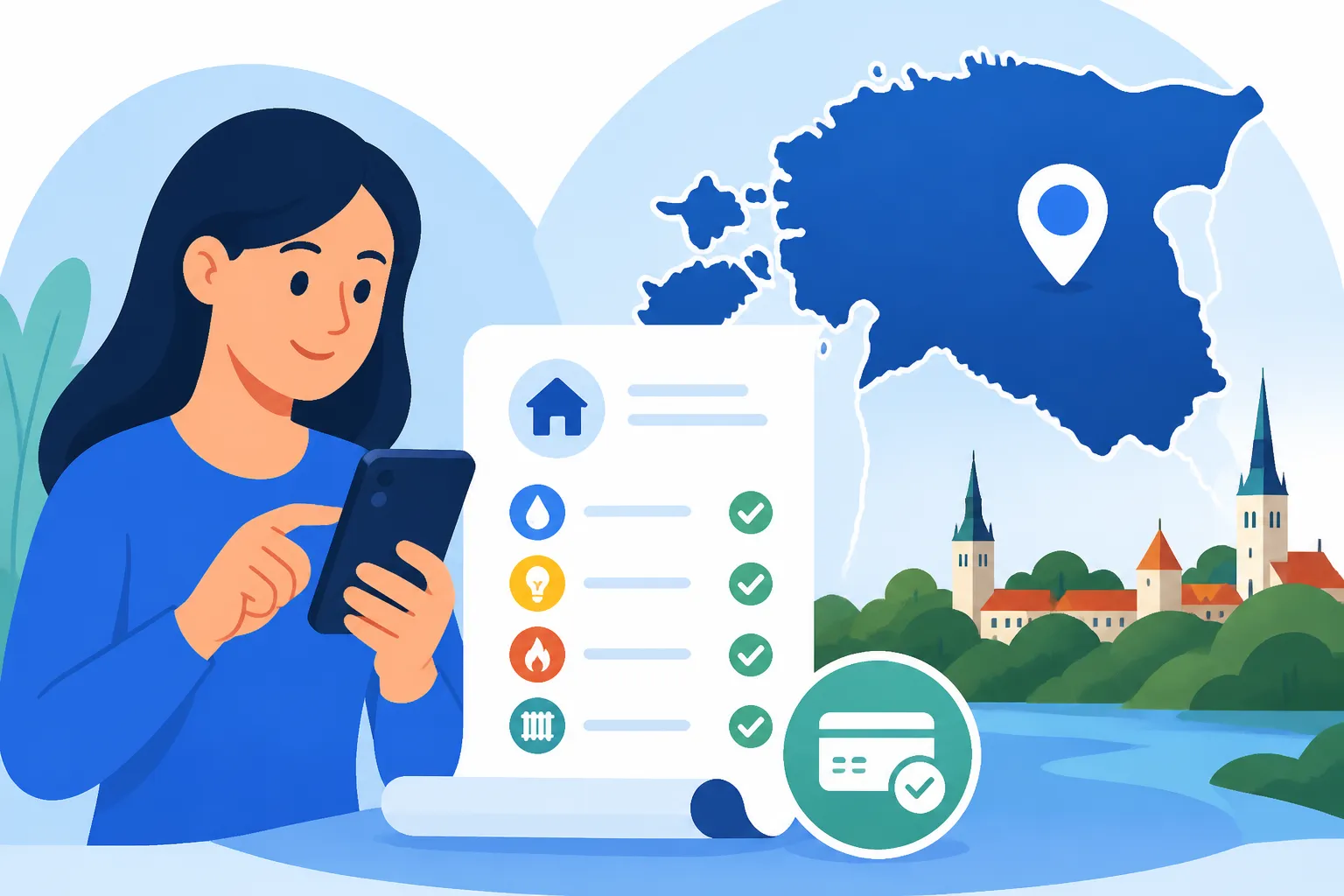
The phrase "kommunaalkulud" is probably one of the first Estonian words you'll learn out of sheer necessity. It literally means "communal expenses," and it encompasses a whole range of services that keep your home running. Unlike some countries where you get separate bills for every little thing, here, especially if you're renting an apartment, many of these charges often come bundled together through your apartment association (korteriühistu) or landlord. This can be convenient, but it also means understanding what you're actually paying for can feel like deciphering a secret code.
What Exactly Are 'Kommunaalkulud'?
At its core, kommunaalkulud cover the shared costs of your building and your individual consumption within your apartment. It's not just about turning on the lights; it's about the entire ecosystem of your home. These bills often fluctuate wildly, especially between summer and winter, largely due to heating costs. During the long, dark, and often bitterly cold Estonian winters, your heating bill can easily be the largest component, sometimes dwarfing your rent itself. It’s a shocker for many newcomers, so be prepared for that seasonal variation.
Beyond heating, typical components include cold water, hot water, sewage, electricity for common areas (hallways, stairwells), waste collection, repair funds for the building, administration fees for the apartment association, and sometimes even internet or TV services if bundled. The specific breakdown can vary depending on your building and whether you have individual contracts for certain services.
Understanding the Components: Heating, Water, Electricity, and More
Let's break down some of the common line items you'll see on your bill, keeping in mind that the terminology will likely be in Estonian:
- Küte (Heating): This is usually the big one. Most apartments in cities like Tallinn and Tartu are connected to district heating networks. Your consumption might be measured by individual radiators with meters, or it could be calculated based on your apartment's square footage and the building's overall consumption. It's often the most variable cost.
- Vesi (Water): You'll typically see separate charges for "külm vesi" (cold water) and "soe vesi" (hot water). Both are usually metered individually in your apartment. Don't forget the "kanalisatsioon" (sewage) charge, which is almost always tied to your water consumption.
- Elekter (Electricity): This can be tricky. Some landlords include it directly in the kommunaalkulud; others expect you to set up your own contract with an electricity provider like Enefit or Elektrum. If you have your own contract, you'll receive a separate bill directly from them. If it's through the apartment association, it will be a line item.
- Prügi (Waste/Rubbish Collection): This covers the cost of emptying the communal bins. It's usually a fixed monthly fee or based on the number of people registered in your apartment.
- Remondifond (Repair Fund): This is a contribution to the building's long-term maintenance and repair projects. It’s a common and necessary charge from apartment associations.
- Haldustasu (Administration Fee): This covers the day-to-day running costs of the apartment association, including accounting, management, and small repairs.
- Internet/TV: Sometimes, especially in newer buildings or certain rental agreements, your internet and basic TV package might be included in the communal bill, or the apartment association might have a bulk deal. However, more often than not, you'll arrange your own service with providers like Telia or Elisa.
It's absolutely critical to clarify with your landlord or apartment association what exactly is covered in your kommunaalkulud and what you need to arrange separately. The sooner you understand Understanding Utility and Maintenance Costs (Kommunaalkulud) in Estonia, the better prepared you'll be.
The Digital Backbone: Payment Methods in Estonia
Estonia is a highly digital society, and paying bills is no exception. In fact, it's pretty much expected that you'll handle most of your financial obligations online. This means that setting up online banking and getting comfortable with digital payments is not just a convenience here; it's practically a necessity. Forget writing checks or even needing to visit your bank branch for every bill – the system is designed for efficiency and minimal fuss.
Online Banking: Your Primary Tool
Your Estonian bank account will quickly become your best friend for managing finances. Major banks like Swedbank, SEB, and LHV all offer robust online banking platforms that are usually available in English, making life significantly easier for expats. These platforms are incredibly intuitive once you get the hang of them, allowing you to view statements, make transfers, and set up recurring payments. If you've just arrived, making sure you open a bank account in Estonia is one of your first crucial steps.
Remember that initial scramble to get things set up? I certainly do. I was trying to coordinate everything, from my residence permit application to finding an apartment. Having reliable internet was a lifesaver, and for those first few days or weeks, while your home internet is still being sorted, having a good data plan or an eSIM from a provider like Airalo can really bridge that gap and ensure you can access your online banking without interruption.
E-Invoices and Direct Debits: Streamlining Payments
This is where the Estonian system truly shines. Most major utility providers and apartment associations offer the option of e-invoices ("e-arved") and direct debits ("otsekorraldus").
- E-Invoices: Instead of receiving a paper bill (though some still send them), the invoice is sent directly to your online bank. You'll see it appear in a dedicated "e-arved" or "e-invoices" section within your online banking portal. You then simply review and confirm the payment. It's secure, environmentally friendly, and you'll never lose a bill under a pile of mail.
- Direct Debits: This takes the e-invoice concept a step further. Once you've set up a direct debit agreement with a service provider and your bank, the payments will be automatically deducted from your account on the due date. This is fantastic for recurring bills like internet, mobile phone, and even electricity if you have a separate contract. You typically set this up once through your online bank or directly with the service provider's self-service portal. It removes the stress of remembering due dates.
I highly recommend setting up e-invoices and direct debits for as many of your recurring bills as possible. It saves time, prevents late fees, and simplifies your financial life immensely. It’s a small administrative step that pays huge dividends in peace of mind.
Other Payment Options: When Digital Isn't Enough
While online payments are the norm, there are still a few alternatives, especially for those who prefer a less digital approach or in specific situations.
- Bank Branch/ATM: You can technically still go to a bank branch or use some ATMs to make payments, but honestly, it’s a relic in Estonia. Bank branches are increasingly streamlined and often require appointments for anything more complex than a quick question. For payments, they'll usually direct you to their online services.
- Post Office (Omniva): Omniva post offices often offer payment services for utility bills. This is a good option if you receive a paper bill and don't have online banking set up yet, or if you prefer to pay with cash. Just bring your bill with the payment details (especially the reference number).
- KIOSK (R-Kiosk, Selver, Maxima): Some convenience stores and supermarkets have payment terminals or customer service desks where you can pay utility bills. This is usually for specific providers and requires you to have the bill with you. Look for signs indicating "arvete tasumine" (bill payment).
These alternative methods are perfectly valid, but they tend to be less common among residents due to the sheer convenience and efficiency of online banking.
A Step-by-Step Guide to Paying Your Bills
Now that we understand what bills are and the main ways to pay, let's walk through the actual process. It's fairly straightforward once you know what to look for.
Locating the Essential Information on Your Bill
Whether you receive a paper bill or an e-invoice, the critical information you need for payment will always be there, though it might be in Estonian. Here’s what to hunt for:
- Maksja (Payer): This will be your name or the apartment address.
- Saaja (Recipient): This is the name of the company or apartment association you are paying (e.g., Enefit, Tallinna Vesi, KÜ [Korteriühistu] Kesklinna 7).
- Saaja konto number (Recipient's account number): This is the IBAN of the company or association. It will start with "EE" followed by many digits. This is absolutely essential.
- Viitenumber (Reference number): This is perhaps the most crucial piece of information. It’s a unique number that identifies your specific payment to your specific apartment or contract. Without it, your payment might not be correctly allocated, leading to headaches. It's usually a long string of numbers. Never forget to include the viitenumber!
- Summa (Amount): The total amount due, usually clearly marked.
- Maksetähtaeg (Due date): The deadline for payment. Make sure to pay by this date to avoid late fees.
Many bills will also have a QR code you can scan with your bank's mobile app, which often pre-fills all these details for you, making payment even faster.
Making a One-Time Bank Transfer
If you're paying manually, perhaps for your very first bill or a non-recurring expense, here's how to do it via online banking:
- Log In: Access your online banking platform using your ID-card, Mobile-ID, or Smart-ID.
- Navigate to Payments: Look for a section like "Maksed" (Payments) or "Ülekanne" (Transfer).
- New Payment: Select to make a "New Payment" or "Uus makse."
- Enter Recipient Details:
- Recipient Name (Saaja nimi): Type in the name of the utility company or apartment association (e.g., Tallinna Vesi).
- Recipient Account Number (Saaja konto number): Enter the IBAN (starts with EE).
- Amount (Summa): Enter the exact amount.
- Reference Number (Viitenumber): THIS IS CRITICAL. Enter the long string of numbers from your bill. Do not skip this!
- Explanation (Selgitus): While the viitenumber is paramount, adding a brief explanation like "kommunaalkulud [your apartment number] [month]" (e.g., "kommunaalkulud korter 12 jaanuar") can't hurt, especially if there's no viitenumber or if you're trying to add clarity.
- Review and Confirm: Double-check all the details. An incorrect account number or missing reference number can cause significant issues.
- Authorize Payment: Confirm the payment using your ID-card PIN2, Mobile-ID, or Smart-ID.
And that's it! The payment should be processed quickly, often within minutes if it's within the same bank or between major Estonian banks.
Setting Up Automated Payments
For recurring bills, setting up e-invoices and direct debits is the smart way to go.
- E-Invoices (E-arved):
- Log into your online bank.
- Look for a section related to "E-invoices" or "E-arved."
- You'll often find an option to search for service providers. Search for your apartment association (Korteriühistu [Name/Address]) or utility company (e.g., Telia, Enefit).
- Select them and request to receive e-invoices. You might need to provide your customer ID or apartment number.
- Once activated, new invoices will automatically appear in your online banking, ready for you to approve.
- Direct Debits (Otsekorraldus):
- After setting up e-invoices with a provider, you usually get the option to convert them to direct debits.
- Within the "E-arved" section of your online bank, or under a separate "Direct Debits" section, you can often find options to create a direct debit agreement.
- You'll specify the service provider, your customer ID, and set a maximum payment limit (a safety measure) if available.
- Once confirmed, future bills will be automatically paid from your account on the due date. You usually still receive a notification that a payment is coming, giving you a chance to review it before it’s taken.
This truly is the most hassle-free way to manage your regular expenses. Once it's set up for your How to Set Up Electricity in Your Estonian Home or How to Set Up Water, Heating and Gas in Estonia bills, you barely have to think about them.
Common Utilities and Their Payment Specifics
Let’s quickly touch on how some specific types of utilities typically handle payments.
Electricity (Enefit, Elektrum)
If you have a direct contract with an electricity provider, which is very common, you'll receive a monthly bill directly from them. Companies like Enefit, which is the dominant player, and Elektrum, a growing competitor, offer comprehensive self-service portals. You can submit your meter readings there (if required), view past bills, and set up e-invoices and direct debits. Some modern smart meters even send readings automatically, simplifying your life even further.
Water and Sewage (Tallinna Vesi, Tartu Veevärk)
In major cities, you’ll deal with municipal water companies like Tallinna Vesi or Tartu Veevärk. If your water bill comes separately (not through your apartment association), they will issue monthly or quarterly invoices. Again, their online self-service portals are key for submitting meter readings and setting up automated payments. The charges for water and sewage are usually combined and based on your metered consumption.
Heating (District Heating, Gas)
Heating, as mentioned, is often the largest component and usually comes via your apartment association. If you have gas for cooking or heating (less common for heating in city apartments but more so in houses), you'll likely have a contract with Eesti Gaas or a similar provider. Their billing cycles and payment methods will be similar to electricity providers, with online self-service and automated payment options being the norm.
Internet and Mobile Services (Telia, Elisa, Tele2)
When you choose a mobile and internet provider in Estonia, companies like Telia, Elisa, and Tele2 will issue monthly bills. This is an area where direct debits are almost universally offered and highly recommended. You can typically set this up directly through their self-service portals when you sign up, or later via your online bank. It's painless and ensures uninterrupted service. I remember being so glad I had direct debit set up for my phone; it was one less thing to think about when I first moved, and with all the other administrative hurdles, it truly helped. When I was just getting my feet on the ground and trying to find my way around Tallinn, I relied heavily on my phone for maps and translations, so ensuring that bill was paid on time was paramount.
Troubleshooting and Key Tips for Expats
Even with the best systems, things can sometimes go awry. Here are some common expat concerns and how to tackle them.
Language Barriers and How to Overcome Them
The biggest initial hurdle for many is the language. Bills are usually in Estonian, and while online banking interfaces are often in English, the specifics of your bill might not be.
- Google Translate/DeepL: Keep a translation tool handy. Copy and paste text from digital bills or snap a photo of a paper one. It’s not perfect, but it will give you the gist.
- Ask Your Landlord/Apartment Association: Don't be shy! Your landlord should be your first point of contact for understanding your initial bills. If you're dealing directly with an apartment association, they often have English-speaking staff or a board member who can help clarify.
- Bank Customer Service: Estonian banks generally have excellent English-speaking customer service. If you're struggling to set up an e-invoice or direct debit, don't hesitate to call them.
- Expat Groups: Online expat communities are a treasure trove of collective knowledge. Someone has almost certainly faced the same obscure line item on a bill that you have.
What Happens If You Miss a Payment?
It's a fear many expats share: what if I accidentally miss a due date? The consequences usually start mildly but can escalate.
- Late Fees (Viivis): Most companies will apply a late fee (viivis) if your payment is delayed. This is usually a small percentage of the outstanding amount per day or month.
- Reminders: You'll likely receive a reminder (meeldetuletus) via email or SMS. This is your cue to pay immediately.
- Service Interruption: For essential services like electricity or internet, if non-payment persists, the provider has the right to cut off your service. This is a last resort, but it can happen.
- Debt Collection: In serious cases of prolonged non-payment, the debt can be handed over to a collection agency, which will involve additional fees and negatively impact your credit history in Estonia.
If you realize you’ve missed a payment, act quickly. Pay the outstanding amount plus any late fees immediately. If you're facing financial difficulties and anticipate a problem, contact the service provider before the due date. They might be able to work out a payment plan. Communication is key.
Staying Organized: A Lifesaver for Expats
Keeping track of your bills is paramount.
- Digital Folder: Create a dedicated digital folder for all your utility bills and contracts. Save PDF versions of e-invoices.
- Spreadsheet: A simple spreadsheet tracking due dates, amounts, and payment confirmations can be incredibly helpful, especially if you have many different bills.
- Calendar Reminders: Set calendar reminders a few days before each due date, particularly for those bills that aren't on direct debit.
- Initial Setup: When you first move in, especially if you used a moving service like Sirelo to bring your life here, everything feels like a whirlwind. But take the time to document every utility contract, every account number, and every payment detail. Your future self will thank you. Understanding The Complete Guide to Cost of Living in Estonia for Expats (2026) includes knowing how to manage these regular outgoings.
Being proactive and leveraging Estonia's digital infrastructure will make paying your utility bills a smooth, almost invisible part of your expat life here.
Comparing Payment Methods
Here's a quick overview of the common payment methods for Estonian utility bills:
| Method | Pros | Cons | Best For |
|---|---|---|---|
| Online Bank Transfer | Direct, secure, fast, available 24/7. | Requires manual input for each payment, easy to forget due dates. | One-off payments, first-time bills, bills not supported by e-invoices. |
| E-Invoice (E-arve) | Bills sent directly to your bank, easy review and approval. | Requires manual approval, still possible to forget to approve. | Regular, semi-automated payments you want to review. |
| Direct Debit (Otsekorraldus) | Fully automated, no missed payments, complete peace of mind. | Requires initial setup, less direct control over each individual payment (though you're usually notified). | Highly recommended for all regular, recurring bills like internet, mobile, electricity. |
| Post Office (Omniva) | Cash payment option, good for those without online banking. | Time-consuming, limited hours, potential for queues. | Cash payments, temporary solution, non-digital users. |
| R-Kiosk/Supermarket | Convenient if already shopping, some flexibility. | Limited acceptance, often requires cash or specific cards. | Quick payments when out and about, specific accepted bills. |
Choosing the right method is about balancing convenience with your personal preference for control. For most expats, a combination of e-invoices and direct debits via online banking will be the most efficient and stress-free approach. Don't forget, setting up your How to Set Up Online Banking and Payments in Estonia is paramount to mastering this! And if you ever need to register your official Registering Your Place of Residence in Estonia: The Complete Guide in the Population Register, know that this foundational step also helps streamline billing processes.
Disclaimer
Please note that while this guide provides comprehensive information based on common practices and available data, utility providers and payment systems can change. Always refer to the most up-to-date information from your specific service provider and your bank. This content is for informational purposes only and does not constitute financial or legal advice.