Understanding Train Travel with Elron in Estonia
Oh, the sheer joy (and sometimes, utter confusion!) of navigating public transport in a new country, right? Especially when you’re trying to figure out if you should brave the buses or embrace the rails. For those of us living in or exploring Estonia, understanding the train system, particularly with the national operator Elron, can really unlock a new level of travel and make connecting with this beautiful country so much easier. This guide is going to walk you through everything you need to know about making the most of train travel here, from buying your tickets to knowing what to expect onboard, ensuring your Estonian adventures are as smooth as possible.
The Elron Experience: Why Choose Trains in Estonia?
For many expats, the default thought for intercity travel often jumps to buses, especially in a compact country like Estonia. But let me tell you, Elron trains offer a unique and often superior experience that you might be overlooking. It's not just about getting from A to B; it's about the journey itself, the comfort, and the surprising efficiency that this system provides. Once you get the hang of it, you might just find yourself preferring the rails for many of your domestic trips.
Comfort and Convenience for Expats
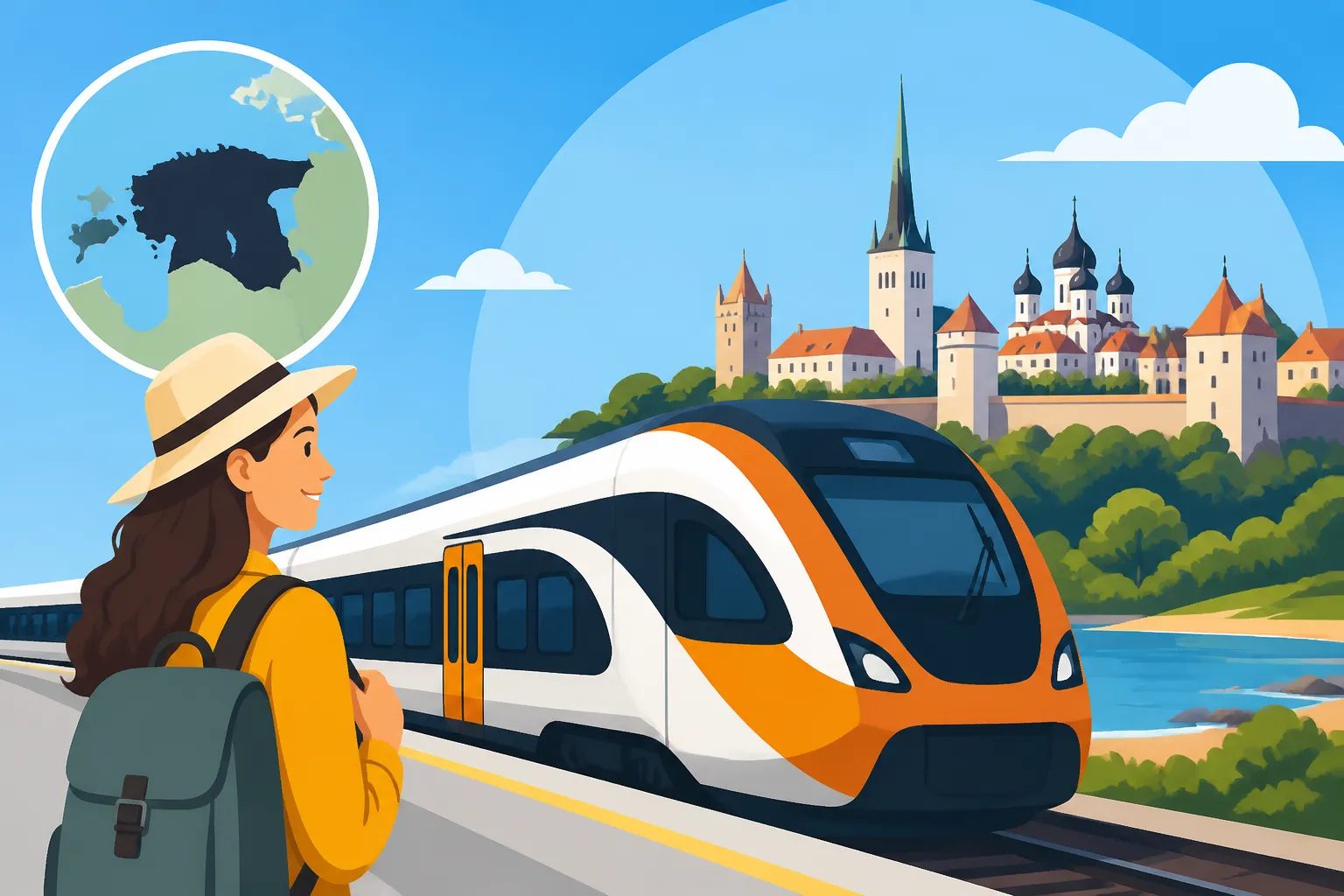
Let's be honest, fitting into a bus seat for a couple of hours with your luggage crammed somewhere can be less than ideal. This is where Elron truly shines. The modern Stadler FLIRT trains are a breath of fresh air, designed with passenger comfort squarely in mind. You’ll find spacious seating with ample legroom, which is a blessing whether you're commuting to work or heading out for a weekend getaway. Many seats even have power outlets, so you can keep your devices charged – essential for long journeys when you're trying to stay connected or simply keep the kids entertained.
Beyond the physical comfort, there's the mental ease. Unlike driving, where you're battling traffic, navigating unfamiliar roads, or constantly searching for parking, train travel allows you to relax. You can catch up on reading, enjoy the scenery, or even get some work done. For those living in the larger cities like Tallinn and needing to travel to other hubs like Tartu, the train offers a consistent, reliable schedule that helps you plan your day with confidence. And let's not forget the sheer convenience of stepping off the train right into the heart of many city centres, avoiding the sometimes-remote bus stations. If you're pondering how to get around after you've sorted out your accommodation, knowing about Elron's reliability is a huge relief, especially if you're navigating the process of moving to Estonia and settling into your new apartment.
Environmental Benefits and Scenic Routes
Choosing the train isn't just good for you; it's also a kinder choice for our planet. In an age where environmental consciousness is increasingly important, opting for rail travel significantly reduces your carbon footprint compared to driving or even taking a bus. Elron's electric trains, in particular, run on Estonia's increasingly green energy mix, making each journey a step towards more sustainable living. For expats who are keen on embracing a greener lifestyle, this is a definite plus. It’s a small, individual decision that collectively makes a difference.
And then there are the views! Estonia might be a relatively flat country, but its landscapes are incredibly diverse and often stunning. As the train glides through dense forests, past tranquil bogs, and across open fields, you get a unique perspective that’s often missed when you're hurtling down a highway. Imagine sitting back, sipping your coffee, and watching the changing seasons paint the Estonian countryside outside your window. The routes to places like Narva, with its historical architecture, or the tranquil beauty towards Viljandi, are particularly picturesque. These journeys aren't just transfers; they're experiences in themselves, offering a chance to truly appreciate the natural beauty of your new home. Whether it's a quick trip or a longer expedition, the train lets you soak it all in without the stress of being behind the wheel.
Understanding Elron's Network and Routes
Elron, as Estonia's national train operator, covers a surprisingly extensive network for a country of its size. Their routes connect major cities with smaller towns, making it a viable option for both daily commuters and weekend adventurers. It’s not just Tallinn-centric either; the network extends its reach across various regions, providing crucial links for both residents and visitors. Getting a good grasp of this network is key to planning your travels effectively.
Key Lines and Destinations from Tallinn
Tallinn's Balti Jaam (Baltic Station) serves as the main hub for Elron trains, connecting the capital to most major destinations across the country. From here, you can branch out in several directions, each leading to distinct parts of Estonia. The main lines radiate outwards like spokes on a wheel:
- Tallinn – Tartu Line: This is perhaps the most popular and frequently used route, connecting the capital with Estonia’s second-largest city and intellectual hub, Tartu. The journey is comfortable, taking around two hours, making it perfect for students, business travellers, or anyone looking for a cultural day trip. You'll often find these trains full, especially on weekends, highlighting their popularity. If you're heading to Tartu for studies or looking for a place to live, this train journey will become very familiar to you, whether you're trying to find an apartment to buy in Tartu or secure a long-term rental in Tartu.
- Tallinn – Narva Line: Stretching eastward, this route takes you to the historical border city of Narva, offering insights into Estonia’s diverse cultural tapestry. The journey is longer, around 2.5 hours, but it’s a direct and efficient way to explore the eastern reaches of the country.
- Tallinn – Viljandi Line: Heading south-west, this line leads to the charming Hanseatic town of Viljandi, famous for its annual folk music festival and beautiful lake. It’s a slightly slower line, often with fewer direct stops, making for a relaxed journey into the heart of rural Estonia.
- Tallinn – Pärnu Line: After a period of reconstruction, the line to Pärnu, Estonia's summer capital, is back! This route is a fantastic way to reach the coast and enjoy the sandy beaches and resort atmosphere without the hassle of driving. The refurbished line offers a modern and quick connection.
- Tallinn – Valga Line: This route goes all the way south to Valga, on the Latvian border. It’s a longer journey, often connecting smaller towns along the way, and can even serve as a starting point for further travel into Latvia.
These main lines offer a great foundation for understanding how Elron can facilitate your travel plans, whether for leisure or practical needs within Estonia.
Connecting Estonia's Cities and Regions
While Tallinn is undeniably the central point, Elron's network isn't solely about reaching the capital. The routes are designed to connect various regional centres and smaller towns, providing essential links for people living outside the main metropolitan areas. For instance, the Tartu-Valga line directly links these two southern cities without needing to loop back through Tallinn. Similarly, there are local routes that connect smaller towns to their nearest regional hub, making daily commutes possible for many.
This regional connectivity is a huge benefit for expats who might be living or working outside of Tallinn. It means you don't necessarily need a car for every journey, offering a more sustainable and often more relaxing way to experience the country. For example, if you're exploring the possibility of working in Estonia, knowing that you can commute comfortably by train to various towns opens up more job opportunities beyond just Tallinn. The detailed timetables, readily available online, make it easy to plan complex multi-leg journeys if necessary. Understanding these connections can truly broaden your horizons and allow you to explore more of Estonia’s diverse regions, from the deep south to the eastern border.
Booking Your Elron Tickets: Options and Tips
One of the great things about public transport in Estonia is how seamlessly digital processes are integrated. Buying Elron train tickets is no exception, offering multiple convenient options to suit every preference, from tech-savvy expats to those who prefer a more traditional approach. Knowing these options will save you time and potential stress, especially during peak travel times.
Online, Station, and Onboard Purchases
Elron makes purchasing tickets remarkably straightforward, whether you're a planner or a last-minute decision-maker.
The most convenient and often recommended method is to buy your tickets online through the Elron website or their mobile app. This is typically the easiest way to secure your seat, especially for popular routes or during busy holiday periods. You can browse timetables, select your seats (on some routes, particularly long-distance ones), and pay directly. Once purchased, the ticket is sent to your email or stored in the app, usually as a QR code. When the conductor comes by, you simply show them your digital ticket on your phone. It’s fast, efficient, and very Estonian in its digital-first approach. For those coming from abroad, getting your mobile data sorted, perhaps with an eSIM from Airalo, makes this process even smoother from day one.
If you prefer a more traditional approach, or if you're not comfortable with online purchases, you can also buy tickets at the ticket office at major stations like Tallinn's Balti Jaam or Tartu. These offices are usually open during regular business hours. Just be aware that queues can form, particularly before popular departures, so factor in extra time. You'll receive a physical ticket, which you then present to the conductor.
Finally, for spontaneous trips or if you're arriving at a smaller station without an office, you can often buy tickets directly from the conductor onboard the train. However, there's a small surcharge for this convenience, so it's generally best avoided if you have other options. Also, conductors usually prefer card payments, though cash might be accepted in smaller denominations. While buying onboard is possible, it's always less hassle to have your ticket ready before you board, ensuring a stress-free departure.
Discounts and Special Passes for Regular Travellers
Elron offers several discount categories that expats should be aware of, especially if you plan on using the trains frequently. These can lead to significant savings over time.
- Pühaste Kaart (Public Transport Card) discounts: If you have an Estonian public transport card (like the green Ühiskaart used in Tallinn), you can register it with Elron to receive certain discounts on your fares. This is particularly useful if you commute or travel regularly between specific cities. The card needs to be personalised with your Isikukood, and the discount is typically applied when you validate your journey by tapping the card at the reader on the train. For anyone settling in Estonia, getting your Isikukood is one of the first crucial steps to access services and benefits like this.
- Youth, Student, and Senior Discounts: Elron provides reduced fares for various groups. Students with a valid Estonian student ID (ISIC card for international students) and seniors (usually 65+) are eligible for discounted tickets. Always carry your ID with you, as the conductor may ask for proof of eligibility. Families with young children also benefit from free travel for children under a certain age.
- Monthly Passes and Multi-Journey Tickets: For frequent commuters, Elron offers monthly passes or multi-journey tickets for specific routes. These are often the most cost-effective option if you travel the same route multiple times a week. You can usually purchase these through the Elron app or website. For those who have just moved and are exploring job opportunities, looking into these passes can significantly reduce your daily travel expenses, making your commute much more manageable as you get started with working in Estonia. Always check the Elron website for the most up-to-date information on discounts and pass options, as these can change.
Practicalities of Train Travel: What Expats Need to Know
Once you've got your ticket sorted, what else should you know to make your Elron journey smooth? From the moment you step onto the platform to your arrival at the destination, there are a few practical aspects that will make your experience more enjoyable and less stressful. Estonia's digital infrastructure extends to its public services, and knowing how to leverage this will significantly enhance your travel.
Onboard Facilities and Services
Elron's modern trains are generally well-equipped, offering a pleasant travel environment. You'll find comfortable seating, often with individual tables or tray tables, perfect for working on your laptop, enjoying a snack, or playing a game. As mentioned earlier, many seats have power outlets (both standard and USB), so you can charge your phone, tablet, or laptop – a blessing for any digital nomad or remote worker.
Free Wi-Fi is also typically available on most Elron trains, though like all public Wi-Fi, the speed and reliability can vary, especially when passing through more remote areas. It's usually good enough for browsing, checking emails, or light social media, but don't count on it for heavy streaming or video calls if it's crucial. Having a backup personal hotspot or using your mobile data (perhaps with a data plan from Airalo if you're just visiting or haven't settled on a local provider yet) is always a good idea.
Most long-distance trains also feature toilets, which are generally clean and accessible. For those with special needs, the trains are largely wheelchair accessible, with dedicated spaces and ramps provided upon request. There aren't usually dedicated catering services like a dining car, but you'll often find vending machines onboard offering snacks and hot drinks. It's always a good idea to bring your own water bottle and any specific snacks you might want, especially for longer journeys.
Luggage, Bikes, and Pet Policies
Understanding what you can bring onboard is crucial, especially if you're travelling with more than just a small backpack.
- Luggage: Elron trains have ample space for luggage. You’ll find overhead racks for smaller items and dedicated luggage areas at the ends of the carriages for larger suitcases. There’s usually no strict weight or size limit like with airlines, but common sense applies – you should be able to manage your own luggage, and it shouldn't obstruct aisles or other passengers. If you're undertaking a larger move within Estonia, say from Tallinn to Tartu, you might opt for a professional moving service like Sirelo for your bulkier items, but for personal bags, the train is very accommodating.
- Bikes: Bringing bicycles on Elron trains is generally allowed, but there are some important considerations. You usually need to purchase a separate ticket for your bike, and space can be limited, especially during peak hours or on popular routes. Dedicated bike spaces are often available at one end of the train, typically marked with a bicycle symbol. It’s best to check Elron’s website or inquire at the station about specific bike policies and availability for your chosen route, particularly if you’re planning a cycling holiday.
- Pets: Small pets in carriers are usually allowed on Elron trains, often free of charge, as long as they don't disturb other passengers. For larger dogs, you might need to purchase a separate "animal ticket" (often at a reduced fare), and they must be kept on a leash and muzzled. Animals are generally not allowed on seats. Again, checking the specific rules on Elron’s website before you travel is highly recommended, as policies can vary slightly. Always ensure your pet is well-behaved and comfortable in public spaces to avoid any issues with fellow travellers.
Comparing Elron with Other Transport Options
When planning your travels within Estonia, you'll inevitably weigh your options. While Elron trains offer many advantages, they're not always the single best solution for every journey. Understanding how they stack up against other popular modes of transport, primarily buses, will help you make informed decisions for your specific needs.
Train vs. Bus: Speed, Cost, and Comfort
This is the big comparison for domestic travel in Estonia. Both trains and buses have their pros and cons, and the "best" option often depends on your priorities.
Speed: For many of the key intercity routes, especially between Tallinn and Tartu or Narva, Elron trains are often faster than buses. Trains avoid road traffic entirely, and with fewer stops and higher average speeds, they cut down journey times. For example, the Tallinn-Tartu train journey typically takes around 2 hours to 2 hours 15 minutes, whereas the bus can range from 2 hours 30 minutes to 3 hours, depending on the number of stops and traffic conditions. This difference can be crucial if you're on a tight schedule or simply prefer to reach your destination quicker.
Cost: The pricing for both trains and buses is generally competitive. Often, bus tickets can be slightly cheaper than train tickets, especially if you book well in advance or catch special promotions from bus operators like Lux Express or Simple Express. However, Elron also offers various discounts (as mentioned earlier) which can bring the price down significantly. It's always worth checking both options for your specific route and travel date. For instance, a basic train ticket from Tallinn to Tartu might be a couple of euros more than the cheapest bus ticket, but the comfort might well be worth the small difference. When you're assessing your overall cost of living in Estonia, factoring in public transport costs is an important budget line item.
Comfort: This is where Elron often pulls ahead. As described, Elron's modern trains offer more spacious seating, ample legroom, power outlets, and generally more room to move around during the journey. The ride is typically smoother, with less bumping and swaying than a bus. For longer journeys, or if you plan to work or relax, the train's superior comfort is a significant advantage. Buses, while modern, still have the inherent limitations of road travel and tighter seating arrangements. If you are prone to motion sickness, trains usually offer a more stable experience.
Frequency and Network Coverage: Buses generally offer greater frequency on popular routes and have a more extensive network, reaching smaller towns and villages where trains simply don't go. So, if your destination isn't directly on an Elron line, a bus will be your only option besides driving. However, Elron's main routes are very frequent, especially between Tallinn and Tartu.
| Feature | Elron Train | Intercity Bus (e.g., Lux Express) |
|---|---|---|
| Speed | Often faster, avoids traffic | Can be slower due to traffic/more stops |
| Comfort | Spacious seats, more legroom, smoother ride, power outlets, Wi-Fi, toilets | Generally good, but less space, more bumps, varied Wi-Fi |
| Cost | Competitive, can be slightly higher, discounts available | Often slightly cheaper, frequent promotions |
| Network | Covers major cities and key routes | More extensive, reaches smaller towns/villages |
| Onboard | Toilets, vending machines, bike/pet policy | Toilets, some have media screens, varied pet policy |
| Flexibility | Less frequent than buses on some routes | High frequency on popular routes |
Day Trips and Longer Journeys: When to Pick the Train
Deciding between train and bus also comes down to the nature of your trip.
For day trips to popular destinations like Tartu, Narva, or Viljandi, the train is often an excellent choice. The faster travel time means more time at your destination, and the comfortable journey ensures you arrive feeling refreshed, not fatigued. If you're exploring the cultural sites or visiting friends for the day, the efficiency of the train allows you to maximize your time. Plus, arriving at a central train station usually means you're already in the thick of things, close to attractions, cafes, and public transport connections for local exploration. For example, when exploring different regions for How Do I Find a Long-Term Rental in Tartu?, the train offers convenient travel.
For longer journeys within Estonia, such as from Tallinn to Valga, or if you're simply moving a substantial distance, the train's comfort and ability to stretch your legs without constant stops can be a game-changer. It transforms what could be a tiring bus ride into a more relaxing experience where you can read, work, or simply enjoy the landscape. If you're contemplating a trip that involves crossing borders into Latvia, the train to Valga offers a direct link, making onward travel potentially easier.
However, there are times when the bus remains indispensable. If you're heading to a smaller town not served by Elron, or if you need to travel at an odd hour when train services are less frequent, the bus network often provides more options. For destinations along the coast that aren't Pärnu, or for reaching national parks and remote areas, buses (or a car) are usually your best bet. Always check the specific destination you have in mind before deciding. A quick search on both Elron's website and major bus company sites will give you a clear picture of what's available for your route.
In conclusion, while Estonia's bus network is comprehensive and often cost-effective, Elron trains offer a compelling alternative, especially for comfort, speed, and a more relaxed travel experience on key intercity routes. It’s a wonderful way to see more of Estonia, often in a more sustainable and enjoyable manner.
Disclaimer
Please note that while I strive to provide accurate and up-to-date information, details regarding public transport schedules, pricing, policies, and services can change. Always verify the latest information directly with Elron's official website or customer service before making travel plans. This guide is for informational purposes only and does not constitute official advice.